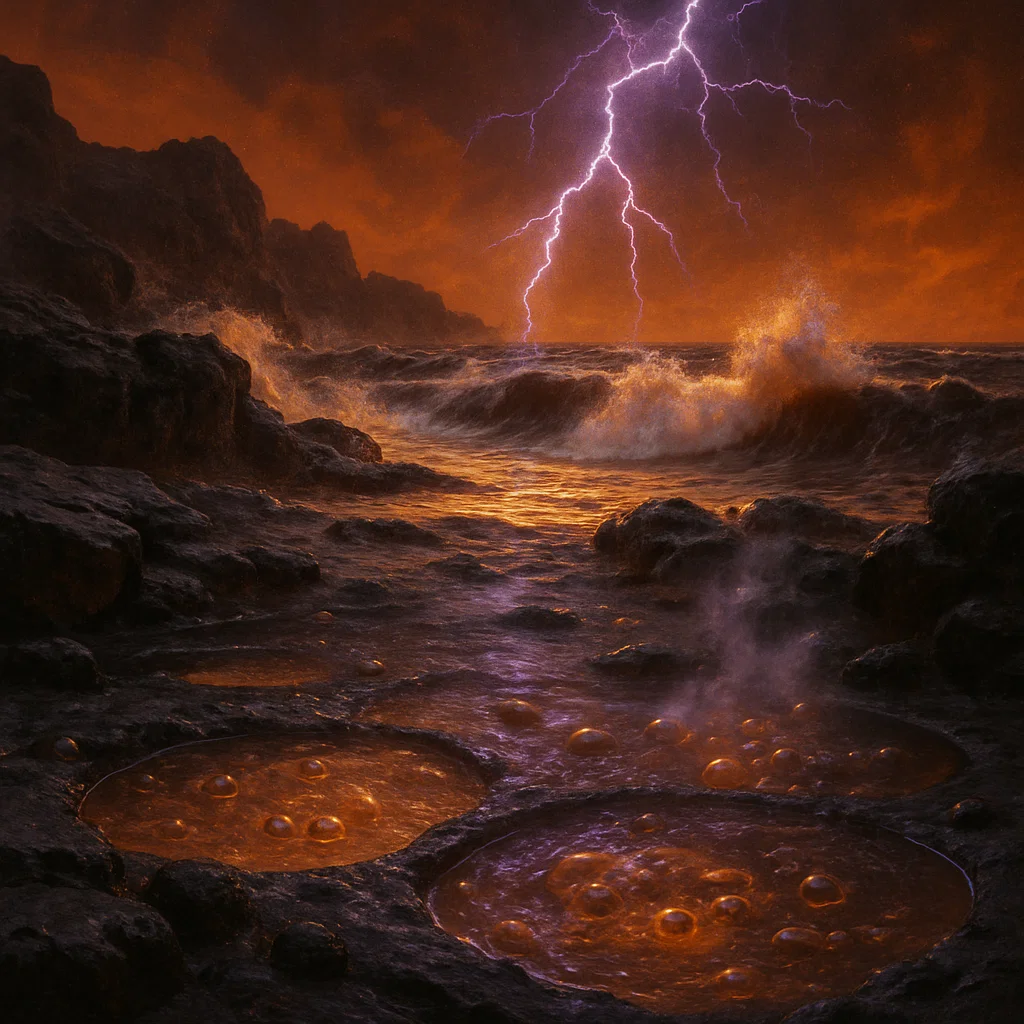
Biological Time traces the history of life as an evolving system of organization, from prebiotic chemistry to the complex ecosystems of the present. It begins when chemistry crosses the threshold into self-replication and continues through successive reorganizations of life’s structure and metabolism. Each era reflects a transformation in how living matter sustains, stores, and transmits information.
Unlike Geological Time, which measures changes in Earth’s physical structure, Biological Time follows the ascent of living order—how molecules became cells, cells became organisms, and organisms formed interconnected biospheres. Its divisions correspond to the appearance of new biological architectures that changed the course of evolution itself.
CHRONOS – Biological Time Eras
| Era | Approximate Range | Scale of Time (Duration) | Governing Principle | Example Focus |
|---|---|---|---|---|
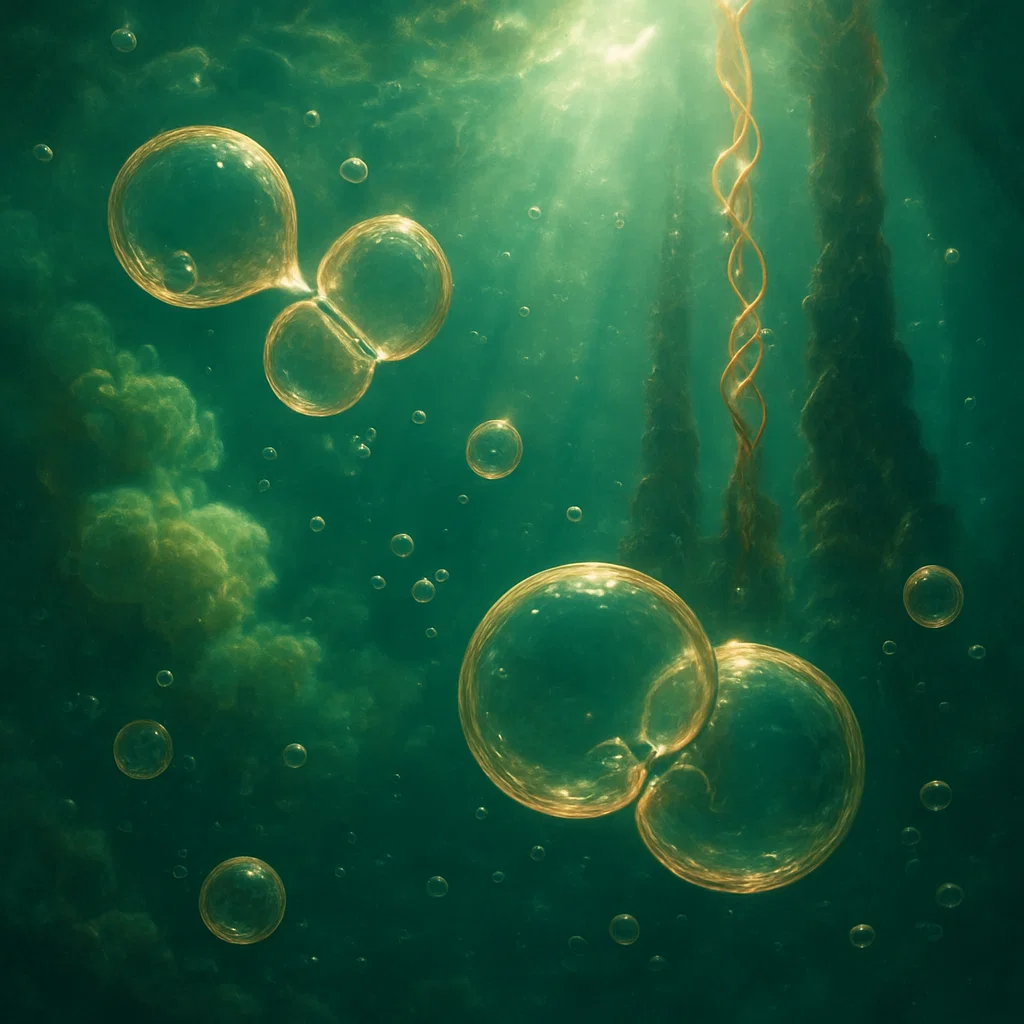
| Prebiotic Era | 4.0 – 3.8 billion years ago | ~200 million years | Chemical self-organization and abiogenesis | Formation of amino acids and lipids; protocells; RNA-world hypotheses |
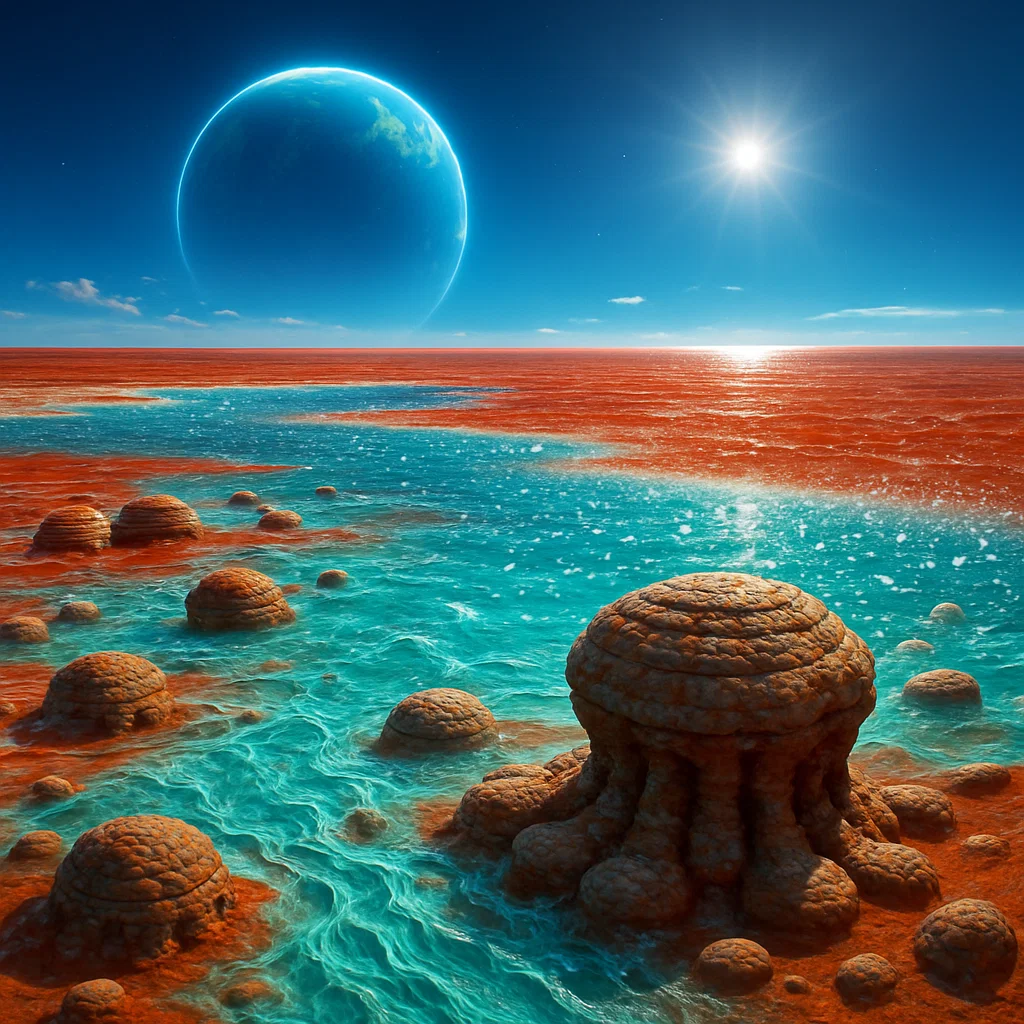
| Prokaryotic Era | 3.8 – 2.1 billion years ago | ~1.7 billion years | Microbial life and metabolic innovation | Bacteria and archaea dominate; photosynthesis and oxygen release; stromatolites |
| Eukaryotic Era | 2.1 billion – 600 million years ago | ~1.5 billion years | Internal cellular complexity and symbiosis | Origin of the nucleus and mitochondria; sexual reproduction; early multicellularity |
| Multicellular Era | 600 – 541 million years ago | ~60 million years | Tissue differentiation and cooperative organization | Ediacaran biota; first animals, fungi, and algae |
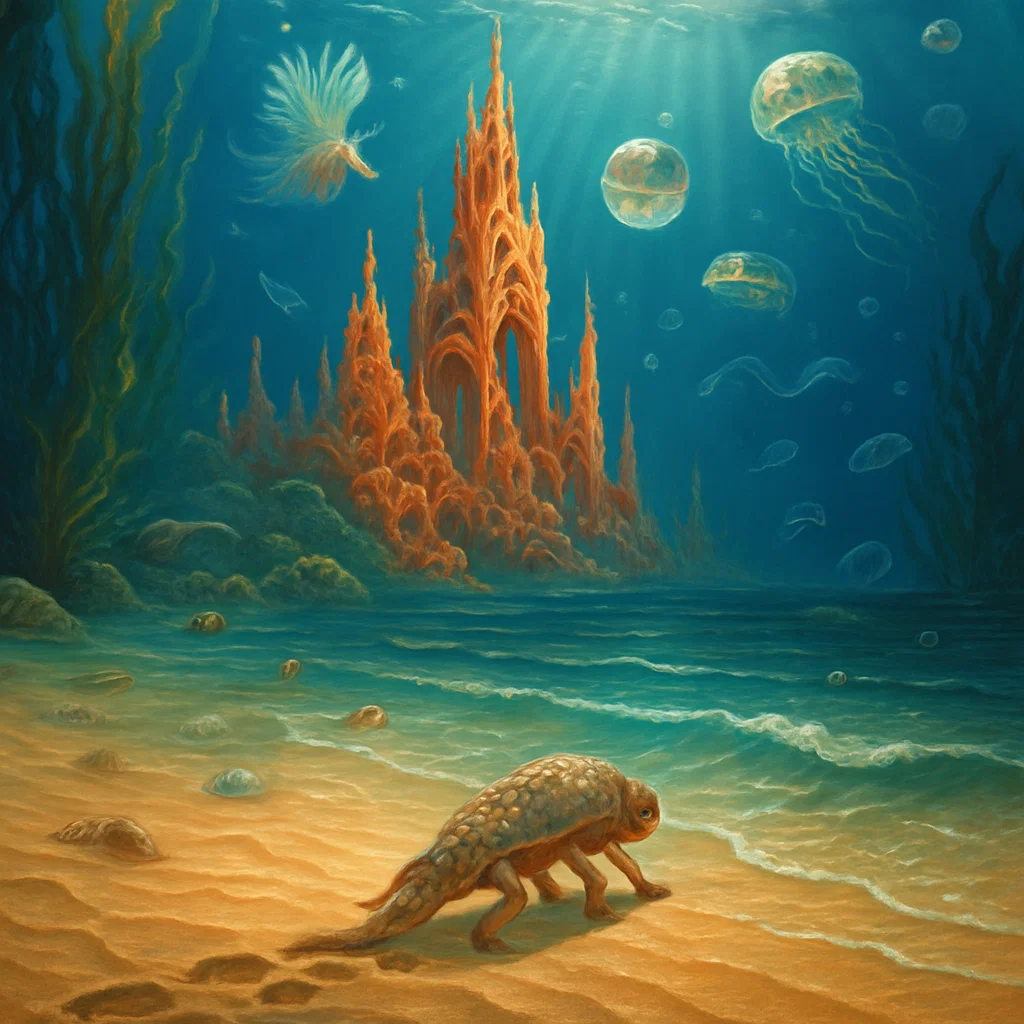
| Metazoan Era | 541 million years ago – present | ~541 million years and ongoing | Complex ecosystems and macroevolutionary diversification | Cambrian explosion; vertebrate evolution; terrestrial colonization; mammals and humans |
Summary:
Biological Time records the long ascent from chemistry to ecology—a progression of increasing complexity and interdependence.
Each era marks a new way life organizes itself: chemical to cellular, cellular to multicellular, and multicellular to ecological. Humanity arises not as a separate “cognitive era,” but as a late development within the ongoing Metazoan Era—a single branch of the broader evolutionary continuum.