Geological Time measures the chronological evolution of Earth itself—the transformation of a once-molten planet into a structured, living world. It begins at the Solar System’s formation (~4.54 billion years ago) and spans to the present day.
Unlike Cosmic Time, which describes universal physics, or Solar Time, which follows the Sun’s stellar cycle, Geological Time focuses on planetary processes: crust formation, tectonic motion, magnetic stabilization, atmospheric chemistry, and the emergence of life.
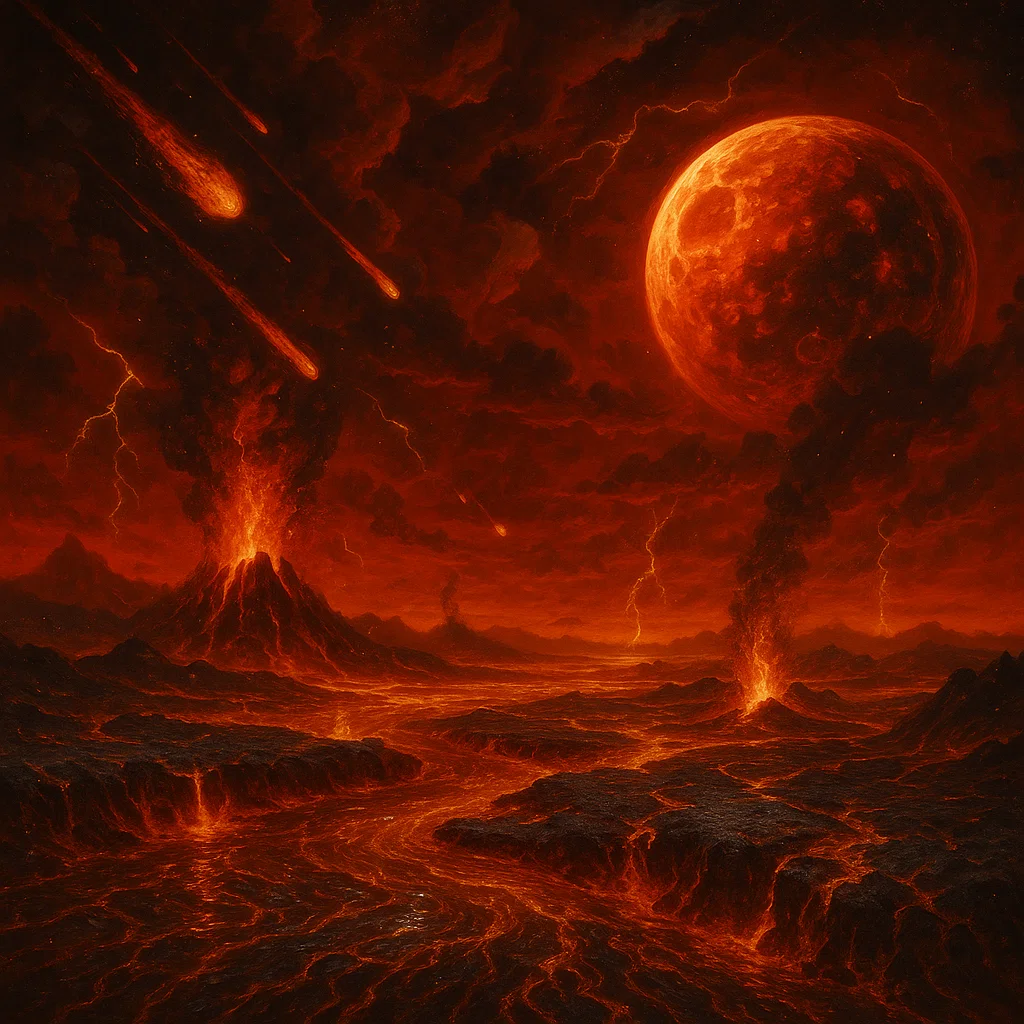
Each eon represents a change in planetary equilibrium—when shifts in heat flow, chemistry, or biology fundamentally reorganized Earth’s surface and interior systems.
CHRONOS – Geological Time
| Era | Approximate Range | Scale of Time (Duration) | Governing Principle | Example Focus |
|---|---|---|---|---|
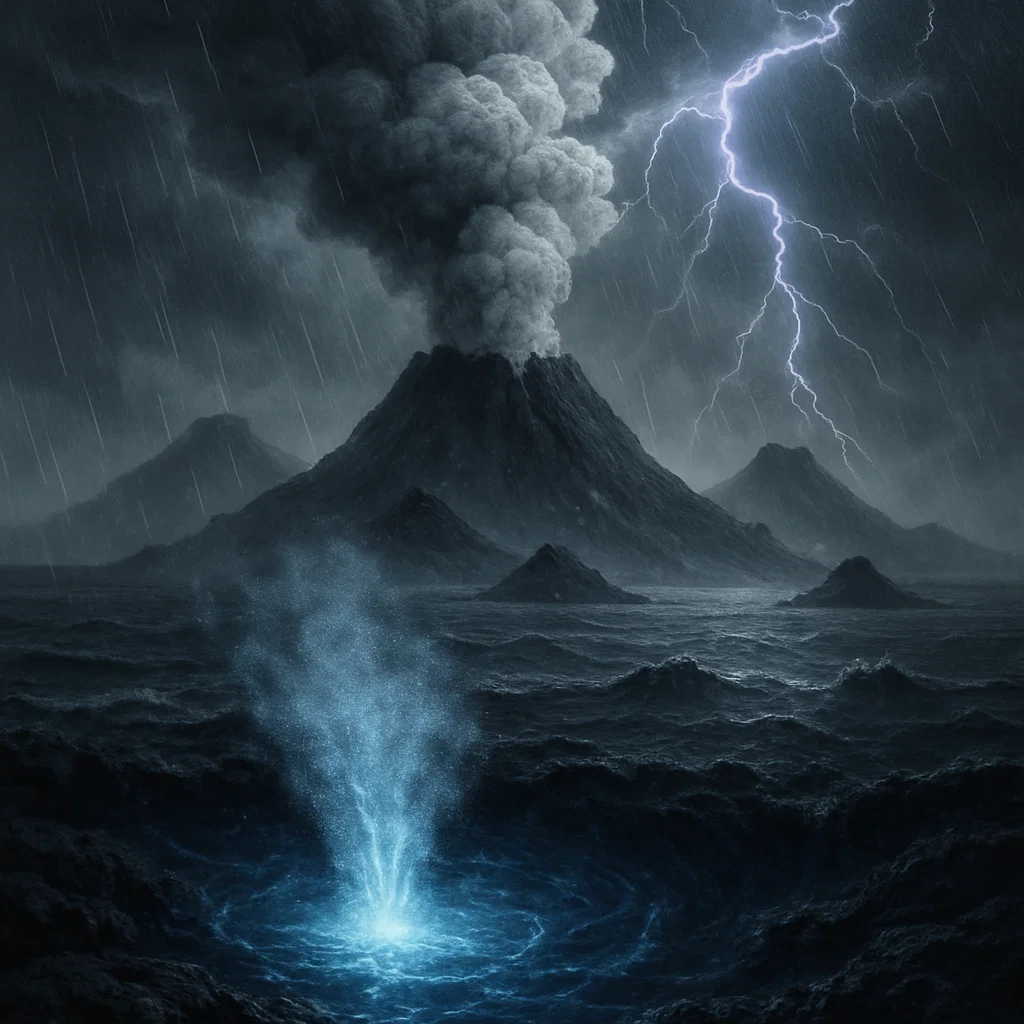
| Hadean Eon | 4.54 – 4.0 billion years ago | ≈ 500 million years | Planetary accretion and internal differentiation | Formation of core and mantle; late heavy bombardment; first crust and oceans begin forming |
| Archean Eon | 4.0 – 2.5 billion years ago | ≈ 1.5 billion years | Crustal stabilization and early biological activity | Emergence of continental cratons; appearance of prokaryotic life; onset of photosynthesis |
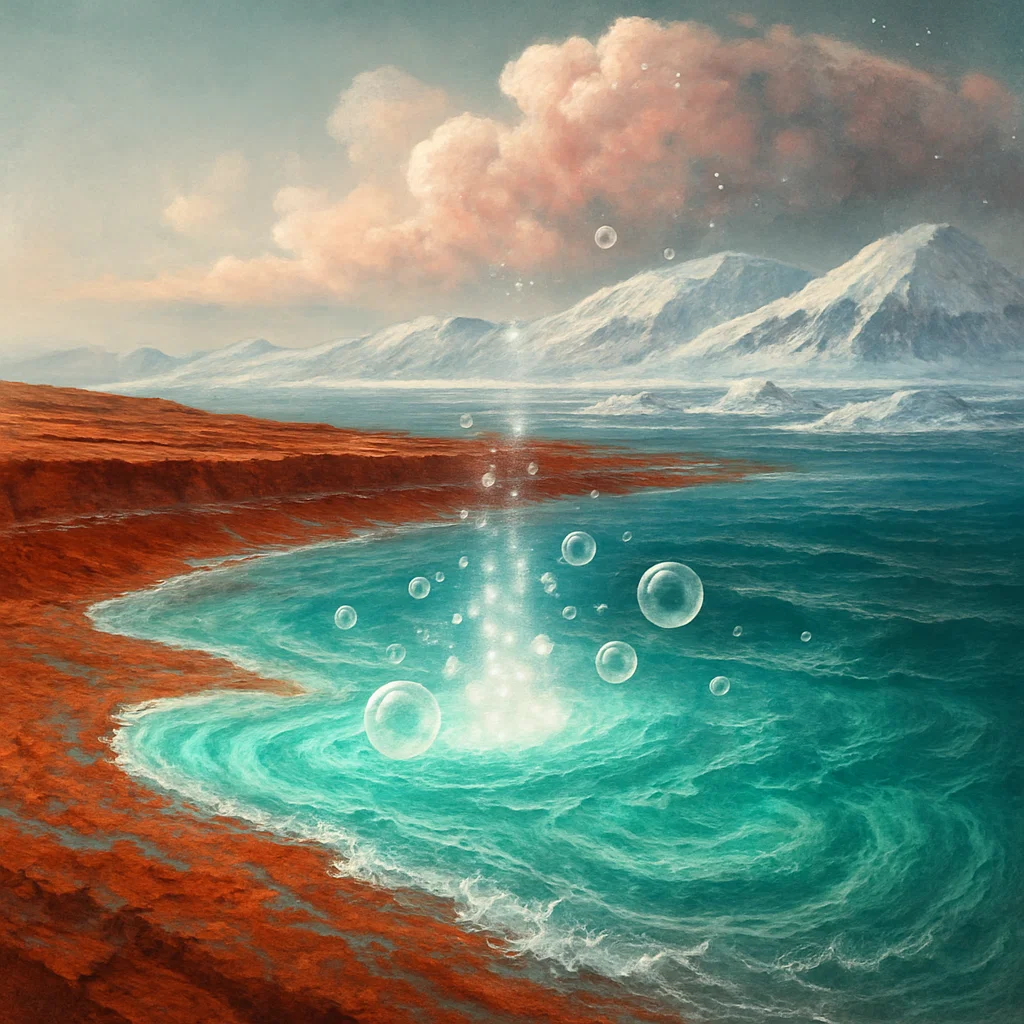
| Proterozoic Eon | 2.5 billion – 541 million years ago | ≈ 2 billion years | Atmospheric oxygenation and continental cycles | Great Oxidation Event; large tectonic supercontinents; rise of eukaryotic life |
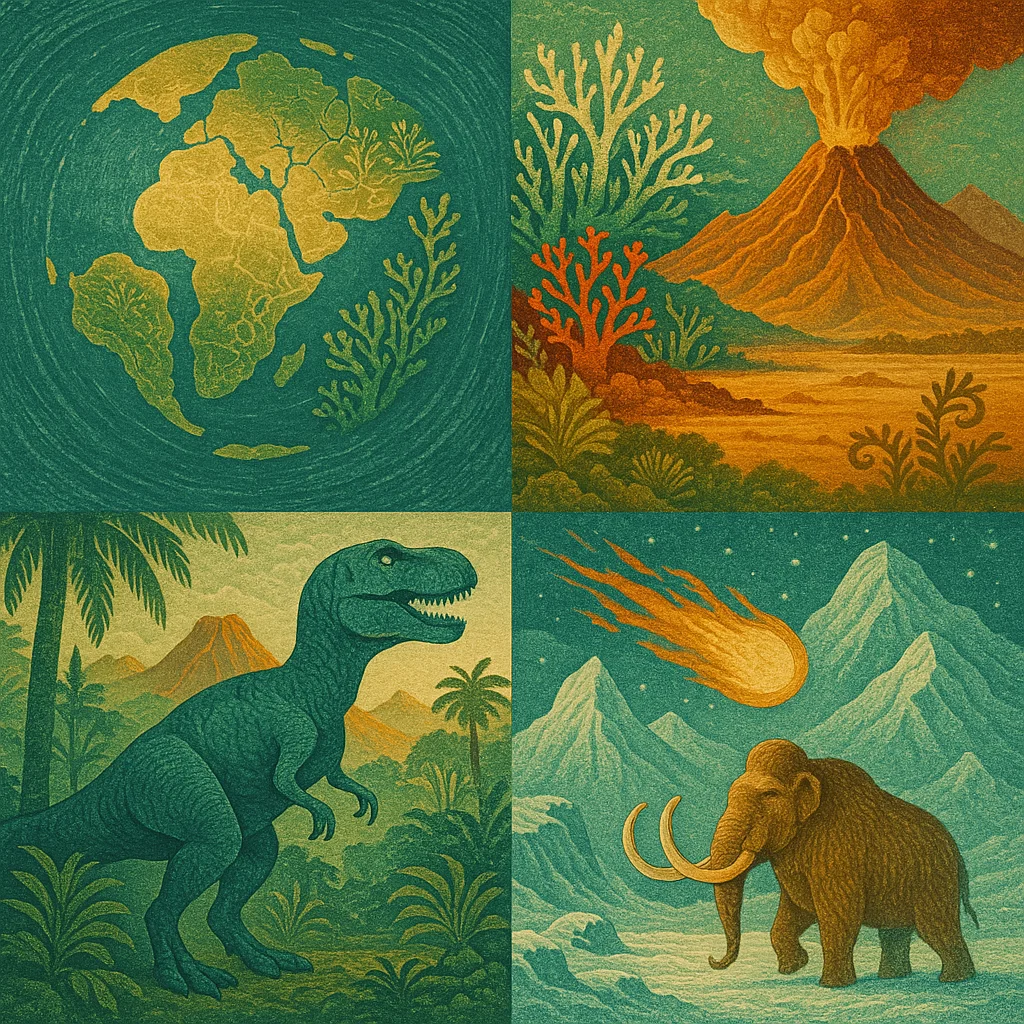
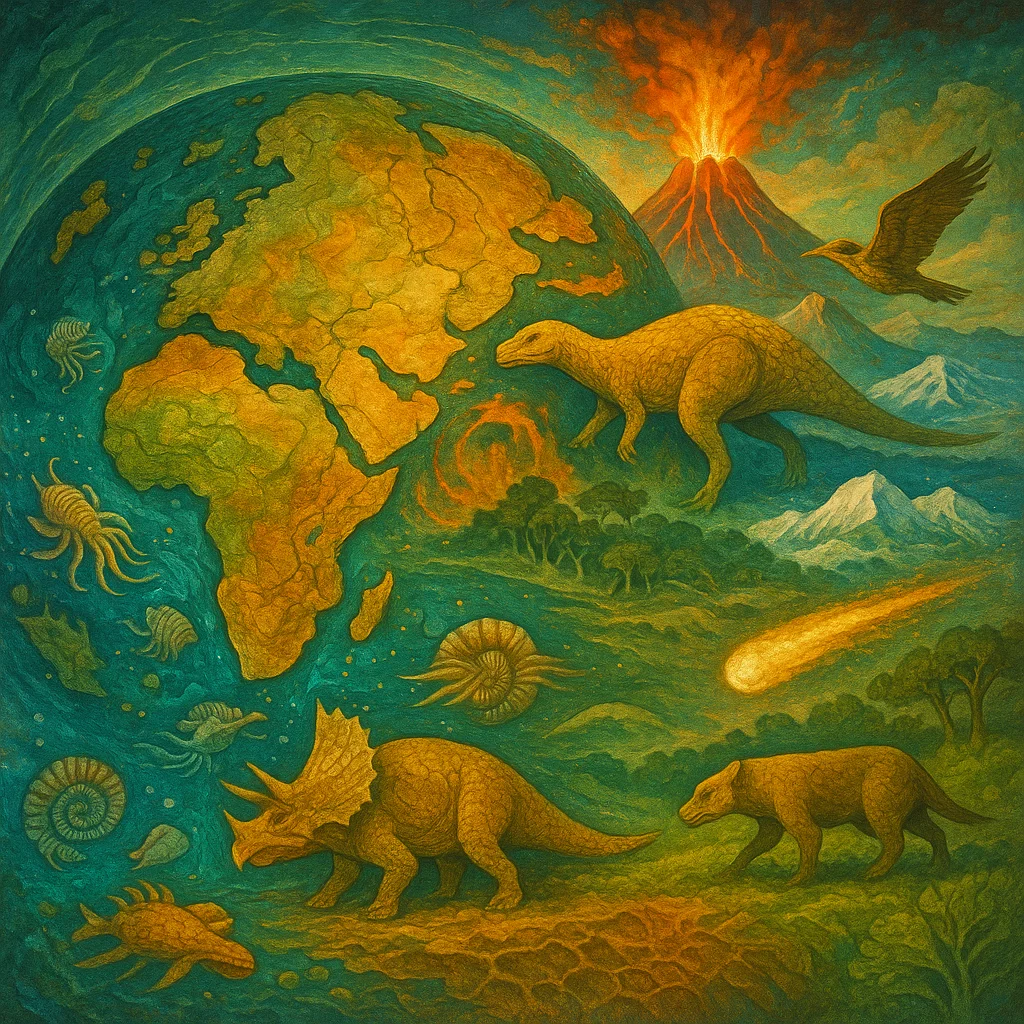
| Phanerozoic Eon | 541 million years ago – present | ≈ 541 million years and ongoing | Complex multicellular life and dynamic biosphere–geosphere interaction | Cambrian diversification; continental drift; repeated mass extinctions; human epochal impact |
Summary:
Geological Time is Earth’s internal clock of transformation, expressed through the interplay of rock, atmosphere, water, and life.
Each successive eon lengthens in stability while deepening in complexity: from violent formation (Hadean) to crustal balance and microbial life (Archean), then to oxygenated tectonic worlds (Proterozoic), and finally to the richly varied, life-dominated surface of the Phanerozoic.
It is the timescale in which the planet becomes not just a body in space, but an evolving, self-regulating system.