Source page: McKinsey & Company
Commentary
Caregivers are burning out
Employee health | Productivity | Workplace safety
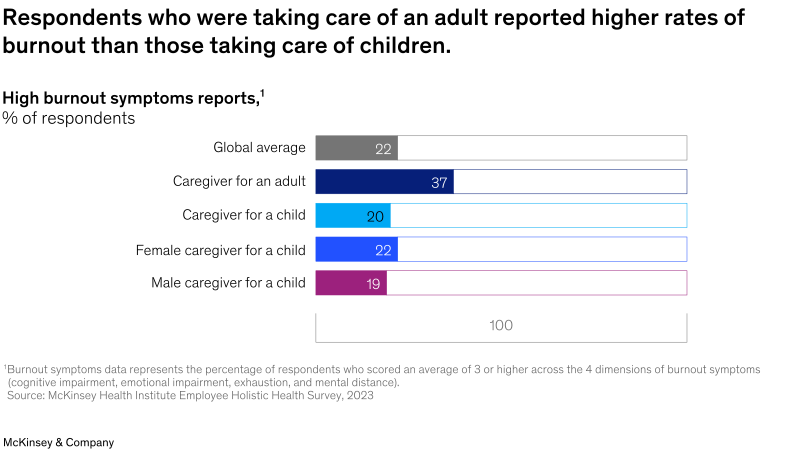
February 25, 2025 – Caregivers for adults experience more workplace burnout than those who care for children. Senior Partner Shail Thaker and colleagues find that 37 percent of caregivers for adults report high burnout symptoms, including cognitive impairment, emotional impairment, exhaustion, and mental distance. Meanwhile, 19 percent of men and 22 percent of women who care for children say that they have high burnout. Women who take care of children experience greater exhaustion than their male counterparts (43 percent versus 35 percent, respectively).
To read the report, see “Thriving workplaces: How employers can improve productivity and change lives,” January 16, 2025.
customizer here
Visual form
Horizontal bar chart.
Layout / body structure
The chart is a single short ranked list of horizontal bars. Read from top to bottom to compare the global average against caregivers for adults, caregivers for children, and the female and male caregiver splits within the child-care group.
What is being compared
It compares the share of respondents reporting high burnout symptoms across different caregiver situations. The comparison focuses on whether caregiving for adults or children is associated with higher burnout and how that differs by gender among child caregivers.
Measurement system
Each bar is measured as a percentage of respondents, with the numeric percentage printed inside the filled segment. The full bar length represents 100, making it easy to compare how far each category extends across the same scale.
Visible structure inside the graphic
The chart is built from a set of outline bars with colored filled portions that stop at the reported percentage. The rows are short and direct, with category names on the left and the values centered inside the fills.
Main takeaway from the visual
The visual shows that adult caregivers report substantially more burnout than child caregivers and the global average. The bar for caregivers of an adult extends farthest by a wide margin, while the child-care rows cluster much closer to the low 20s.
Key standout values or extremes
Caregivers for an adult register 37 percent, clearly above the 22 percent global average. Caregivers for a child register 20 percent overall, with female caregivers for a child at 22 percent and male caregivers for a child at 19 percent, keeping the child-care group well below the adult-caregiving level.
Controls / sequence, when applicable
This is a static chart image with no in-chart controls to operate.
Companion media, when applicable
There is no separate companion audio or video; the chart image is the full visual on this page.