Source page: McKinsey & Company
Commentary
A plan for more planes
Aerospace | Travel & Transportation
September 23, 2024 – This week, our charts feature the latest insights in aviation—from soaring fleet demands to landing the right talent and more.
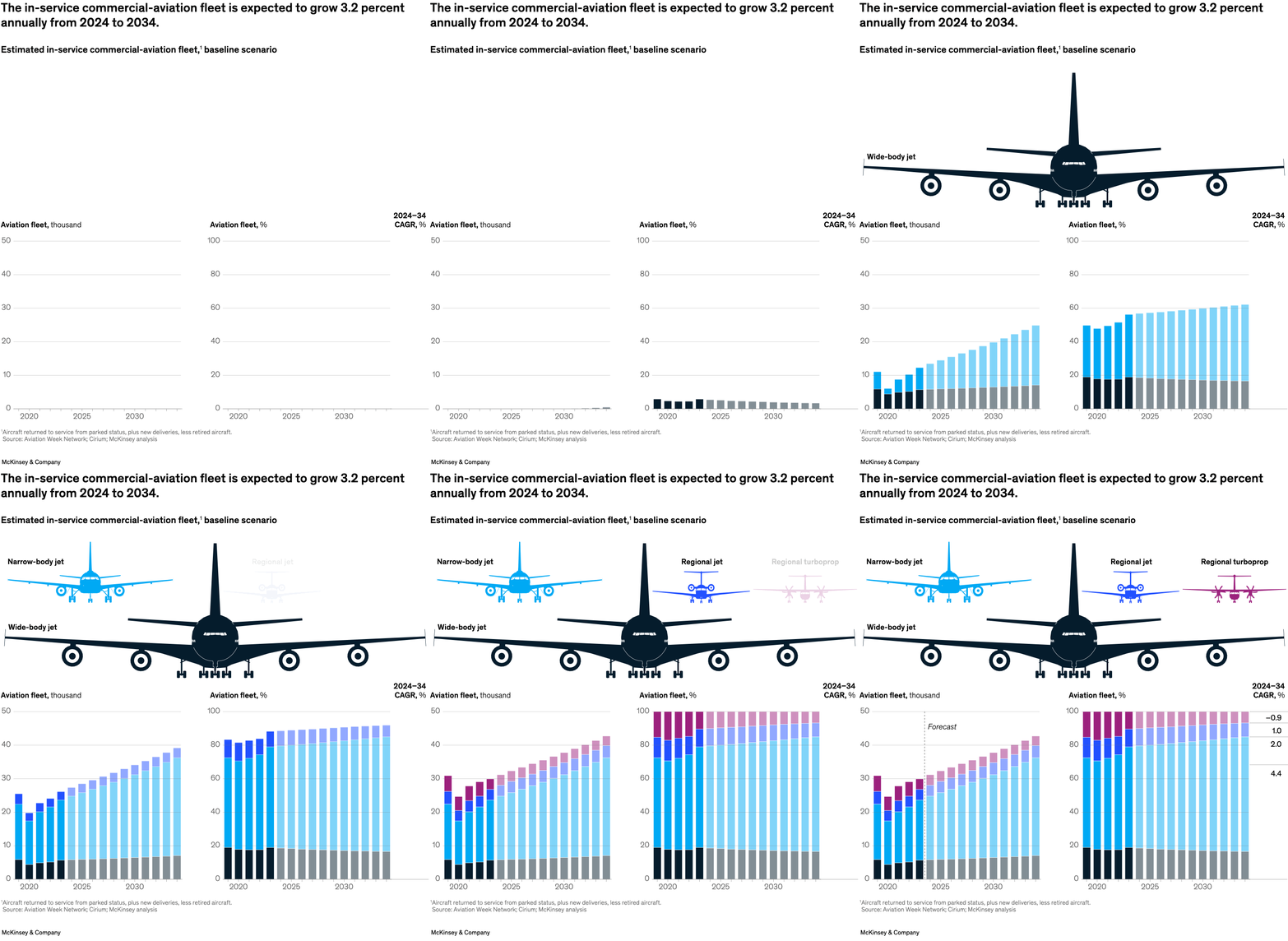
With leisure travel back to prepandemic levels, the commercial-aviation fleet is expected to grow by 3.2 percent annually to meet passenger demand. Partner Daniel Leblanc and coauthors find that narrow-body aircraft will account for nearly 70 percent of the in-service fleet by 2034 and sustain a growth rate of 4.4 percent over that period. The fleet of smaller, regional turboprop aircraft will shrink. With more aircraft in use, demand for maintenance, repair, and overhaul services is expected to grow 1.2 percent through 2034.
To read the report, see “What does the future hold for commercial-aviation maintenance?,” July 17, 2024.
customizer here
Visual form
Multi-panel stacked bar chart with aircraft-type illustration.
Layout / body structure
The chart has a visual header showing four aircraft types and a lower section with two synchronized stacked-bar panels. The lower left panel tracks fleet size in thousands with a forecast divider, and the lower right panel shows the fleet mix as percentage share, so the page is read from the aircraft categories into total fleet growth and then into the changing mix.
What is being compared
It compares the in-service commercial-aviation fleet over time by aircraft type, showing both how the total fleet grows and how narrow-body jets, wide-body jets, regional jets, and regional turboprops contribute to the overall mix.
Measurement system
The left chart uses thousands of aircraft, while the right chart uses percentage share and includes CAGR figures for 2024 – 34 on the far right. Color distinguishes the four aircraft families across both panels.
Visible structure inside the graphic
Each year is a stacked bar in both panels, with the forecast line marking the move from recent history into the projected period. The aircraft silhouettes at the top tie the colors and labels to the categories that appear in the stacked columns below.
Main takeaway from the visual
The visual shows steady fleet expansion led by narrow-body jets rather than a balanced rise across every aircraft type. The left panel climbs through the forecast period, and the right panel shows narrow bodies holding the dominant share while wide bodies edge down and regional fleets grow more modestly.
Key standout values or extremes
The headline CAGR for the full fleet is 3.2 percent from 2024 to 2034. On the right, the category growth rates show narrow-body jets growing fastest at 4.4 percent, regional jets at 2.0 percent, regional turboprops at 1.0 percent, and wide-body jets declining slightly at -0.9 percent.
Controls / sequence, when applicable
This is a static chart image with no in-chart controls to operate.
Companion media, when applicable
There is no separate companion audio or video; the chart image is the full visual on this page.