Source page: McKinsey & Company
Commentary
Seeking wafer makers
Semiconductors | Talent
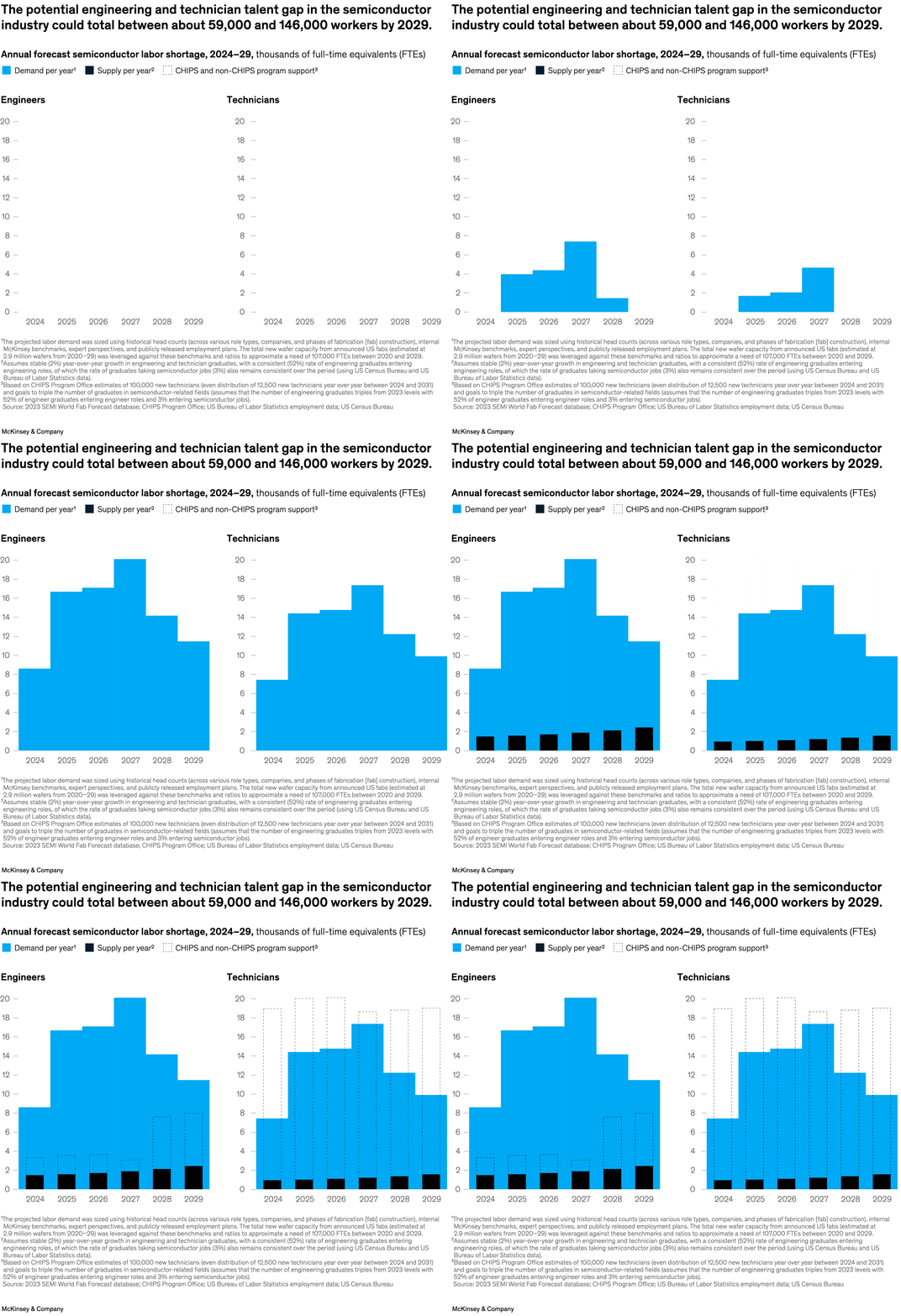
September 18, 2024 – US semiconductor manufacturers need a few good workers. The industry is facing a projected labor shortage, as the demand for engineers and technicians is outpacing supply. Senior partner Bill Wiseman and colleagues find that by 2029, the industry could face a talent gap of between 59,000 and 146,000 workers. If the CHIPS Act can meet its targets, technician shortages may be mitigated. But demand for engineers will likely worsen unless planned workforce development programs can boost labor supply—which may take until 2028.
To read the article, see “Reimagining labor to close the expanding US semiconductor talent gap,” August 2, 2024.
customizer here
Visual form
Two-panel stacked and outlined bar chart sequence.
Layout / body structure
The chart is split into two side-by-side panels, one for engineers and one for technicians. Each panel shows annual stacks from 2024 through 2029, with solid bars for demand and supply and a dashed outlined extension for the added support implied by CHIPS and non-CHIPS program assumptions.
What is being compared
It compares annual semiconductor labor demand and supply for engineers and technicians, showing how the potential talent gap evolves across the rest of the decade under different support assumptions.
Measurement system
The reader tracks thousands of full-time equivalents. Light blue represents annual demand, dark blue represents annual supply, and the dashed outline indicates the extra program-support layer that could narrow but not eliminate the shortage.
Visible structure inside the graphic
Each year contains a small dark supply block at the base and a much taller light demand block above it, while the later years add dashed boxes rising beyond the filled bars. The same design is repeated for engineers and technicians so the two shortage profiles can be compared directly.
Main takeaway from the visual
The chart shows demand towering over supply in both occupational groups, with technicians facing the larger visible gap across most of the period. Even with the dashed program-support additions, the charts still leave a substantial portion of demand unmet by the end of the decade.
Key standout values or extremes
The headline range puts the combined potential gap between about 59,000 and 146,000 workers by 2029. Engineer demand rises to roughly 20 thousand FTEs around 2027 before easing, while technician demand peaks around 17 to 18 thousand, with supply in both panels staying near the low single-digit thousands.
Controls / sequence, when applicable
This is a static chart image with no in-chart controls to operate.
Companion media, when applicable
There is no separate companion audio or video; the chart image is the full visual on this page.