Source page: McKinsey & Company
Commentary
Retail and hospitality’s workforce woes
Retail | Workplace | Hospitality
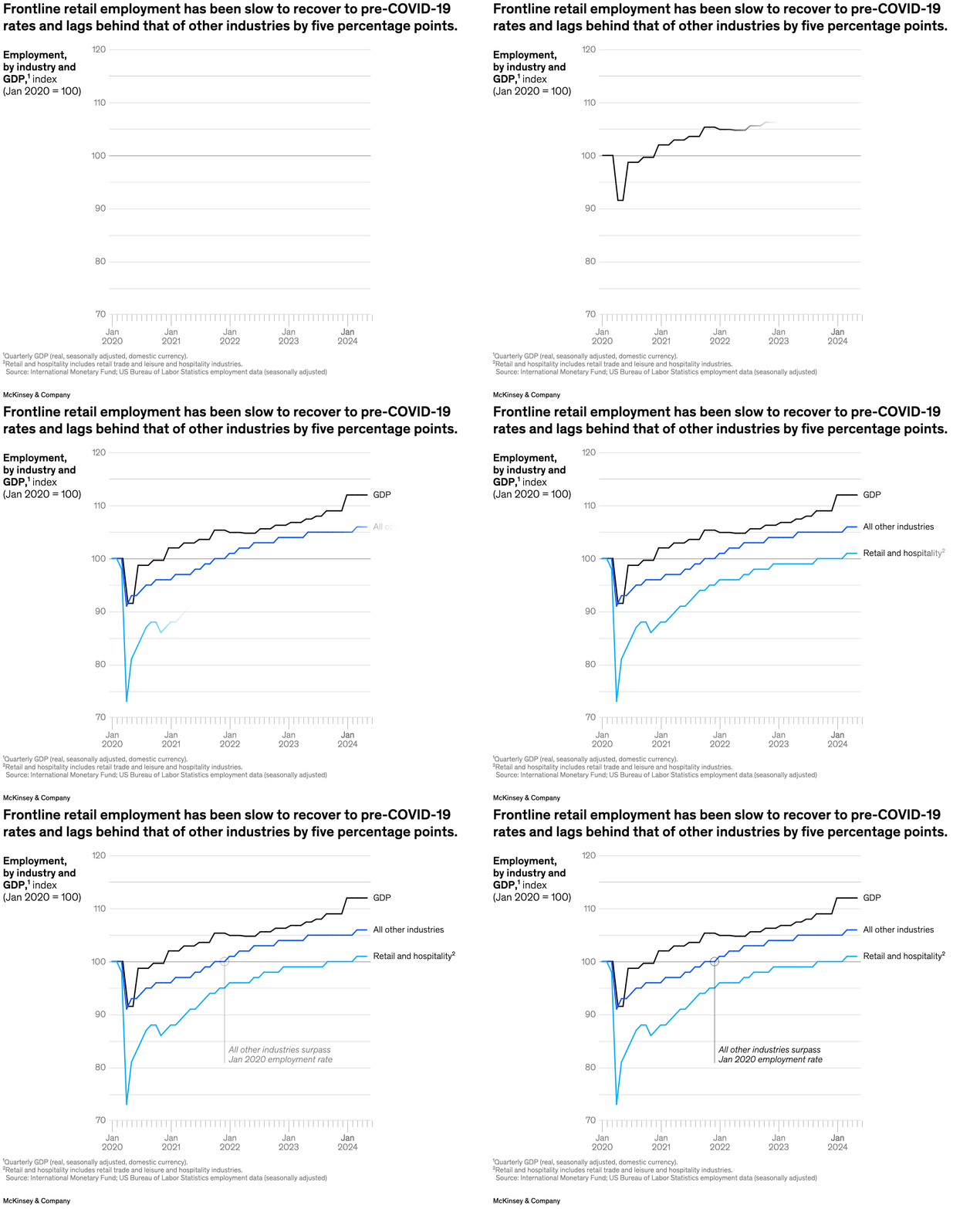
September 5, 2024 – The US retail and hospitality workforce is still dealing with the aftershocks of the COVID-19 pandemic. For example, employment in all other industries recovered to January 2020 levels by November 2021. However, it wasn’t until September 2023 when the retail and hospitality labor force came back to its prepandemic status, say partner David Fuller and coauthors. And employment is still lagging behind other industries. Retailers’ employee value propositions are not meeting workers’ needs, which is likely contributing to the lack of workforce growth in the sector.
To read the article, see “How retailers can build and retain a strong frontline workforce in 2024,” July 17, 2024.
customizer here
Visual form
Multi-series line chart.
Layout / body structure
The page uses one wide time-series chart read left to right from January 2020 to January 2024, with the legend on the right edge and an annotation dropped into the middle of the plot to mark the recovery crossover.
What is being compared
It compares GDP, employment in all other industries, and employment in retail and hospitality over the same post-2020 recovery window.
Measurement system
All three lines are indexed to January 2020 = 100, so the chart is showing relative recovery levels rather than raw jobs or dollar totals, with monthly or near-monthly time marks along the horizontal axis.
Visible structure inside the graphic
A black line tracks GDP, a darker blue line tracks all other industries, and a lighter blue line tracks retail and hospitality; the light-blue line plunges the furthest early on, then climbs back slowly, while a vertical callout marks the point where all other industries move back above the 100 index line.
Main takeaway from the visual
Retail and hospitality never catches up with the broader recovery: GDP moves highest, the rest of the economy regains and exceeds its January 2020 level sooner, and retail and hospitality trails both all the way to the end of the period.
Key standout values or extremes
Retail and hospitality drops to the low 70s at its trough before only recovering to about 101 by January 2024, all other industries climbs to roughly 106, GDP reaches about 112, and the page headline calls out a five-percentage-point lag versus other industries.
Controls / sequence, when applicable
This is a static chart image with no in-chart controls to operate.
Companion media, when applicable
There is no separate companion audio or video; the chart image is the full visual on this page.