Source page: McKinsey & Company
Commentary
Gen AI casts a wider net
Generative AI | Artificial Intelligence | Strategy
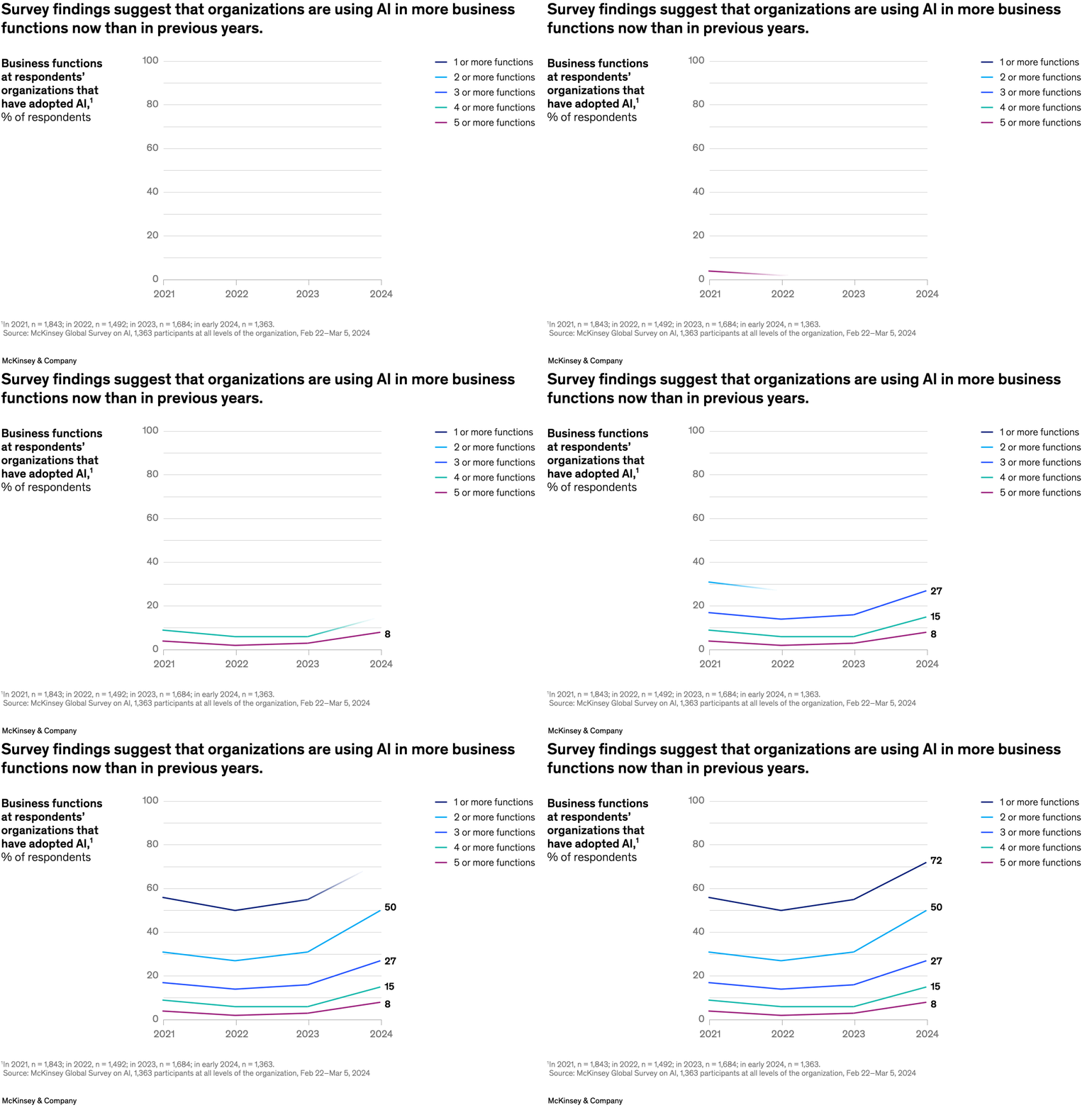
July 3, 2024 – Generative AI (gen AI) hasn’t taken long to expand into new business functions. Senior partner Alex Singla and coauthors find that the number of organizations using gen AI in one or more functions rose from 56 percent in 2021 to 72 percent in early 2024. Additionally, the number of organizations using gen AI in at least five business functions jumped from 8 percent to 15 percent during that time. The biggest increase in adoption has been in professional services, such as HR, training, and R&D, the authors report.
To read the survey, see “The state of AI in early 2024: Gen AI adoption spikes and starts to generate value,” May 30, 2024.
customizer here
Visual form
Line chart.
Layout / body structure
This is a single chart with five lines running across the same time axis from 2021 to 2024. The reading order is left to right through the survey years and then to the labeled endpoints on the right edge.
What is being compared
It compares how many business functions inside an organization are using AI, with separate series for use in one or more, two or more, three or more, four or more, and five or more functions.
Measurement system
The y-axis is the percentage of respondents, while the x-axis is survey year. Color separates the function-count thresholds, and the right-edge labels show the latest reading for each threshold.
Visible structure inside the graphic
Five lines are stacked from the broadest adoption measure at the top to the narrowest at the bottom. Each line bends upward over time and ends with a labeled value in 2024, making the spread between shallow and deep adoption easy to read.
Main takeaway from the visual
The chart shows that AI use is spreading across more parts of the business, not just becoming deeper in one area, because every threshold rises and the latest year shows the sharpest jump.
Key standout values or extremes
By 2024, the one-or-more-functions line reaches 72 percent, two-or-more reaches 50 percent, three-or-more reaches 27 percent, four-or-more reaches 15 percent, and five-or-more reaches 8 percent.
Controls / sequence, when applicable
This is a static chart image with no in-chart controls to operate.
Companion media, when applicable
There is no separate companion audio or video; the chart image is the full visual on this page.