Source page: McKinsey & Company
Commentary
Gen Z’s spiritual well-being
Mental health | Gen Z
May 23, 2024 – Gen Z’s spiritual health is suffering compared with other age groups. In a McKinsey Health Institute survey of more than 41,000 respondents across 26 countries, partner Erica Coe and coauthors find that overall, Gen Zers report more challenges with spiritual health than their non–Gen Z counterparts; for example, Gen Zers report poor spiritual health at three times the rate of baby boomers. Since spiritual health—having a sense of self-purpose and a connection to something larger than oneself—intersects with other dimensions of holistic health, insights into these aspects can lead to better resilience.
To read the article, see “In search of self and something bigger: A spiritual health exploration,” May 13, 2024.
customizer here
Visual form
Multi-panel image sequence.
Layout / body structure
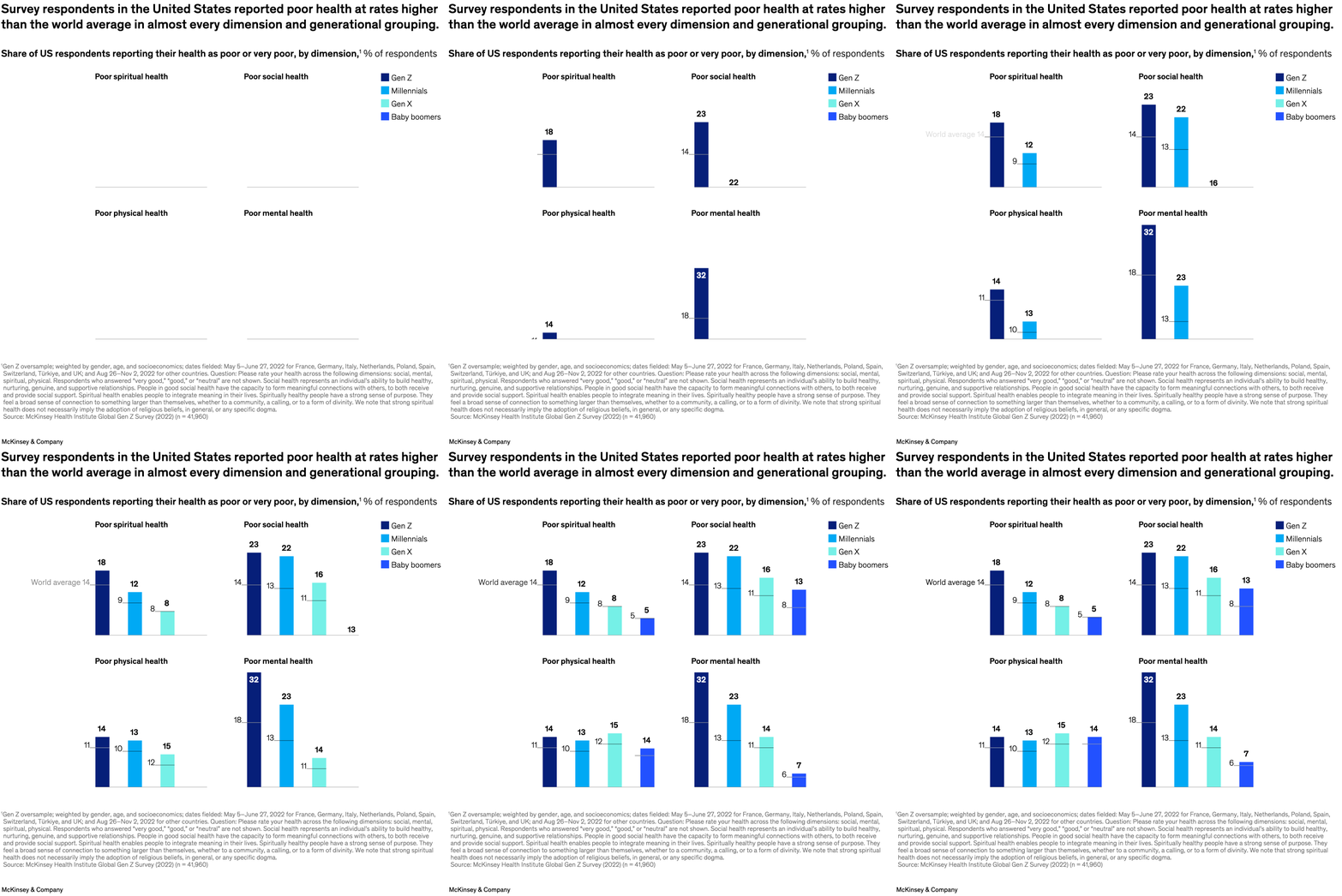
The chart is arranged as four small grouped bar charts in a grid. The reading order is panel by panel across poor spiritual health, poor social health, poor physical health, and poor mental health.
What is being compared
It compares the share of US respondents reporting poor health against the world average across four health dimensions and four generational groups: Gen Z, millennials, Gen X, and baby boomers.
Measurement system
The y-values are percentages, with one cluster of bars inside each panel. Color separates the generational cohorts, and a world-average reference is shown for each health dimension to benchmark the US reading.
Visible structure inside the graphic
Each panel contains four age-cohort bars and one world-average marker or reference label. The poor-mental-health panel has the tallest bars overall, while the other three panels show lower but still meaningful gaps among generations.
Main takeaway from the visual
The visual shows that poor health is reported at higher rates in the United States than the world average across nearly every generation and dimension, with mental health standing out as the most severe gap, especially for Gen Z.
Key standout values or extremes
In the poor-mental-health panel, Gen Z reaches 32 percent, the highest value on the page. Other panels show US readings above the world average in most age groups, while spiritual and social health remain notably elevated for younger cohorts as well.
Controls / sequence, when applicable
This is a static chart image with no in-chart controls to operate.
Companion media, when applicable
There is no separate companion audio or video; the chart image is the full visual on this page.