Source page: McKinsey & Company
Commentary
Keeping aircraft in the sky with AI
Aerospace | Artificial Intelligence
May 7, 2024 – The recent double-digit growth of commercial air travel, a global shortage of aircraft, and a backlog of deferred maintenance are causing significant personnel shortages at airline and related companies, particularly when it comes to maintenance, repair, and overhaul. And these labor shortages are expected to persist and even intensify, with one-fifth of aviation maintenance technician jobs projected to go unfilled by 2033. However, partner Christian Langer and coauthors find that generative AI could relieve some of that pressure by helping both maintenance and back-office employees do their jobs more efficiently, and by boosting the quality, consistency, and accuracy of maintenance work.
To read the article, see “The generative AI opportunity in airline maintenance,” April 8, 2024.
customizer here
Visual form
Comparison infographic.
Layout / body structure
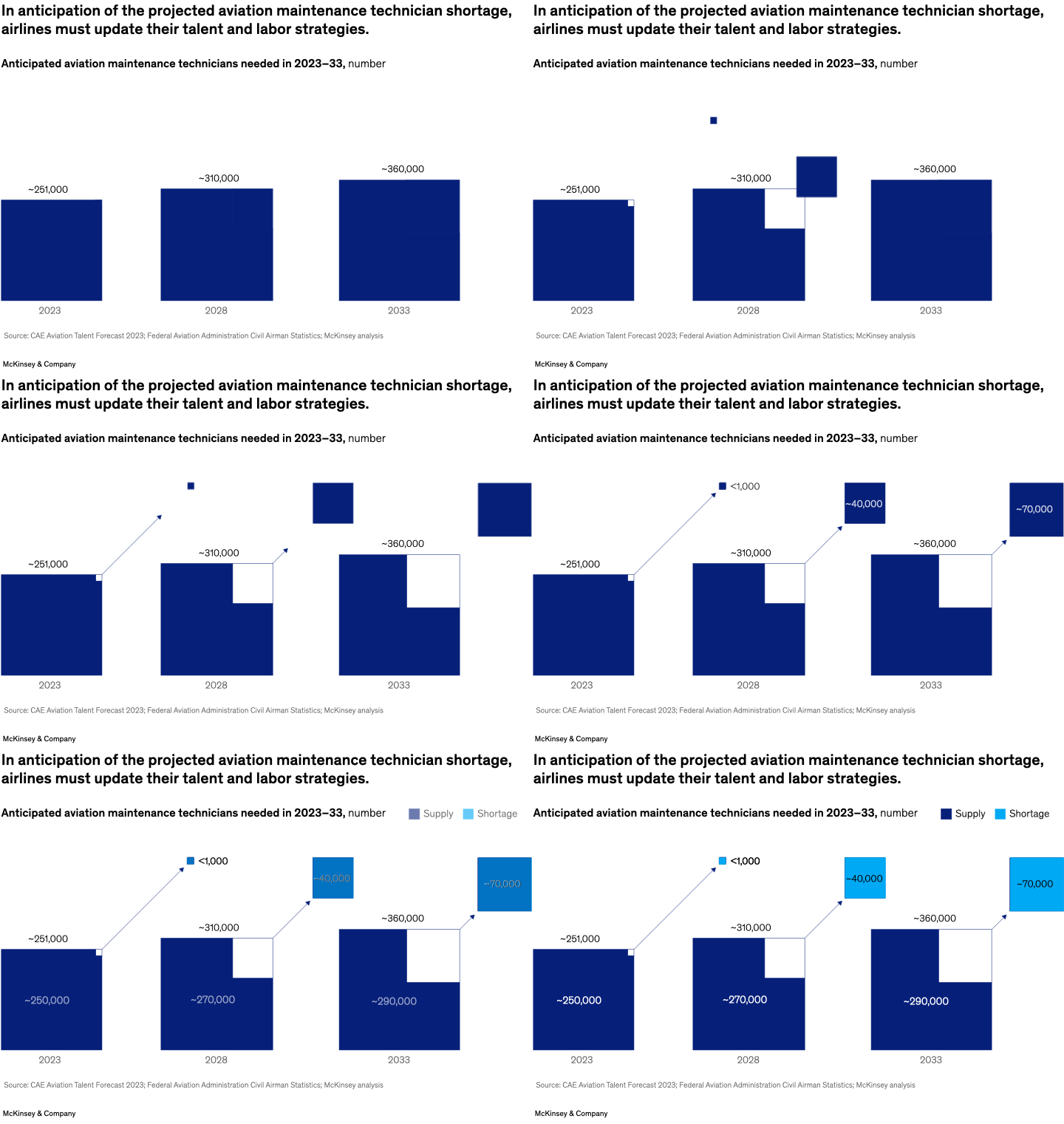
The chart is laid out as a three-step time sequence for 2023, 2028, and 2033. Read left to right through the three blocks, using the dark base for supply and the lighter top segment for the shortage.
What is being compared
It compares anticipated aviation maintenance technician supply with projected technician shortages over the next decade.
Measurement system
The values are numbers of technicians. Dark blue represents supply, light blue represents the shortfall, and the labels beside each block quantify the gap at each point in time.
Visible structure inside the graphic
Each year is shown as a stacked rectangular block with the shortage sitting above the available supply. Connector lines step upward from one year to the next, making the widening shortfall more visually dramatic.
Main takeaway from the visual
The visual shows that technician shortages deepen materially over time even as the available workforce remains large, meaning the gap grows because future need rises faster than supply.
Key standout values or extremes
The shortage is shown at about 25,000 in 2023, about 40,000 in 2028, and about 70,000 in 2033. The supply blocks remain around 250,000 to 290,000 technicians, so the widening gap is driven by demand outpacing labor availability.
Controls / sequence, when applicable
This is a static chart image with no in-chart controls to operate.
Companion media, when applicable
There is no separate companion audio or video; the chart image is the full visual on this page.