Source page: McKinsey & Company
Commentary
The future of food?
Consumer | Food | Sustainability
April 18, 2024 – Labels that use recognizable language and easily understood claims about health impacts are the most compelling for enticing people to try a food product with novel ingredients. Senior partner Roberto Uchoa and colleagues find that vegetarian and vegan terminology, despite being widely recognized, don’t sway consumers’ decisions as much, while production details aren’t well understood or influential. Understanding consumer perceptions can help companies guide the emerging market for novel ingredients and proteins—and could contribute to forging a more sustainable and robust food system.
To read the article, see “Novel proteins: Consumer appetite for sustainably made ingredients,” March 21, 2024.
customizer here
Visual form
Scatter plot.
Layout / body structure
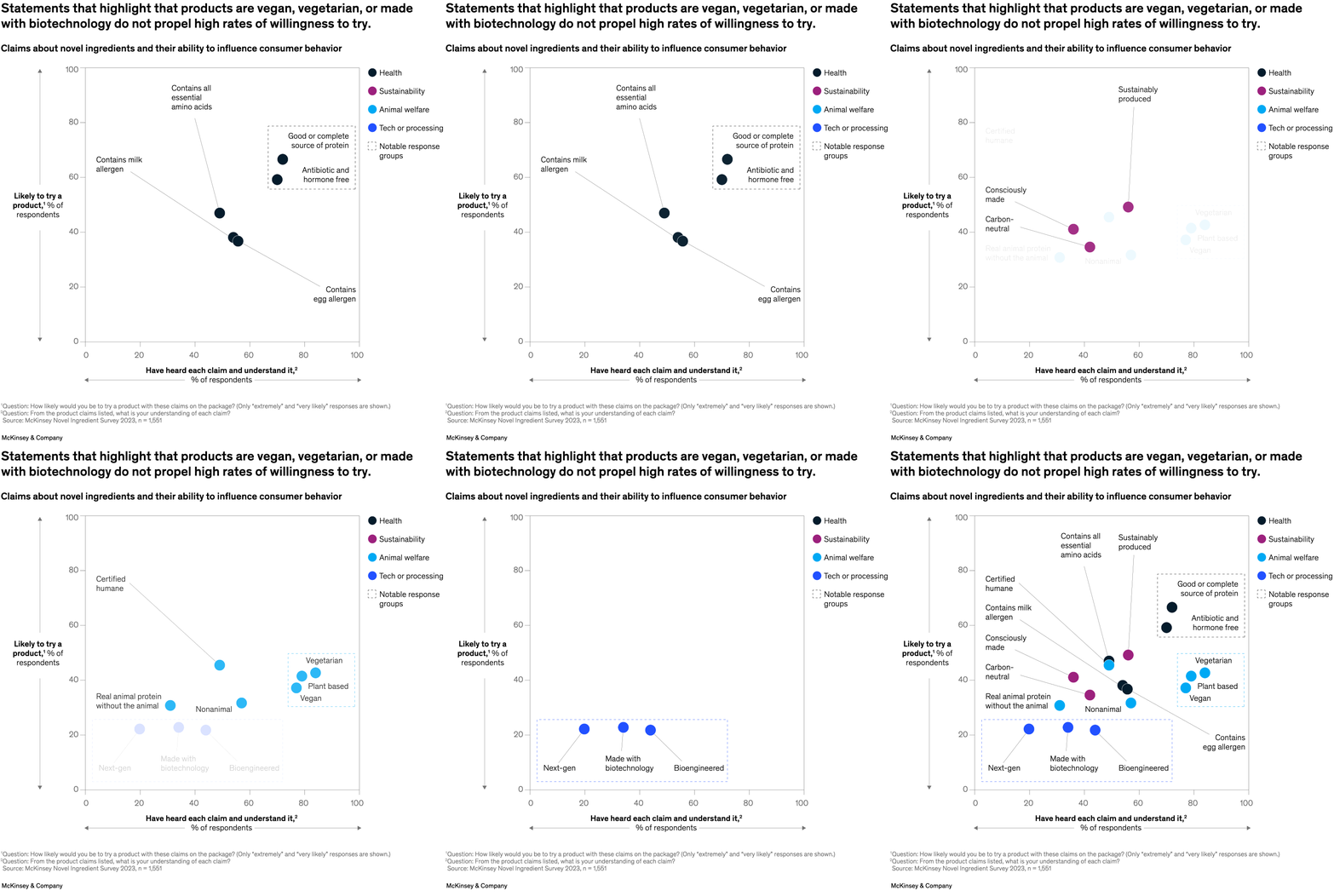
The page uses a single two-axis scatter plot with product claims distributed across the field and reference arrows explaining the axes. The reading order is across the understanding axis first and then up the willingness-to-try axis.
What is being compared
It compares food-product claims and ingredient statements by how well consumers understand them and how willing they are to try products carrying those claims.
Measurement system
Both axes are percentages of respondents. The horizontal axis shows share of respondents who have heard each claim and understand it, while the vertical axis shows the share likely to try a product featuring that claim. Color separates claim families such as health, sustainability, animal welfare, and technology or processing-related claims.
Visible structure inside the graphic
Each claim is plotted as a labeled dot, with arrows and guide text pointing to regions of stronger understanding and stronger trial interest. Claims such as healthy, vegetarian, plant-based, and vegan sit farther to the right, while biotech- or process-oriented claims sit lower or farther left.
Main takeaway from the visual
The scatter shows that familiar consumer-facing labels perform better than technical or biotechnology language, so claims about vegan, vegetarian, or biotech status do not by themselves drive especially high willingness to try.
Key standout values or extremes
Healthy and sustainability-related claims cluster in the upper-right half of the plot, while labels such as contains milk protein or contains egg allergen sit far lower on trial interest. Vegan and plant-based appear relatively well understood, but their willingness-to-try values remain only moderate rather than dominant.
Controls / sequence, when applicable
This is a static chart image with no in-chart controls to operate.
Companion media, when applicable
There is no separate companion audio or video; the chart image is the full visual on this page.