Source page: McKinsey & Company
Commentary
The true gen AI talent pool
Artificial Intelligence | Workplace
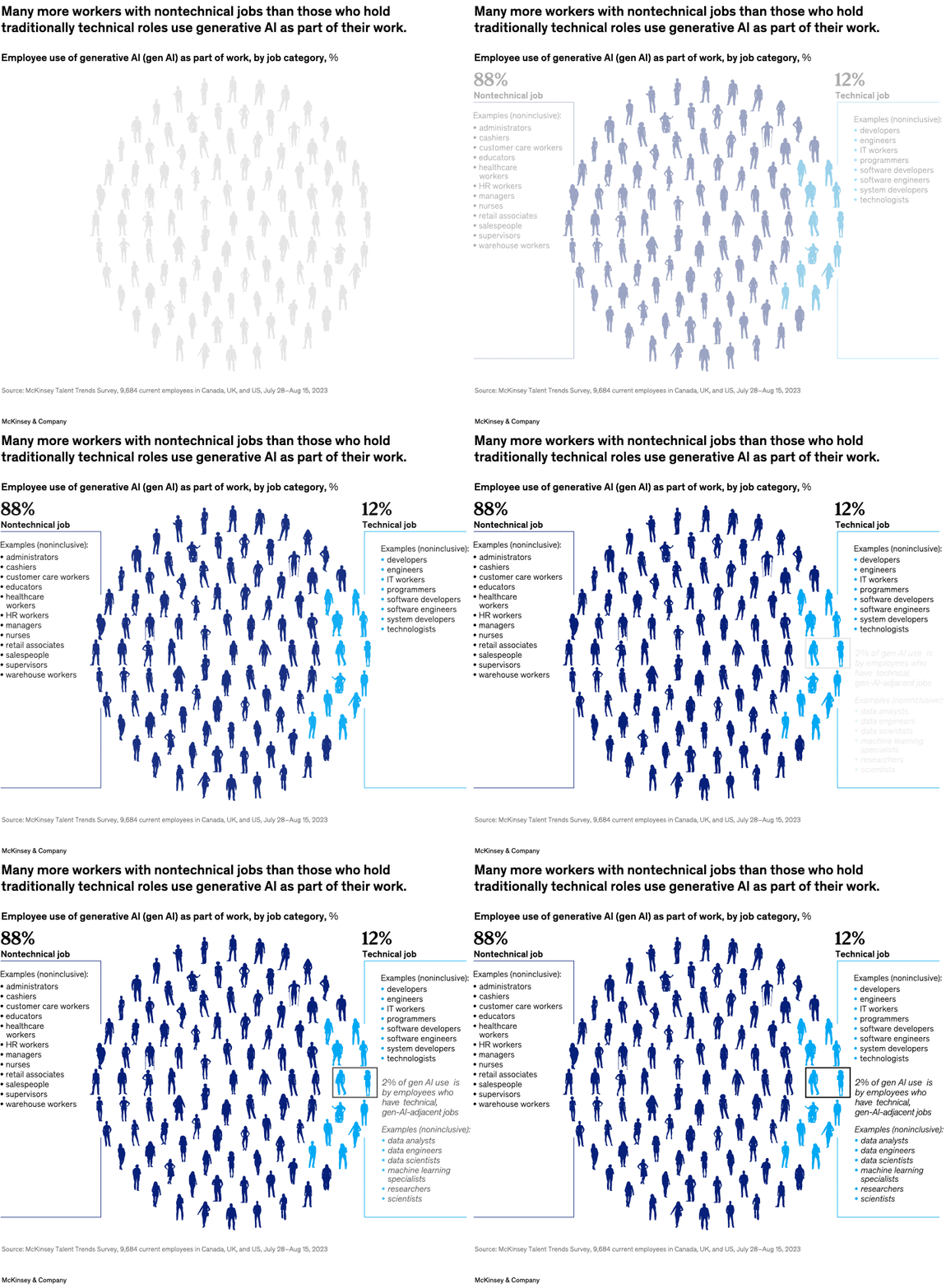
April 17, 2024 – The pool of generative AI (gen AI) talent within organizations is likely bigger than expected, note senior partner Aaron De Smet and coauthors. As many as 88 percent of respondents in our survey who were already using gen AI, often for repetitive tasks, had nontechnical jobs. And of the remaining 12 percent of gen AI users who had tech-heavy roles, only 2 percent worked in gen AI–adjacent jobs. Organizations that better understand how their employees are harnessing gen AI will be able to more appropriately link up talent to jobs.
To read the article, see “The human side of generative AI: Creating a path to productivity,” March 18, 2024.
customizer here
Visual form
Comparison infographic.
Layout / body structure
The page is built around a large field of worker icons with a highlighted technical subgroup on the right. The reading order starts with the large nontechnical majority on the left and center and then moves to the smaller technical cluster on the right-side bracket.
What is being compared
It compares use of generative AI at work by job category, separating nontechnical jobs from traditionally technical roles.
Measurement system
The values are percentages of workers using generative AI in each category. Large headline percentages identify the two groups, and the icon field visually reinforces the much larger nontechnical user pool.
Visible structure inside the graphic
A dense pyramid-like arrangement of dark worker icons fills most of the chart, while a smaller highlighted group of lighter icons is boxed on the right. Side lists name example nontechnical jobs and technical jobs to show which kinds of roles sit in each bucket.
Main takeaway from the visual
The graphic shows that the effective gen-AI workforce is much broader than the classic technical-talent pool because many more users come from nontechnical occupations than from the smaller technical cohort.
Key standout values or extremes
The nontechnical category is labeled at 88 percent, while the technical category is labeled at 12 percent. The icon field mirrors that split by giving the nontechnical side a much larger share of the visual space.
Controls / sequence, when applicable
This is a static chart image with no in-chart controls to operate.
Companion media, when applicable
There is no separate companion audio or video; the chart image is the full visual on this page.