Source page: McKinsey & Company
Commentary
Advancing health at the city level
Cities | Healthcare
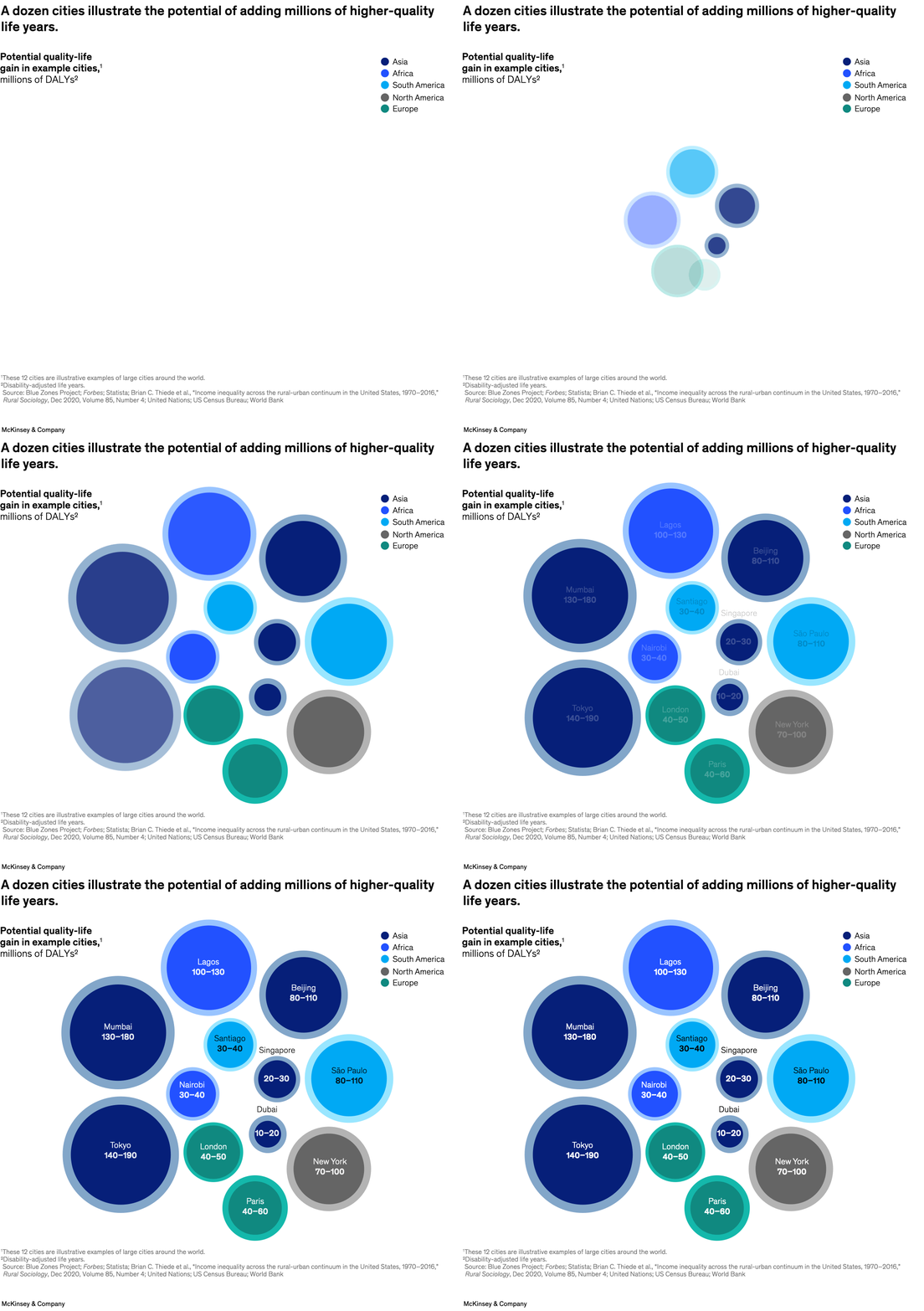
March 12, 2024 – With the number of people living in cities expected to increase to 70 percent of the global population by 2050, addressing large disparities in health outcomes in urban areas has significant potential to improve lives and livelihoods. Senior partner Hemant Ahlawat and colleagues estimate that improving health interventions can unlock 20 billion to 25 billion additional years of higher-quality life across cities globally (approximately five years per person living in urban areas). For individual cities, this could amount to anywhere from 10 million to 190 million higher-quality life years for their residents.
To read the article, see “How to achieve great health for all? Start in your city,” February 9, 2024.
customizer here
Visual form
Bubble chart.
Layout / body structure
This is a single bubble map-style layout with city circles scattered across the page and a legend on the right. The reading order moves through the labeled city bubbles by size and then to the region legend.
What is being compared
It compares the potential quality-life gain that cities could unlock, measured in millions of DALYs, across a sample of cities around the world.
Measurement system
Bubble size represents potential quality-life gain in millions of DALYs, and color groups the cities by region. The value range is printed inside or beside each city bubble as a labeled band.
Visible structure inside the graphic
Large and small circles are clustered together in one field, each labeled with a city name and a DALY range. The biggest bubbles sit toward the left and upper portions of the chart, while smaller city bubbles fill in around them.
Main takeaway from the visual
The chart shows that cities differ widely in how much higher-quality life they could add, with some large urban centers offering very large potential gains and others still offering meaningful but smaller improvements.
Key standout values or extremes
Mumbai is labeled at 130 to 180 million DALYs, Tokyo at 140 to 190, Lagos at 100 to 130, and Beijing and São Paulo both at 80 to 110. Smaller bubbles such as Dubai and Singapore sit in much lower ranges by comparison.
Controls / sequence, when applicable
This is a static chart image with no in-chart controls to operate.
Companion media, when applicable
There is no separate companion audio or video; the chart image is the full visual on this page.