Source page: McKinsey & Company
Commentary
Healthier women, healthier economies
Economy | Women's health
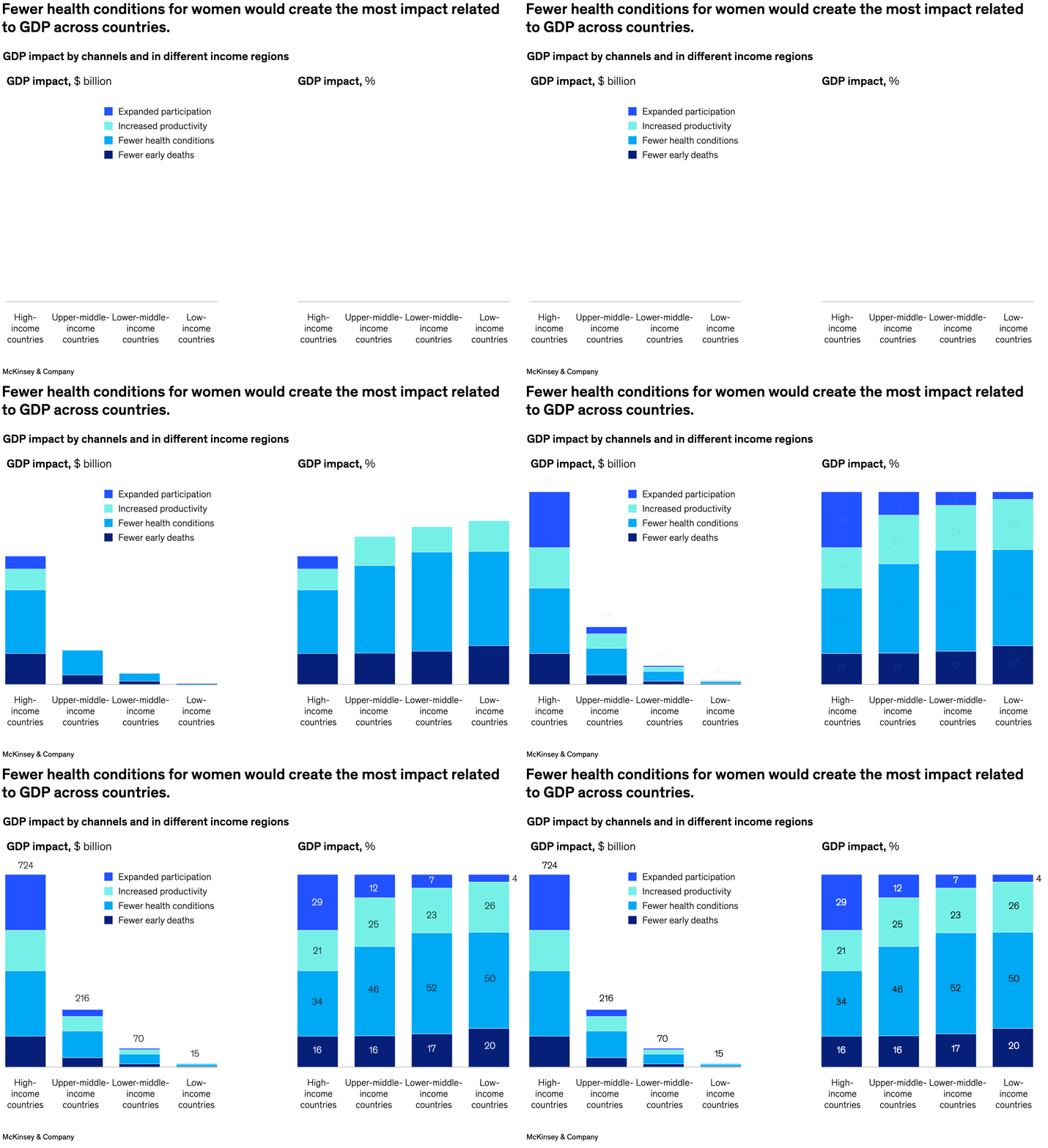
March 8, 2024 – GDP in many countries could get a boost if women’s health conditions in those regions were better addressed. Senior partner Lucy Pérez and colleagues observe that especially in low-income economies, most of the potential GDP impact is the result of fewer early deaths and fewer health conditions among women. Progress on women’s health not only improves their quality of life but can allow them to more actively participate in the workforce. Every $1 invested in women’s health is projected to yield approximately $3 in economic growth.
To read the report, see “Closing the women’s health gap: A $1 trillion opportunity to improve lives and economies,” January 17, 2024.
customizer here
Visual form
Two stacked bar charts.
Layout / body structure
The chart is laid out as a left-right pair, with dollar impact on the left and percentage mix on the right, and a shared legend between the two plots.
What is being compared
It compares GDP impact across high-income, upper-middle-income, lower-middle-income, and low-income countries and splits each income group across expanded participation, increased productivity, fewer health conditions, and fewer early deaths.
Measurement system
The left chart is measured in billions of dollars and the right chart in percentages, with each stack segment labeled so the reader can track both absolute size and mix.
Visible structure inside the graphic
The left side uses four vertical stacks with totals above them, while the right side repeats the same four groups as percentage stacks with in-bar numbers for each channel.
Main takeaway from the visual
The biggest absolute GDP gain sits in high-income countries, but across the income ladder the largest visible slice of the mix comes from reducing health conditions, especially outside the top-income group.
Key standout values or extremes
The dollar totals are 724, 216, 70, and 15 from high-income to low-income countries, while the fewer-health-conditions segment accounts for 34, 46, 52, and 50 percent across those same groups.
Controls / sequence, when applicable
This is a static chart image with no in-chart controls to operate.
Companion media, when applicable
There is no separate companion audio or video; the chart image is the full visual on this page.