Source page: McKinsey & Company
Commentary
A $1 trillion boost from better health
Healthcare | Women's health
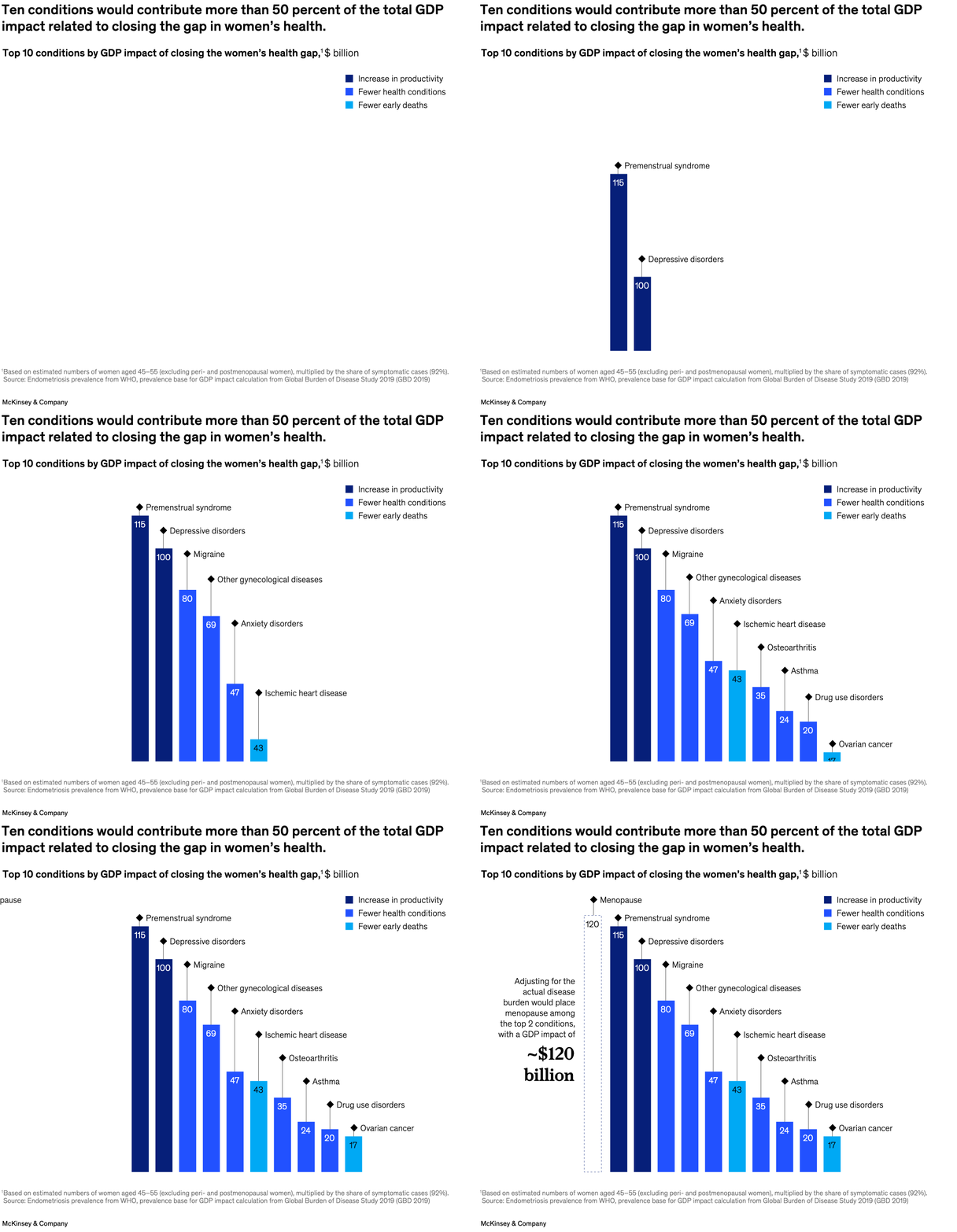
February 28, 2024 – Global life expectancy has increased, from 30 years in 1800 to 73 years in 2018. Yet, as senior partner Kweilin Ellingrud and colleagues show, that’s not the whole picture. Women spend nine years—25 percent more time than men—in poor health, which reduces their productivity and earning potential. Closing this health gap would improve quality of life for women but could also add $1 trillion to the global economy. Effective treatment of just ten conditions could account for more than 50 percent of that economic impact. Better treatment of premenstrual syndrome and menopause combined, for example, could add about $235 billion to global GDP.
To read the report, see “Closing the women’s health gap: A $1 trillion opportunity to improve lives and economies,” January 17, 2024.
customizer here
Visual form
Ranked bar chart.
Layout / body structure
A single descending chart runs across the page, with a large annotation about menopause on the left, the ordered bars in the center, and the category legend on the right.
What is being compared
It compares the top ten conditions by GDP impact from closing the women’s health gap and shows which conditions contribute the biggest share of the economic upside.
Measurement system
The bars are measured in billions of dollars, and color distinguishes impact through increased productivity, fewer health conditions, and fewer early deaths.
Visible structure inside the graphic
Each bar is labeled with a condition name and value, the bars descend from largest to smallest, and a dashed reference bracket on the left adds the adjusted menopause estimate into the ranking.
Main takeaway from the visual
A relatively small set of conditions accounts for a large share of the total GDP opportunity, with menopause and premenstrual syndrome sitting at the top of the ranking.
Key standout values or extremes
The menopause annotation is about $120 billion, premenstrual syndrome is 115, depressive disorders 100, migraine 80, other gynecological diseases 69, and ovarian cancer 17 at the bottom of the top-ten list.
Controls / sequence, when applicable
This is a static chart image with no in-chart controls to operate.
Companion media, when applicable
There is no separate companion audio or video; the chart image is the full visual on this page.