Source page: McKinsey & Company
Commentary
An outlook on oil
Oil & Gas
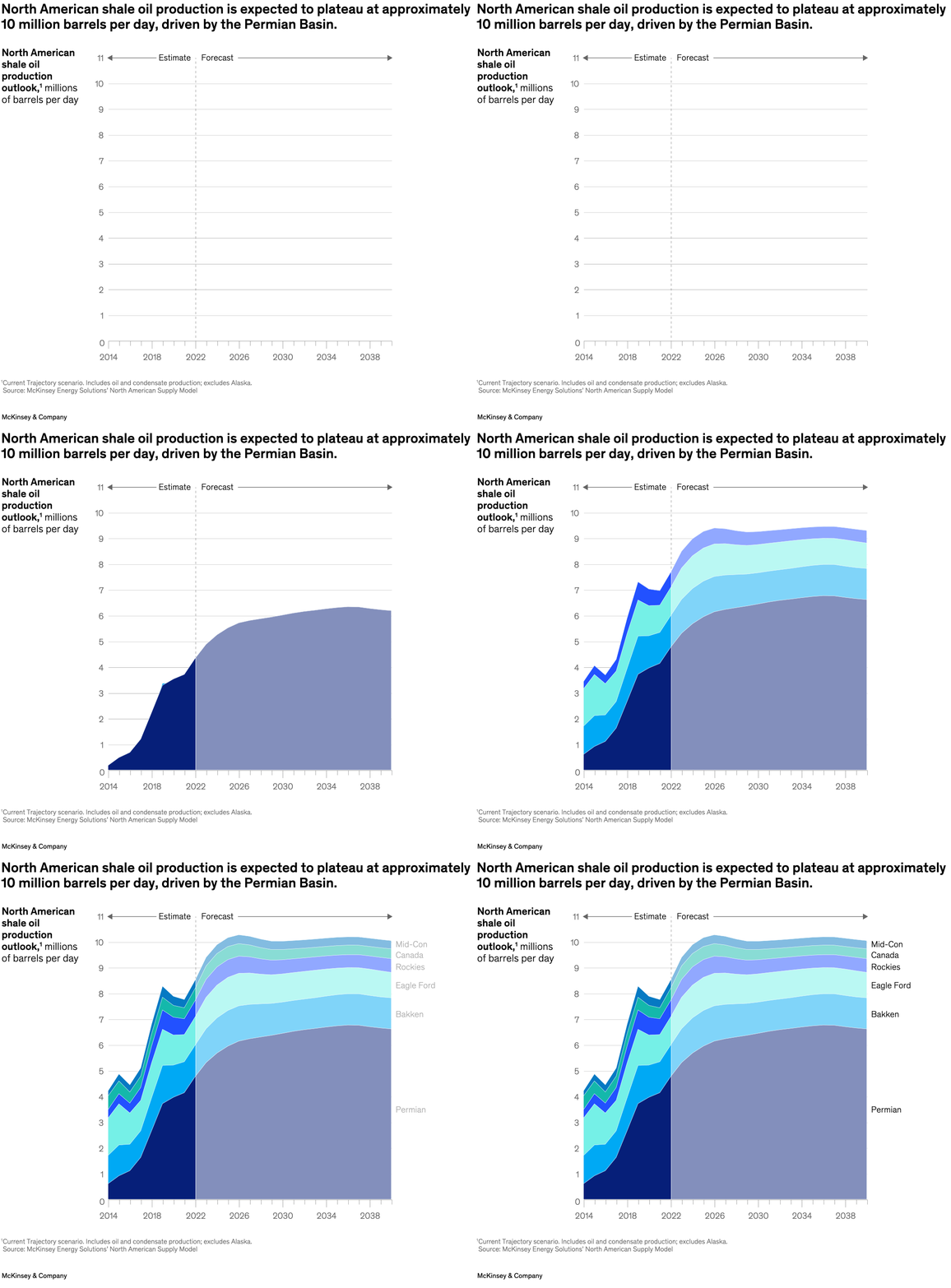
February 20, 2024 – Oil demand growth has started to show signs of slowing, and demand could fall by up to 50 percent by 2050. However, investment in a broad energy mix, including oil and gas, could continue for a period to shore up security of supply and meet demand, particularly from end-use sectors such as chemicals, aviation, and heavy trucking. Consider North American shale oil production, which, according to senior partner Micah Smith and coauthors, could plateau in the mid-2020s at about ten million barrels per day and remain stable through 2040.
To read the article, see “Global Energy Perspective 2023: Oil outlook,” January 24, 2024.
customizer here
Visual form
Stacked area chart.
Layout / body structure
A single continuous time-series chart runs from 2014 into the late 2030s, with a dashed divider marking where the chart shifts from estimate to forecast.
What is being compared
It compares North American shale oil production across the Permian, Bakken, Eagle Ford, Rockies, Canada, and Mid-Con basins over time.
Measurement system
The vertical axis measures millions of barrels per day, and the horizontal axis tracks years from the mid-2010s into the forecast period.
Visible structure inside the graphic
The total is built from layered basin bands, each basin is labeled at the right edge of the chart, and the estimate-versus-forecast split is marked near 2022.
Main takeaway from the visual
Total shale production rises sharply and then flattens near the 10-million-barrels-per-day level, with the Permian Basin forming by far the largest visible layer in the stack.
Key standout values or extremes
The stacked total climbs from below 5 million barrels per day in the mid-2010s to about 10 by the mid-2020s and then stays close to that plateau through the forecast horizon.
Controls / sequence, when applicable
This is a static chart image with no in-chart controls to operate.
Companion media, when applicable
There is no separate companion audio or video; the chart image is the full visual on this page.