Source page: McKinsey & Company
Commentary
Job skills of the future
Artificial Intelligence | Diversity & Inclusion | North America
January 29, 2024 – One of the most pressing questions about generative AI (gen AI) is how it will reshape the workforce—with the risks of job displacement potentially more pronounced for workers of color. Black Americans, for example, are overrepresented in roles most likely to be taken over by automation. According to senior partner Mark McMillan and colleagues, leaning in to “future-proof skills”—such as socioemotional understanding and comfort with ambiguity—could help Black workers remain resilient amid the rapid changes that gen AI will bring.
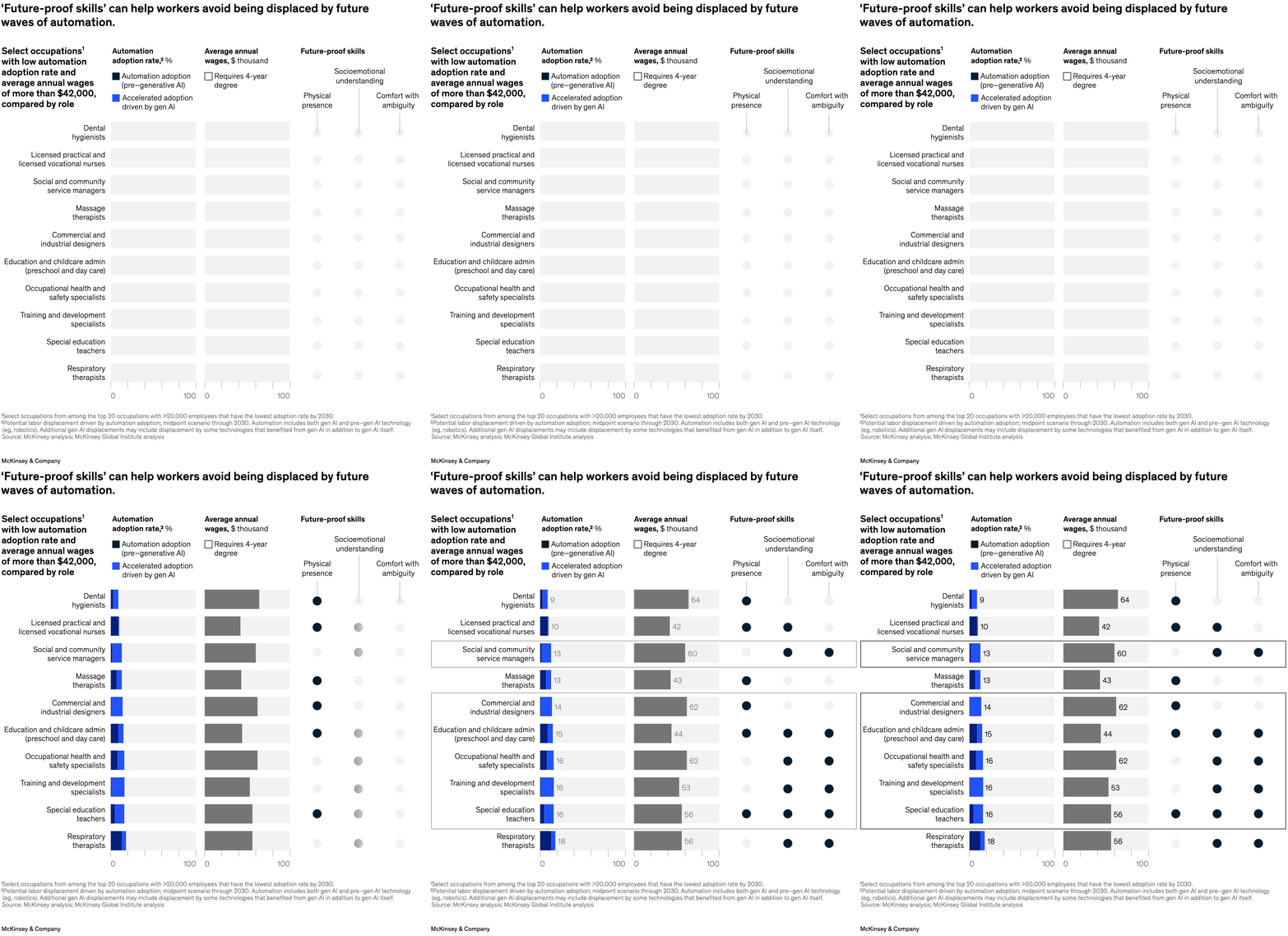
To read the article, see “The impact of generative AI on Black communities,” December 19, 2023.
customizer here
Visual form
Occupational matrix with automation bars, wage bars, and skill indicators.
Layout / body structure
Occupations are listed by row, with automation-adoption bars and wage bars in the middle columns and a future-proof-skills dot matrix on the right.
What is being compared
It compares selected occupations that combine relatively low automation adoption with wages above $42,000 and shows which future-proof skill traits those roles require.
Measurement system
The left bars show automation adoption rate in percent, the middle bars show average annual wages in thousands of dollars, and the rightmost columns mark the presence of physical-presence, socioemotional-understanding, and comfort-with-ambiguity skills.
Visible structure inside the graphic
Each row contains a dark and light automation bar, a gray wage bar with the value printed at the end, and one dot under each future-proof-skill column; some groups of occupations are boxed together for emphasis.
Main takeaway from the visual
The roles that look more resilient are the ones that pair relatively low automation exposure with strong human or judgment-heavy skill requirements rather than routine-only work.
Key standout values or extremes
Dental hygienists show an automation adoption rate of 9 with wages of 64, licensed practical and vocational nurses 10 with wages of 42, social and community service managers 13 with wages of 60, special education teachers 16 with wages of 56, and respiratory therapists 18 with wages of 56.
Controls / sequence, when applicable
This is a static chart image with no in-chart controls to operate.
Companion media, when applicable
There is no separate companion audio or video; the chart image is the full visual on this page.