Source page: McKinsey & Company
Commentary
Big things come in recyclable packages
Retail | Sustainability | Consumer
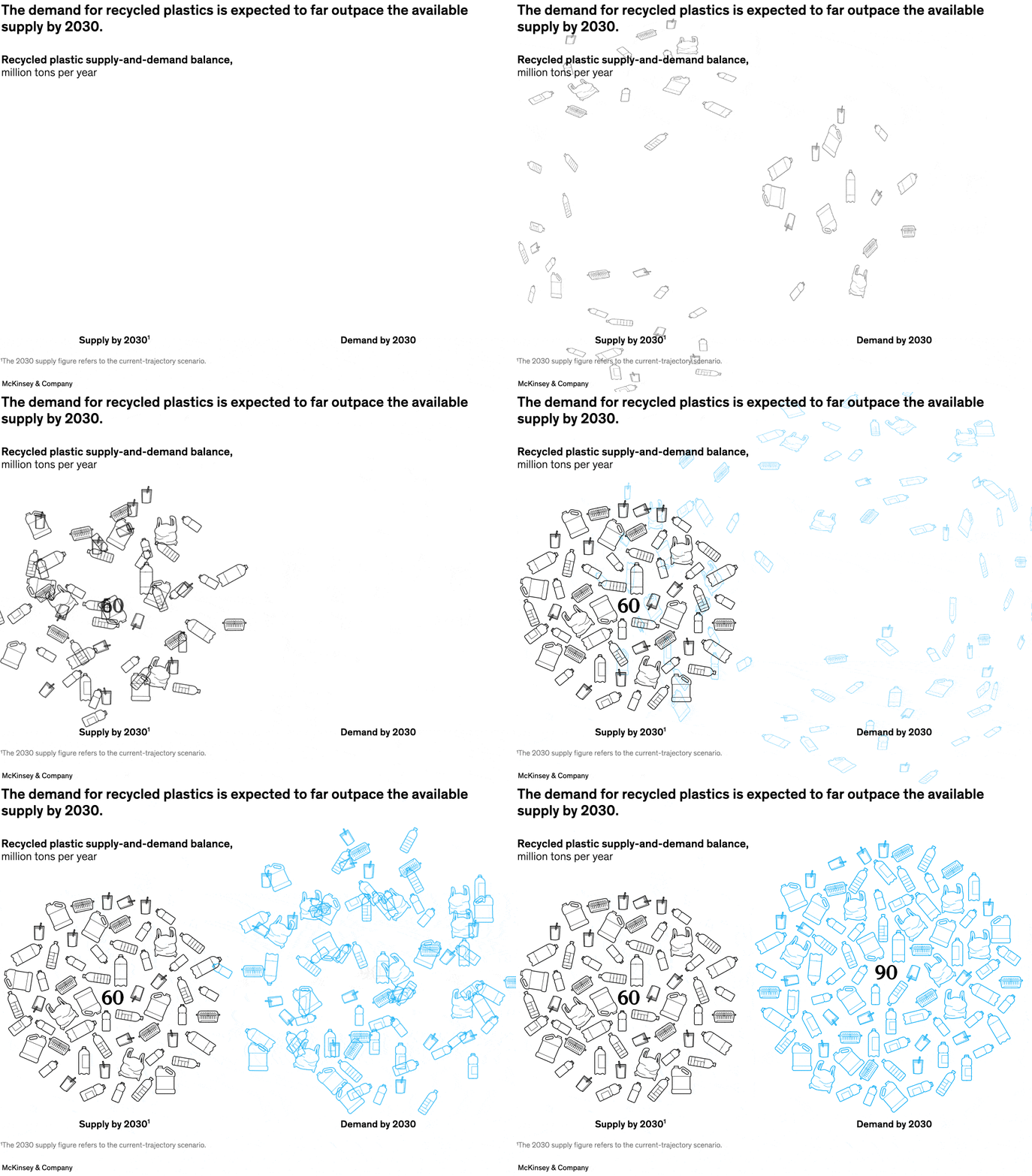
January 24, 2024 – Many retailers vow to reach ambitious sustainability goals by making more of their packaging recyclable; the boldest players aim to increase the share of such material in their products to 50 percent by 2030. That could prove challenging, note senior partner Daniel Rexhausen and colleagues. The demand for postconsumer recycled plastic packaging is expected to increase threefold by 2030 while the supply of these materials is only expected to double.
To read the article, see “Reimagine, reuse, recycle: How to reach sustainable packaging targets in retail,” December 14, 2023.
customizer here
Visual form
Pictorial supply-demand comparison chart.
Layout / body structure
The chart uses two large clusters of package icons side by side, with supply on the left and demand on the right, so the reader compares the two circles directly.
What is being compared
It compares projected recycled plastic supply and projected recycled plastic demand by 2030.
Measurement system
The values are measured in million tons per year, with the totals printed in the middle of each package cluster.
Visible structure inside the graphic
Each side is built from dozens of packaging silhouettes rather than conventional bars, which turns the comparison into two differently sized icon clouds anchored by the numbers at their centers.
Main takeaway from the visual
Demand visibly exceeds supply, so the chart makes the future shortage obvious even before reading the labels.
Key standout values or extremes
Supply is shown at 60 million tons by 2030, while demand reaches 90 million tons by 2030.
Controls / sequence, when applicable
This is a static chart image with no in-chart controls to operate.
Companion media, when applicable
There is no separate companion audio or video; the chart image is the full visual on this page.