Source page: McKinsey & Company
Commentary
A prescription for supply chain challenges
Healthcare | Pharmaceuticals & Medical Products | Supply Chain Management
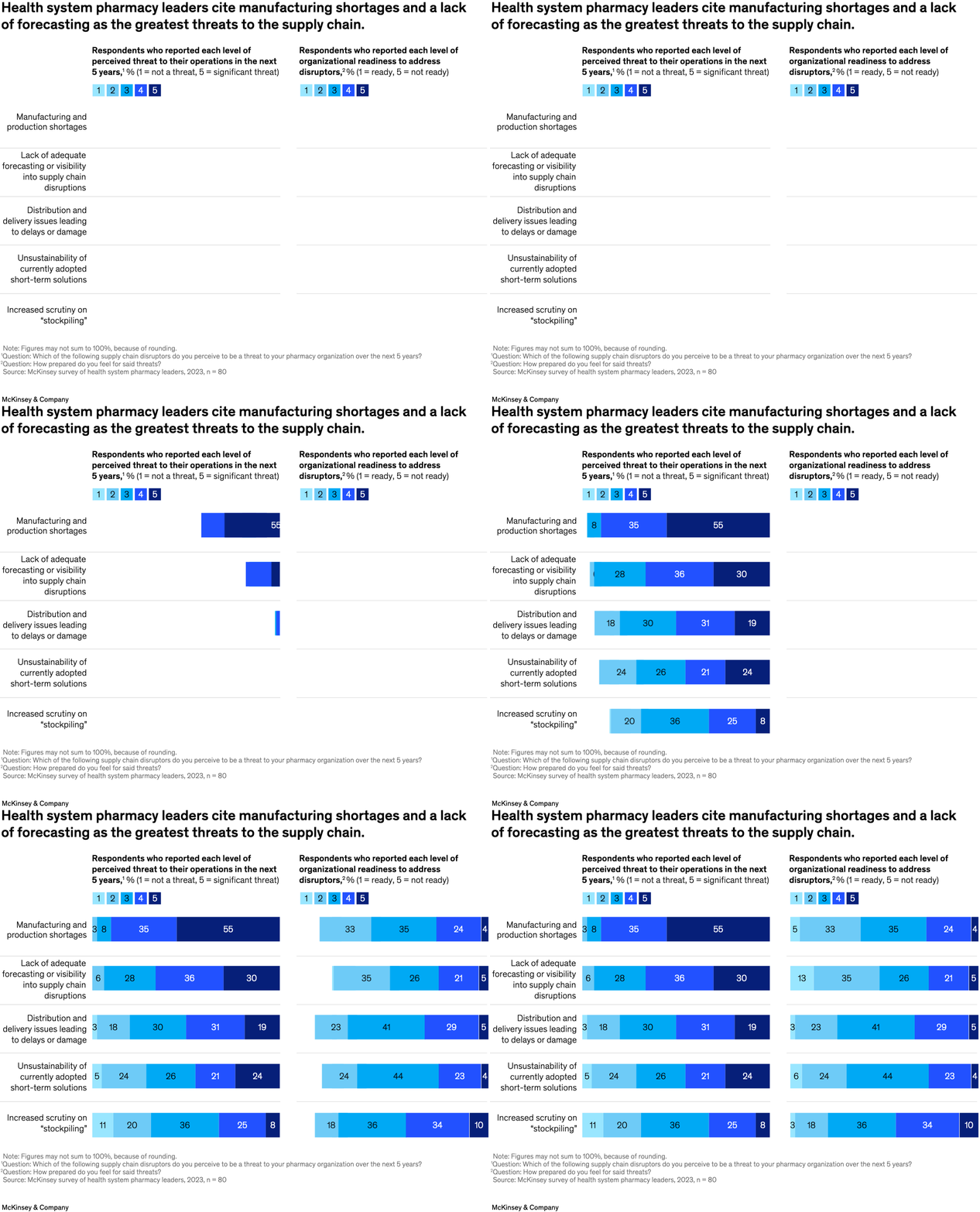
November 28, 2023 – Pharmacies could be a growth area for players across different health systems, from for-profit and not-for-profit entities to academic medical centers. However, leaders will likely need to address a set of pressing challenges, including supply chain disruptions. According to a survey of pharmacy leaders within the health system, partner Will Weinstein and colleagues find that manufacturing shortages top the list of potential threats to their operations. Leaders could boost supply chain resilience by improving their sourcing, contracting, and distribution capabilities.
To read the article, see “Untapped opportunities for health system pharmacies,” November 7, 2023.
customizer here
Visual form
Two-panel stacked horizontal bar chart. The left panel ranks expected supply-chain threats and the right panel shows how prepared organizations say they are to address those disruptions.
Layout / body structure
The page is split into two aligned horizontal-bar panels read left to right. Each panel uses the same list of challenge categories, so the reader first sees which risks are expected to matter most in the next five years and then immediately sees the preparedness distribution for those same risks.
What is being compared
The visual compares several supply-chain risks inside health system pharmacy operations, including manufacturing and production shortages, lack of adequate forecasting or visibility, distribution and delivery issues, unsustainability of current sources, and increased security or stockpiling concerns. It also compares perceived importance with stated preparedness for each risk.
Measurement system
The bars are measured as percentages of respondents, and each row is stacked across a five-point scale. On the threat side the scale runs from not a threat to a significant threat, and on the preparedness side it runs from not at all prepared to very well prepared.
Visible structure inside the graphic
Both panels use repeated horizontal stacks in blue shades, with the darkest or longest segments highlighting where responses concentrate. Because the category list is aligned across the two panels, the reader can compare the same issue across two different questions without mentally remapping the rows.
Main takeaway from the visual
Manufacturing shortages dominate the threat picture, but preparedness does not fully close the gap. The left panel shows the strongest concentration in the significant-threat end for manufacturing and production shortages, while the right panel shows only a partial shift into the better-prepared categories rather than a uniformly confident response.
Key standout values or extremes
Manufacturing and production shortages carries the heaviest threat concentration, including a 56 percent block in the most severe end of the scale. On the preparedness side, responses cluster in the middle rather than at the very well prepared end, which reinforces the mismatch between the severity of the risk and the readiness to handle it.
Controls / sequence, when applicable
This is a static chart image with no in-chart controls to operate.
Companion media, when applicable
There is no separate companion audio or video; the chart image is the full visual on this page.