Source page: McKinsey & Company
Commentary
Safety first
Automotive | Consumer
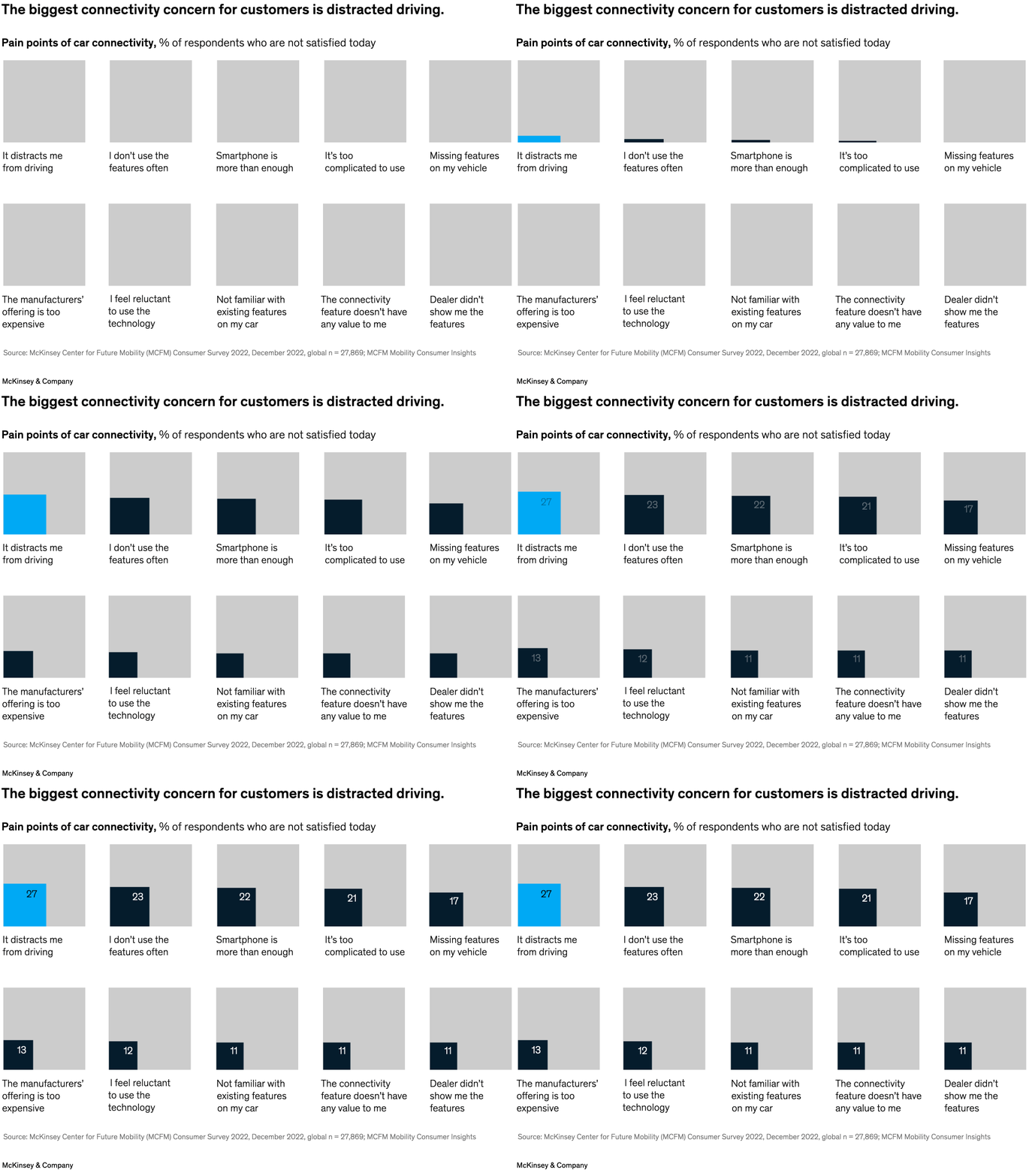
September 27, 2023 – Connected cars are the future of the automotive industry, according to McKinsey’s 2023 Global Automotive Connectivity Executive Survey. Partners Michele Bertoncello and Tobias Schneiderbauer and colleagues find that about half of consumers surveyed around the world say they would consider switching to a car brand that offered smarter, better-performing in-car features, up from about 20 percent in 2014. Yet, the automotive industry’s offerings remain in their infancy, and only 17 percent of customers say they are satisfied with current in-car features. Their biggest concerns are driver distraction, and unnecessary and complicated features.
To read the article, see “Corporate business building to unlock value in automotive connectivity,” August 31, 2023.
customizer here
Visual form
Multi-card ranking chart. It uses a grid of pain-point tiles instead of a single axis-based plot.
Layout / body structure
The page lays the dissatisfaction points out in a two-row grid, with one card for each pain point. Reader moves across the first row and then down to the second, comparing the same percentage metric across all the complaints.
What is being compared
It compares the main pain points of car connectivity among respondents who say they are not satisfied today, including distraction while driving, low feature use, overcomplication, missing features, cost, unfamiliarity, and weak dealer explanation.
Measurement system
The unit is percent of respondents who are not satisfied today. The emphasis is on relative complaint weight across the tiles rather than on a time sequence.
Visible structure inside the graphic
Each concern is shown as a separate card or block with its own label, which turns the visual into a ranked wall of complaints rather than a continuous line or bar. The repeated tile shape makes the wording and relative prominence of each concern the main thing to scan.
Main takeaway from the visual
Distracted driving sits at the top of the concern set, which means safety outranks novelty when customers judge connectivity. The surrounding tiles show that usability and value problems cluster right behind it.
Key standout values or extremes
The headline tile is distracted driving, and the rest of the grid reinforces that dissatisfaction is spread across both safety and usability issues rather than only one technical flaw. Complicated interfaces, missing features, and limited use all remain prominent in the visible ranking.
Controls / sequence, when applicable
This is a static chart image with no in-chart controls to operate.
Companion media, when applicable
There is no separate companion audio or video; the chart image is the full visual on this page.