Source page: McKinsey & Company
Commentary
Plastic urgency
Chemicals | Sustainability
September 20, 2023 – Strong demand for circular plastics, combined with changing regulations and increasingly ambitious company commitments, has led to healthy margins in advanced recycling, find partner Jeremy Wallach and coauthors. However, for circular plastics to ultimately meet demand, investment will be needed across the value chain, including collection, sortation, pretreatment, and advanced recycling technologies. Our research shows that achieving 20 to 30 percent of recycled content in plastic packaging by 2030 globally could require investment of as much as $100 billion.
To read the article, see “A unique moment in time: Scaling plastics circularity,” August 16, 2023.
customizer here
Visual form
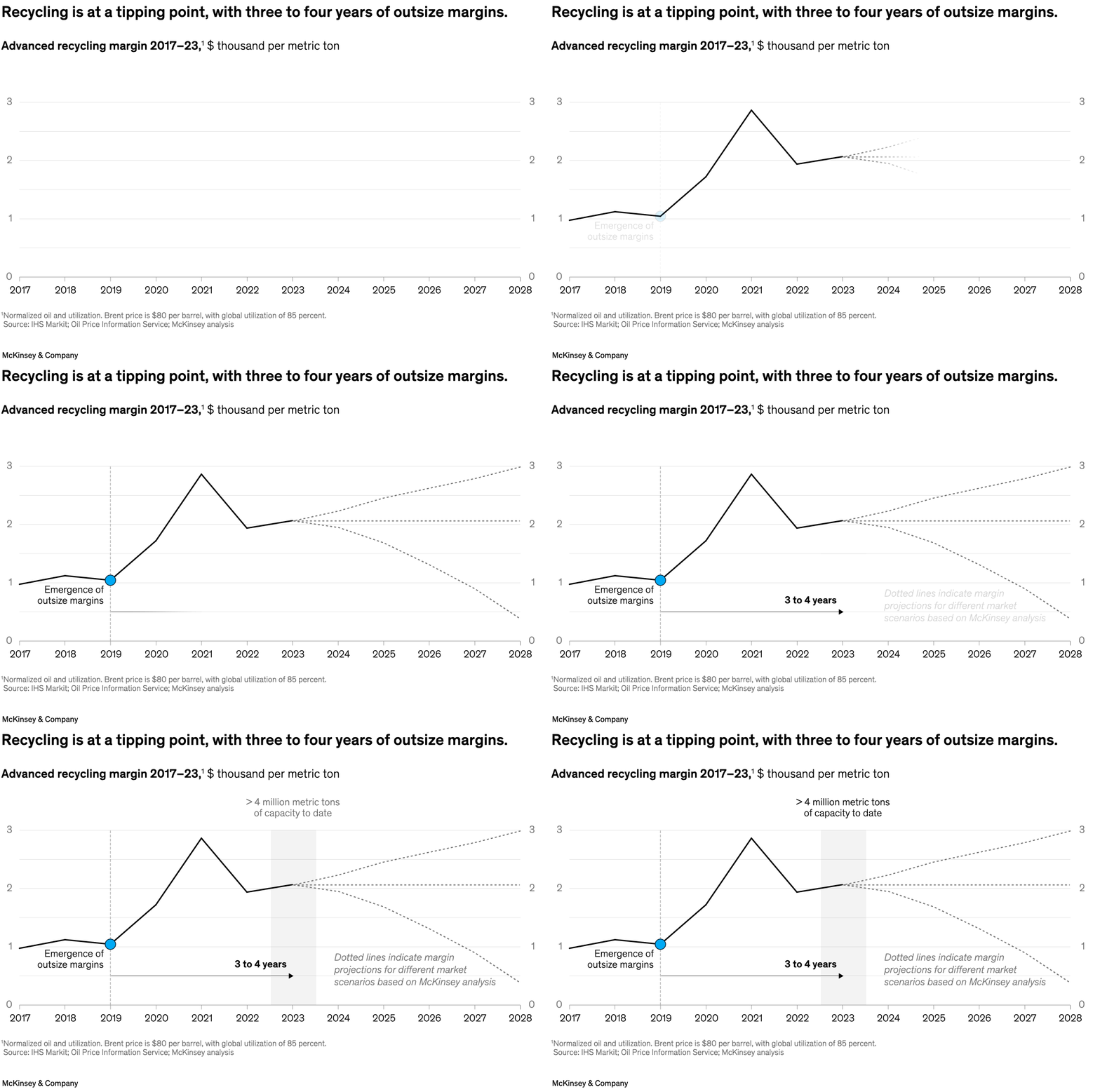
Line chart focused on margin levels over time. It tracks advanced recycling margin across multiple years.
Layout / body structure
The chart is a single time-series panel running from 2017 through the late 2020s, with one line moving across a dollars-per-metric-ton scale. The reading order is left to right across the years.
What is being compared
It compares advanced recycling margin across time, highlighting the near-term window in which margins remain unusually favorable.
Measurement system
The vertical axis is measured in thousands of dollars per metric ton, and the horizontal axis is calendar year. The chart is about margin level, not volume or market share.
Visible structure inside the graphic
The visual uses one primary line against a sparse grid, so the emphasis stays on the direction and persistence of margins rather than on category breakdown. The clean layout makes the changing slope the main thing to read.
Main takeaway from the visual
Advanced recycling is sitting in a temporarily favorable margin window instead of in a long flat equilibrium. The chart is built to show a tipping-point moment with several years of unusually strong economics.
Key standout values or extremes
The headline takeaway is the projected three-to-four-year period of outsize margins. The line sits well above zero and remains elevated through the near-term years before the later normalization implied by the longer horizon.
Controls / sequence, when applicable
This is a static chart image with no in-chart controls to operate.
Companion media, when applicable
There is no separate companion audio or video; the chart image is the full visual on this page.