Source page: McKinsey & Company
Commentary
Going whole hog on automation
Agriculture | Economy
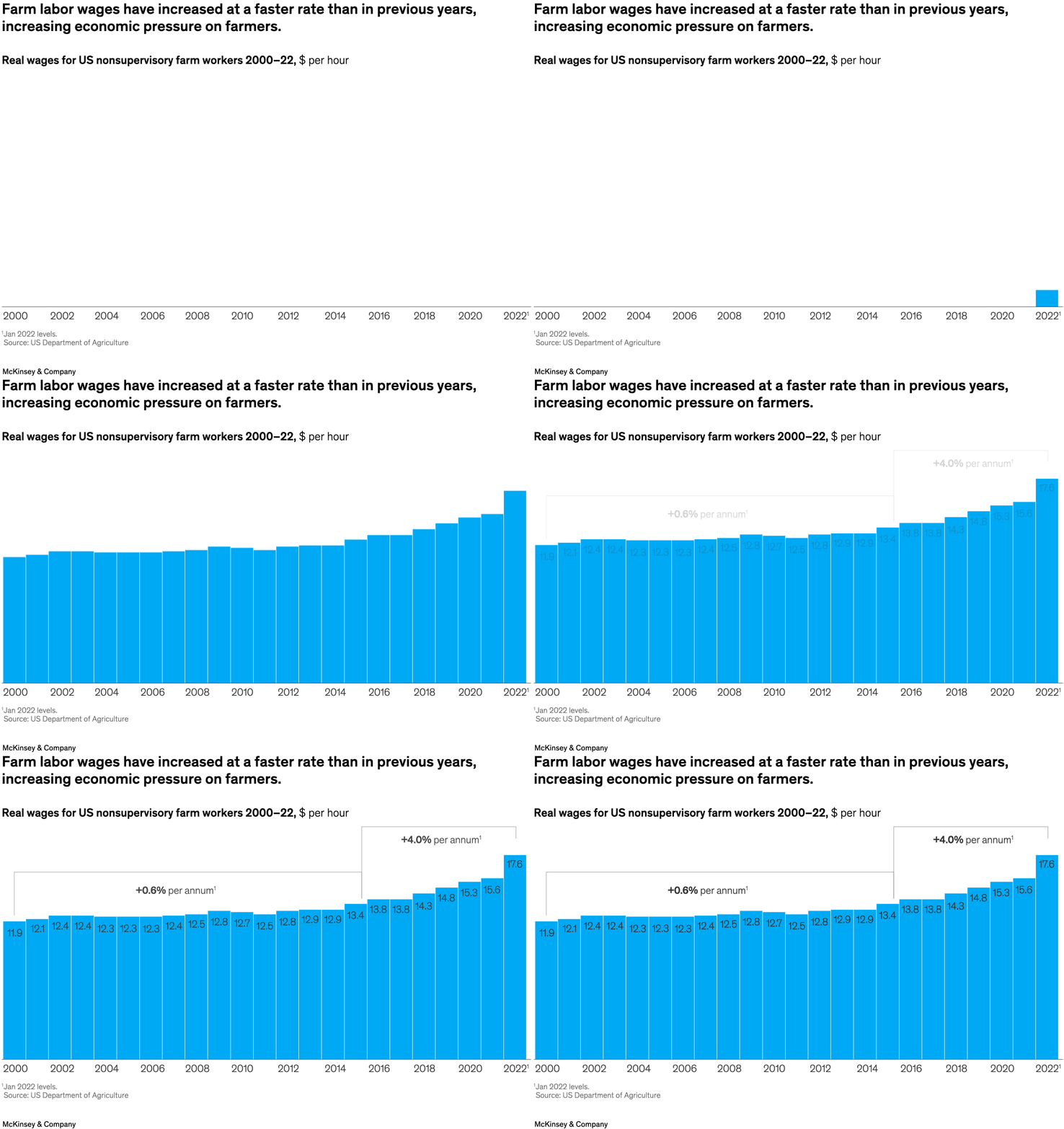
July 5, 2023 – Farmers worldwide are feeling a financial squeeze, as significant cost increases for labor and resources put their profitability at risk. In the United States, wages rose 4 percent a year from 2015 to 2022, after gains of less than 1 percent for almost 15 years. Senior partner Rob Bland and colleagues note that innovative solutions such as automation can help to improve working conditions on farms, lower the operating skills required for workers, and decrease farms’ labor costs.
To read the article, see “Trends driving automation on the farm,” May 31, 2023.
customizer here
Visual form
Line chart.
Layout / body structure
A single time-series chart runs left to right from 2000 through 2022, with the title and notes above and below the plot area.
What is being compared
It compares real wages for US nonsupervisory farm workers over time.
Measurement system
The vertical measure is dollars per hour, the horizontal measure is calendar year, and the note specifies that the wage scale is shown at January 2022 levels.
Visible structure inside the graphic
The visual is organized around one continuous wage line, year ticks across the bottom, and a shared frame that makes the slope of the later years easy to compare with the flatter earlier stretch.
Main takeaway from the visual
The shape of the line is meant to show that farm-labor wage pressure intensified late in the series, with the right side climbing faster than the long, flatter run that came before it.
Key standout values or extremes
The source copy ties the visual to less than 1 percent annual growth for much of the earlier period and about 4 percent annual growth from 2015 to 2022, which matches the visibly steeper final segment of the chart.
Controls / sequence, when applicable
This is a static chart image with no in-chart controls to operate.
Companion media, when applicable
There is no separate companion audio or video; the chart image is the full visual on this page.