Source page: McKinsey & Company
Commentary
A new funding landscape in logistics
Logistics | Start-ups
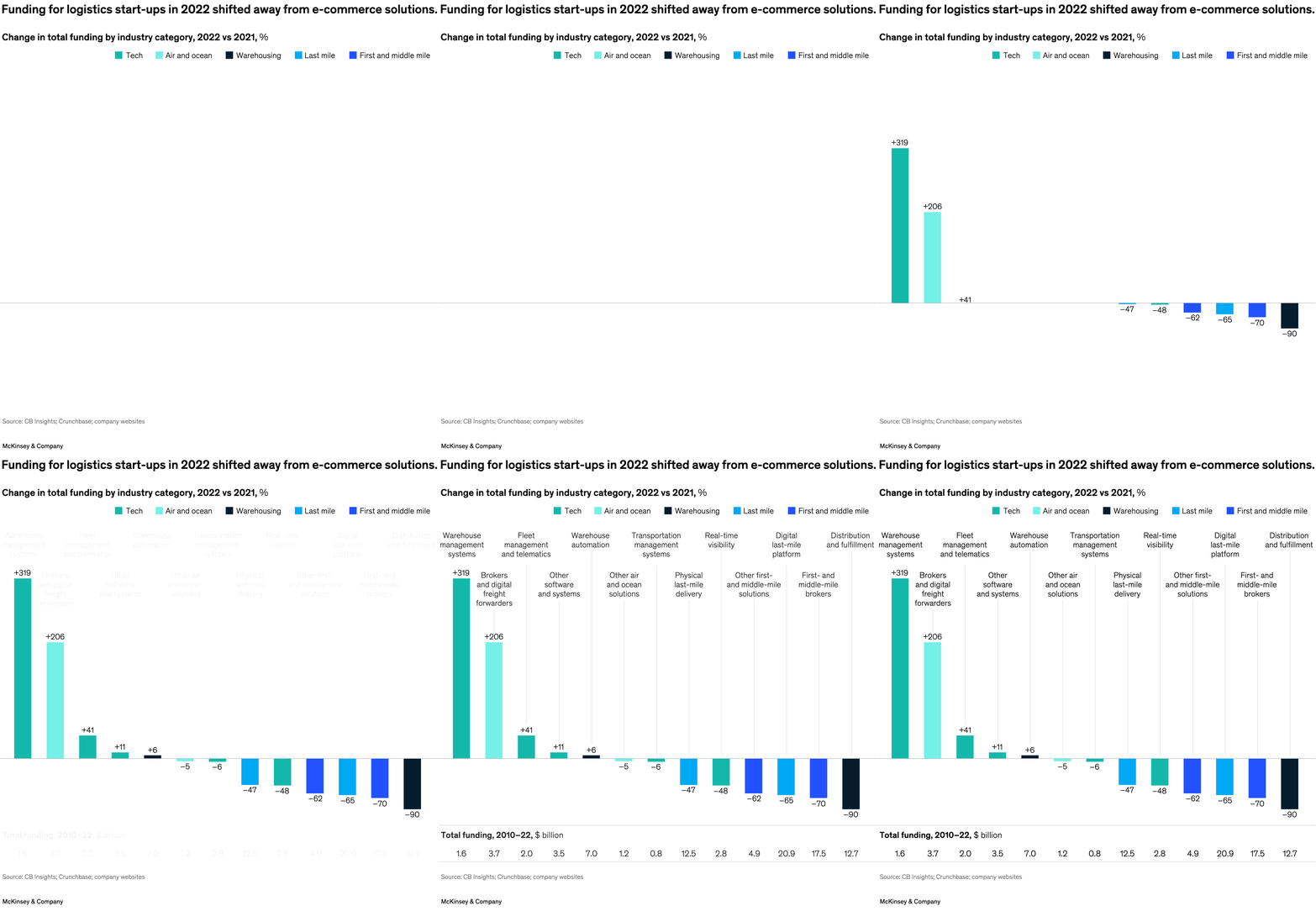
June 23, 2023 – A surge in funding for logistics start-ups in 2021 was followed by a decline of almost 50 percent at the end of last year, senior partner Ludwig Hausmann and colleagues note in their analysis of 600 logistics start-ups. Due in part to higher interest rates and a shift in consumer spending habits from goods to services, start-up funding decreased sharply in three logistics sectors: distribution and fulfillment, first- and middle-mile brokers, and digital last-mile platforms.
To read the article, see “Start-up funding in logistics: Adjusting to a new reality,” May 16, 2023.
customizer here
Visual form
Positive-and-negative category bar chart.
Layout / body structure
A single baseline runs horizontally across the page, with bars rising above it for funding gains and falling below it for declines, and the category labels arranged above the bar positions.
What is being compared
It compares 2022 versus 2021 funding changes across logistics start-up categories, including tech, air and ocean, warehousing, last mile, and first and middle mile segments.
Measurement system
The measure is percentage change in total funding by industry category, with signed values printed on the bars and a secondary row of total-funding figures shown along the bottom.
Visible structure inside the graphic
Each category has one vertical bar anchored to the zero line, colors map the bars to the category families in the legend, and labels above the bars identify specific segments such as warehouse management systems, fleet management and telematics, digital last-mile platforms, and distribution and fulfillment.
Main takeaway from the visual
The chart shows a sharp rotation away from e-commerce-heavy segments and toward a smaller set of operational-tech categories, with the biggest gains on the left side and the steepest declines stacked on the right.
Key standout values or extremes
Warehouse management systems leads the gainers at +319 and brokers and digital freight forwarders follow at +206, while the steepest visible drop is distribution and fulfillment at -90, with first- and middle-mile brokers at -70 and digital last-mile platforms at -65.
Controls / sequence, when applicable
This is a static chart image with no in-chart controls to operate.
Companion media, when applicable
There is no separate companion audio or video; the chart image is the full visual on this page.