Source page: McKinsey & Company
Commentary
Philippines’ unmet banking needs
Banking | Asia-Pacific | Digital
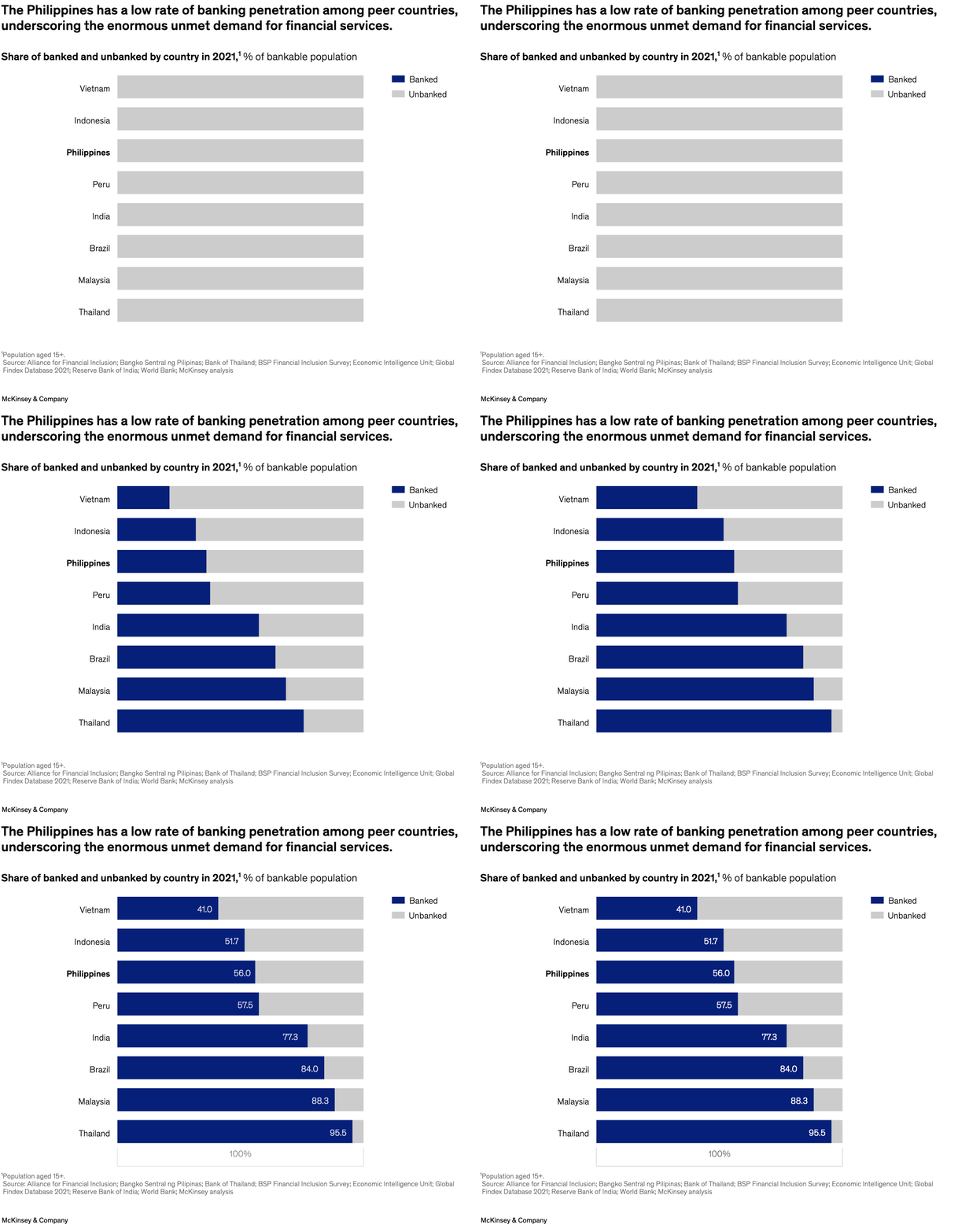
June 5, 2023 – Banking revenue pools in the Philippines may triple by 2030, but 44 percent of the country’s bankable population—those aged 15 and older—is considered unbanked. Senior partner Guillaume de Gantès and coauthors note the country’s banking penetration rate is low compared with its peers and emerging-markets standards. Rural areas, particularly, are underserved, as those residents are less likely to have access to physical banks.
To read the article, see “On the verge of a digital banking revolution in the Philippines,” May 3, 2023.
customizer here
Visual form
Horizontal 100-percent stacked bar chart.
Layout / body structure
A single comparison chart stacks countries vertically and uses one full-width horizontal bar per country, read from top to bottom with the banked share in dark blue and the unbanked share in gray.
What is being compared
It compares the share of banked and unbanked people in several peer countries, with the Philippines highlighted against Vietnam, Indonesia, Peru, India, Brazil, Malaysia, and Thailand.
Measurement system
The measure is percent of the bankable population in 2021, so every country bar totals to 100 percent and the dividing point between blue and gray carries the comparison.
Visible structure inside the graphic
The chart uses one legend, eight country rows, and two-color stacked bars, with the Philippines label bolded so the eye lands on that row before comparing its split against the peers above and below it.
Main takeaway from the visual
The Philippines sits in the lower-banking middle of the pack rather than near the fully banked countries, which makes the unmet demand story visible immediately once its blue segment is compared with Thailand, Malaysia, Brazil, and India.
Key standout values or extremes
Thailand is almost fully banked and Vietnam has the shortest blue segment in the frame, while the Philippines bar lands only a little past halfway, matching the page’s point that a large share of the bankable population remains outside formal banking.
Controls / sequence, when applicable
This is a static chart image with no in-chart controls to operate.
Companion media, when applicable
There is no separate companion audio or video; the chart image is the full visual on this page.