Source page: McKinsey & Company
Commentary
Full steam ahead
Chemicals | Decarbonization
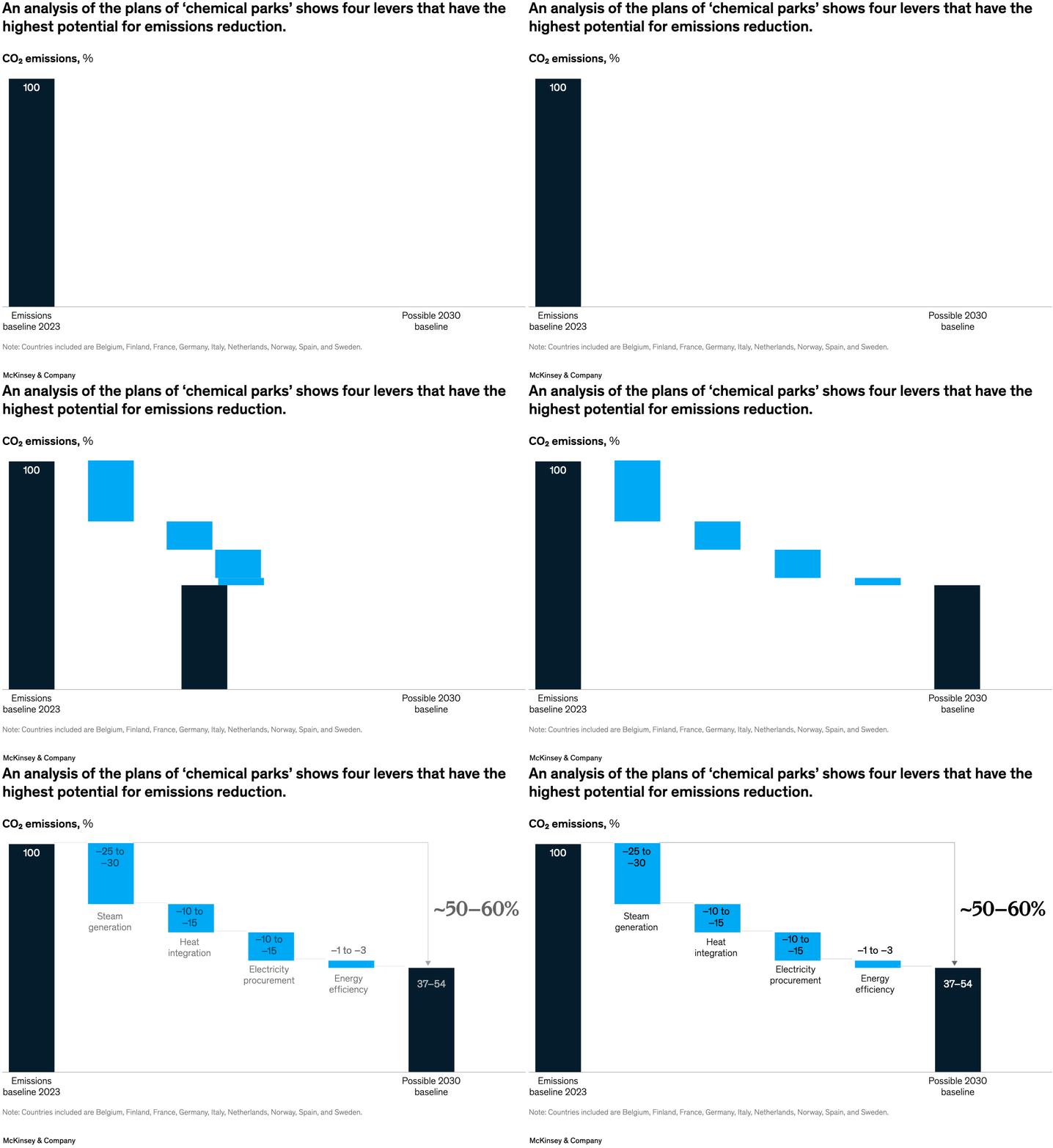
May 25, 2023 – Decarbonizing the hard-to-abate chemical industry will be a key step on the path to reducing emissions. Senior partners Ulrich Weihe, Thomas Weskamp, and colleagues studied more than 20 decarbonization projects in “chemical parks,” or industrial clusters, in countries across Europe. They identified four actions that would do the most to reduce emissions: pursuing steam generation, utilizing residual heat, changing electricity procurement, and improving energy efficiency.
To read the article, “Decarbonizing the chemical industry,” April 12, 2023.
Want to read the latest digital issue of McKinsey Quarterly? Sign up for a free membership.
customizer here
Visual form
Waterfall-style emissions-reduction chart.
Layout / body structure
The graphic starts with a full baseline column at the far left, then steps through a sequence of floating reduction blocks, and lands on a lower dark column representing the possible 2030 baseline on the right.
What is being compared
It compares a 2023 chemical-park emissions baseline with the lower emissions level that could be reached by 2030 after applying four high-potential decarbonization levers.
Measurement system
The vertical measure is CO2 emissions indexed in percent, with the starting baseline explicitly marked at 100.
Visible structure inside the graphic
A dark opening column establishes the full baseline, light-blue floating blocks show the contribution of each lever, and a second dark subtotal column appears partway through the sequence before the chart resolves toward the possible 2030 baseline label.
Main takeaway from the visual
The step-down arrangement makes the emissions-reduction story cumulative, showing that no single lever does all the work but the four levers together push the baseline down substantially.
Key standout values or extremes
The starting emissions baseline is labeled 100, and the chart headline emphasizes that four levers carry the highest reduction potential across the chemical-park plans analyzed.
Controls / sequence, when applicable
This is a static chart image with no in-chart controls to operate.
Companion media, when applicable
There is no separate companion audio or video; the chart image is the full visual on this page.