Source page: McKinsey & Company
Commentary
Unseen and untreated
Healthcare | Life Sciences
May 10, 2023 – Women’s health conditions have long been diagnosed far less often than conditions affecting men. While that disparity is improving, senior partner Lucy Pérez and colleagues note that for every woman diagnosed with a condition such as endometriosis or polycystic ovary syndrome, about four still go undiagnosed.
To read the article, see “Closing the data gaps in women’s health,” April 3, 2023.
customizer here
Visual form
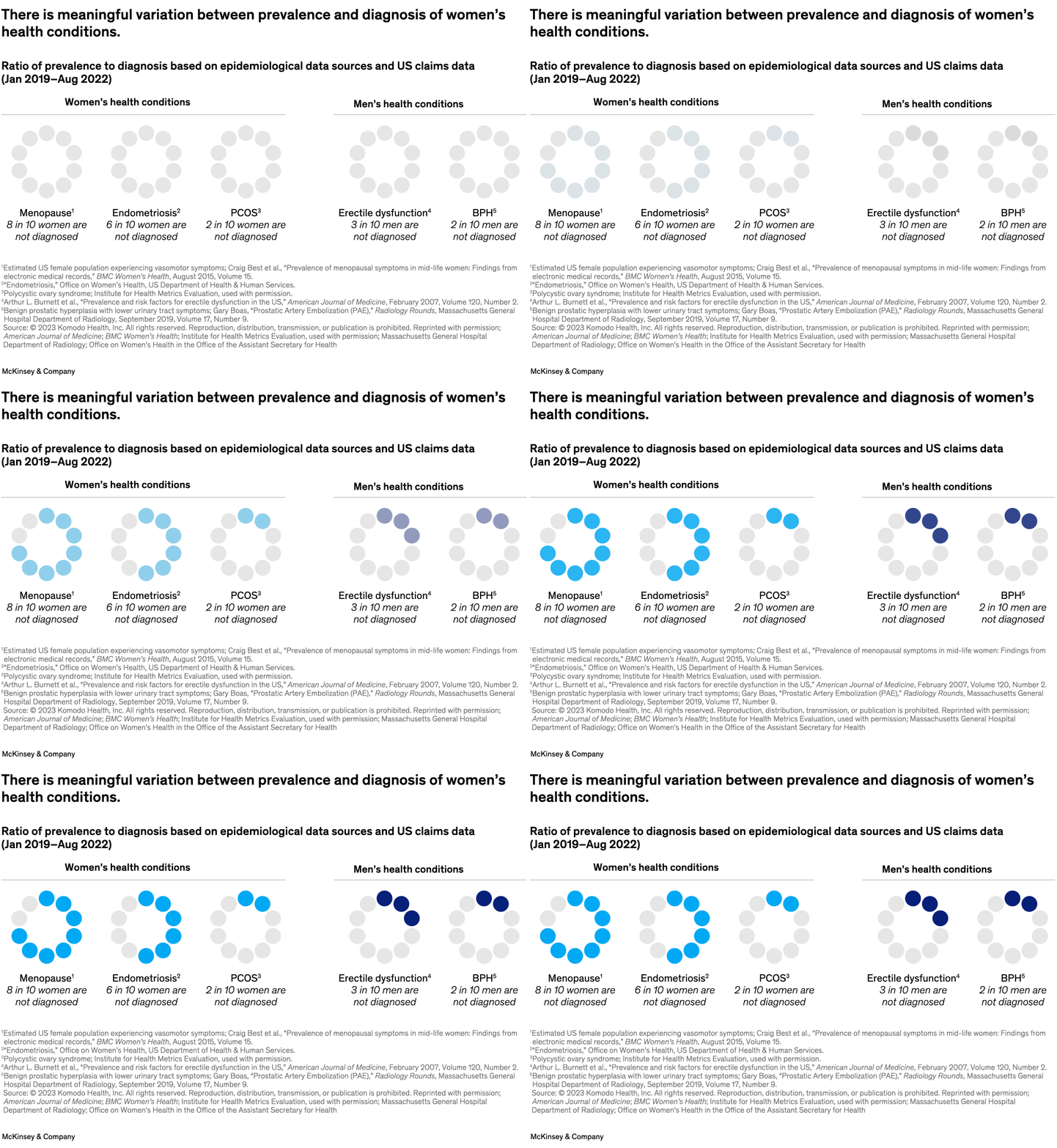
Paired condition-by-condition ring infographic.
Layout / body structure
The page splits the visual into two side-by-side groups, with women’s health conditions on the left and men’s health conditions on the right, and each condition shown as a ten-dot ring with a diagnosis note underneath.
What is being compared
It compares the gap between prevalence and diagnosis for several women’s health conditions against a smaller set of men’s health conditions used as a reference point.
Measurement system
The measure is a ratio out of ten people affected by a condition who are not diagnosed, so the reader follows simple out-of-ten counts rather than a conventional axis.
Visible structure inside the graphic
Each condition gets one labeled ring, and the short text directly beneath each ring states the undiagnosed share, which turns the chart into a condition-by-condition comparison rather than a trend line or stacked bar.
Main takeaway from the visual
The women’s side shows larger diagnosis gaps than the men’s side, especially for menopause and endometriosis, so the visual makes the underdiagnosis problem look broader and more severe for women’s health conditions.
Key standout values or extremes
Menopause is labeled 8 in 10 women not diagnosed, endometriosis 6 in 10, and PCOS 2 in 10; on the men’s side, erectile dysfunction is labeled 3 in 10 men not diagnosed and BPH 2 in 10.
Controls / sequence, when applicable
This is a static chart image with no in-chart controls to operate.
Companion media, when applicable
There is no separate companion audio or video; the chart image is the full visual on this page.