Source page: McKinsey & Company
Commentary
Investing in a sustainable future
Decarbonization | Infrastructure
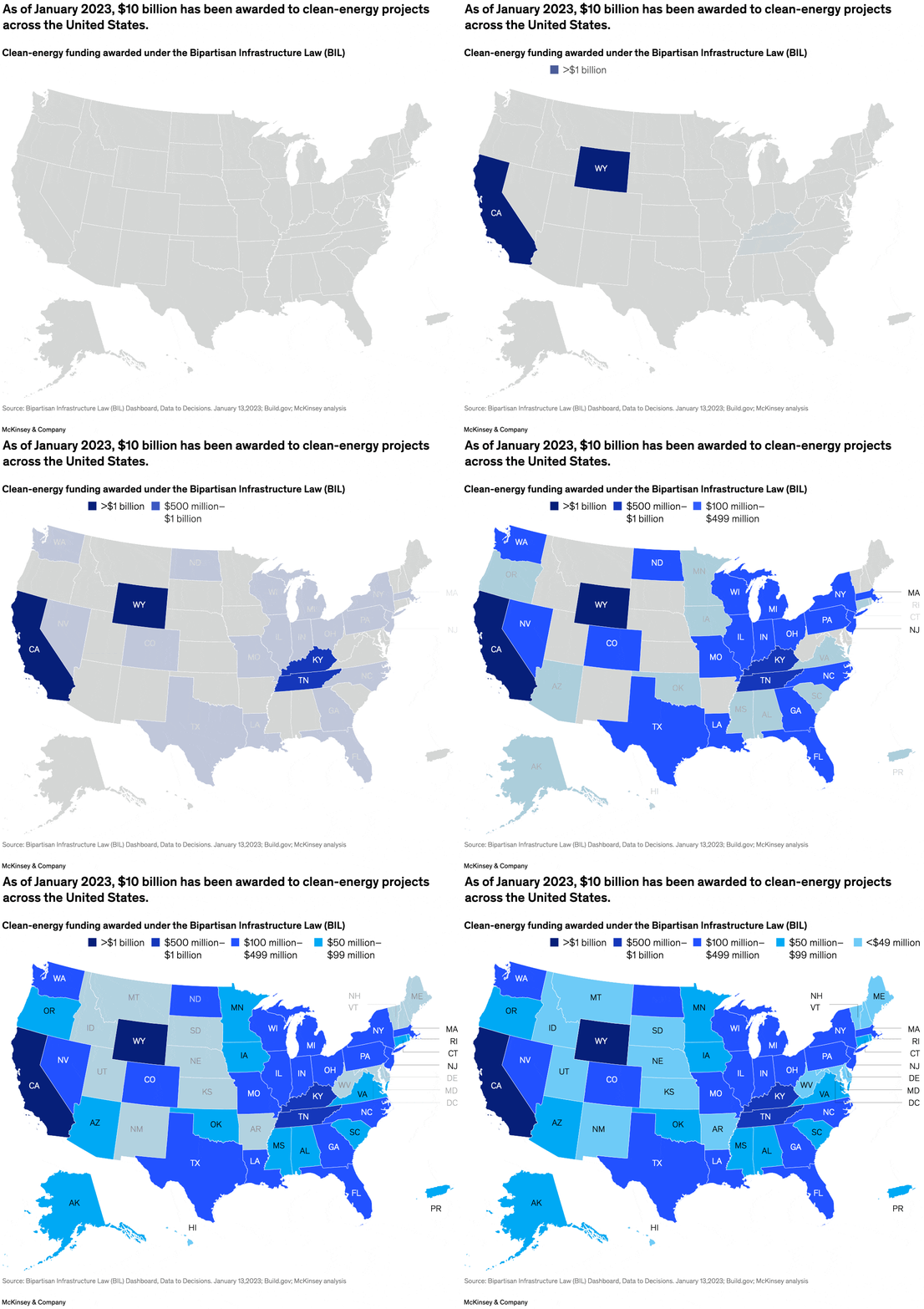
April 25, 2023 – The $1 trillion US Infrastructure Investment and Jobs Act is more than a year old, and some spending patterns are becoming apparent. As of January 2023, $10 billion had been awarded to clean-energy projects across the United States, according to partner Adam Barth and coauthors, who note that just three programs—Weatherization Assistance, Battery Materials Processing, and Advanced Reactor Demonstration—account for 70 percent of that spending so far.
To read the article, see “One year into the BIL: Catalyzing US investments in energy,” March 20, 2023.
customizer here
Visual form
US choropleth funding map.
Layout / body structure
A single US map fills the page, with Alaska and Hawaii inset below and small Northeast states called out on the right, while a four-bin legend sits above the map.
What is being compared
It compares states by the amount of clean-energy funding awarded under the Bipartisan Infrastructure Law as of January 2023.
Measurement system
The funding measure is grouped into four bins: more than 1 billion dollars, 500 million to 1 billion, 100 million to 499 million, and 50 million to 99 million.
Visible structure inside the graphic
Each state is filled with one of four blue shades, gray states indicate no visible award in the map frame, and state abbreviations are printed directly on many of the colored states so the map reads as both a geographic and categorical comparison.
Main takeaway from the visual
Awarded funding is spread broadly across the country but concentrated most heavily in a smaller set of states, with the darkest shade appearing only in a few places while many other states fall into the middle funding bands.
Key standout values or extremes
California and Wyoming appear in the darkest more-than-1-billion-dollar bin, while large groups of states such as Texas, Washington, Michigan, Pennsylvania, and Florida sit in the next funding tiers; the headline total on the page is 10 billion dollars awarded nationwide.
Controls / sequence, when applicable
This is a static chart image with no in-chart controls to operate.
Companion media, when applicable
There is no separate companion audio or video; the chart image is the full visual on this page.