Source page: McKinsey & Company
Commentary
STEM the tide
Diversity & Inclusion | Talent | Technology
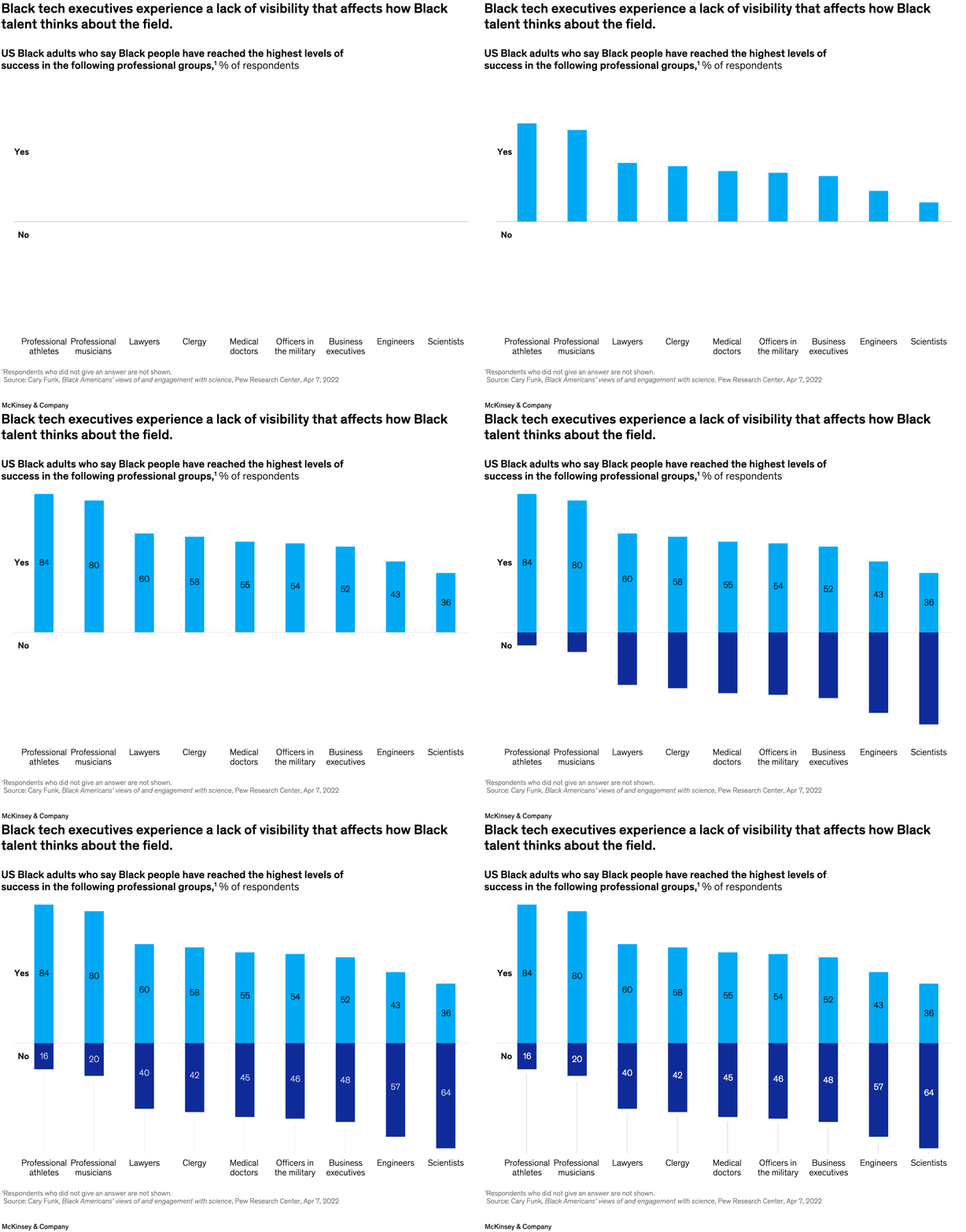
April 10, 2023 – There’s an opportunity to step up the inclusion of Black talent in STEM fields, write senior partner Mark McMillan, partner Jan Shelly Brown, and colleagues. According to a Pew Research survey, the percentage of Black adults who say “Black people have reached the highest levels of success” in a range of careers was highest for professional athletes and musicians—and approximately double the rate of engineers and scientists.
To read the article, see “How to close the Black tech talent gap,” February 3, 2023.
customizer here
Visual form
Diverging stacked bar chart.
Layout / body structure
The page uses a single chart with nine vertical bars arranged left to right by profession, with the positive response stacked above a shared midpoint and the negative response dropped below it.
What is being compared
It compares how Black adults in the United States rate Black success across nine professional groups, from athletes and musicians through lawyers, clergy, doctors, military officers, business executives, engineers, and scientists.
Measurement system
The measure is the percent of respondents answering yes or no for each profession, so each bar works as a split share comparison rather than as a raw count.
Visible structure inside the graphic
Each profession is shown as one stacked column, with the lighter upper segment marking yes, the darker lower segment marking no, and the bars descending across the page as the yes share falls. The professions are labeled along the bottom and the bars are sorted from strongest perceived success to weakest.
Main takeaway from the visual
The chart shows that Black respondents see the highest levels of Black success in sports and music, while engineering and science sit at the bottom of the ranking, so the visual reads as a visibility gap between entertainment or athletics and STEM careers.
Key standout values or extremes
The strongest yes shares are 84 percent for professional athletes and 80 percent for professional musicians. The weakest are 43 percent for engineers and 36 percent for scientists, with the no share rising to 57 percent and 64 percent in those two fields.
Controls / sequence, when applicable
This is a static chart image with no in-chart controls to operate.
Companion media, when applicable
There is no separate companion audio or video; the chart image is the full visual on this page.