Source page: McKinsey & Company
Commentary
Cleantech creation
Sustainability | Renewable energy | Technology
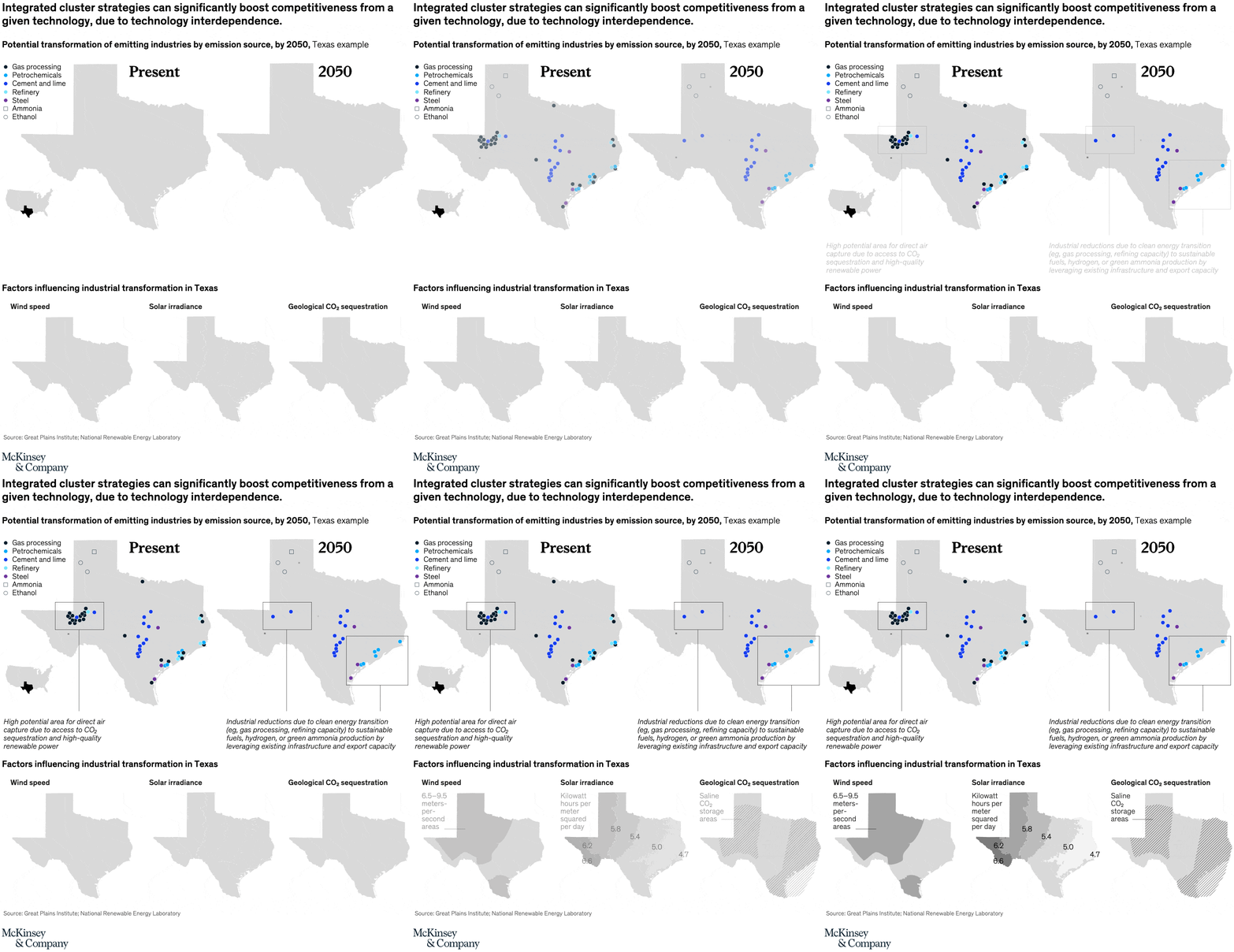
December 5, 2022 – Achieving net-zero goals will require stepping up climate technology innovations. The United States can capture value and improve energy security by, for instance, establishing climate tech hubs where natural resources and industrial centers exist. Senior partner Laura Corb and colleagues note that parts of Texas, with established gas infrastructure and a wealth of renewables, could support hydrogen supplies to industries along the coast and could produce sustainable fuel for export and transportation.
To read the article, see “Climate tech competitiveness: Can the United States raise its game?,” October 3, 2022.
customizer here
Visual form
Cluster strategy diagram.
Layout / body structure
The page uses a cluster-based visual rather than a simple single-axis chart. Reader starts with one focal technology or hub and then reads outward through the connected supporting capabilities that strengthen competitiveness.
What is being compared
It compares cleantech strategies built as integrated clusters with less connected stand-alone approaches, with the emphasis on how interdependence across technologies raises competitiveness.
Measurement system
The chart is measured more through strategic interdependence and competitiveness than through one single quantitative axis. The labels identify the technology nodes and the relationships that make a cluster more valuable.
Visible structure inside the graphic
The main internal pieces are the technology nodes, the lines or adjacency showing interdependence, and the cluster framing that groups natural resources, industrial assets, and adjacent technologies into one competitive system.
Main takeaway from the visual
The diagram shows that cleantech value creation depends on building connected hubs rather than isolated projects. Competitiveness increases when related technologies reinforce one another, which is why the visual centers on integrated clusters.
Key standout values or extremes
The chart’s strongest explicit message is that integrated cluster strategies can significantly boost competitiveness from a given technology because of interdependence. The article framing connects that logic to US opportunities in regions such as parts of Texas.
Controls / sequence, when applicable
This is a static chart image with no in-chart controls to operate.
Companion media, when applicable
There is no separate companion audio or video; the chart image is the full visual on this page.