Source page: McKinsey & Company
Commentary
The power of greener jet fuel
Aerospace | Sustainability | Travel & Transportation
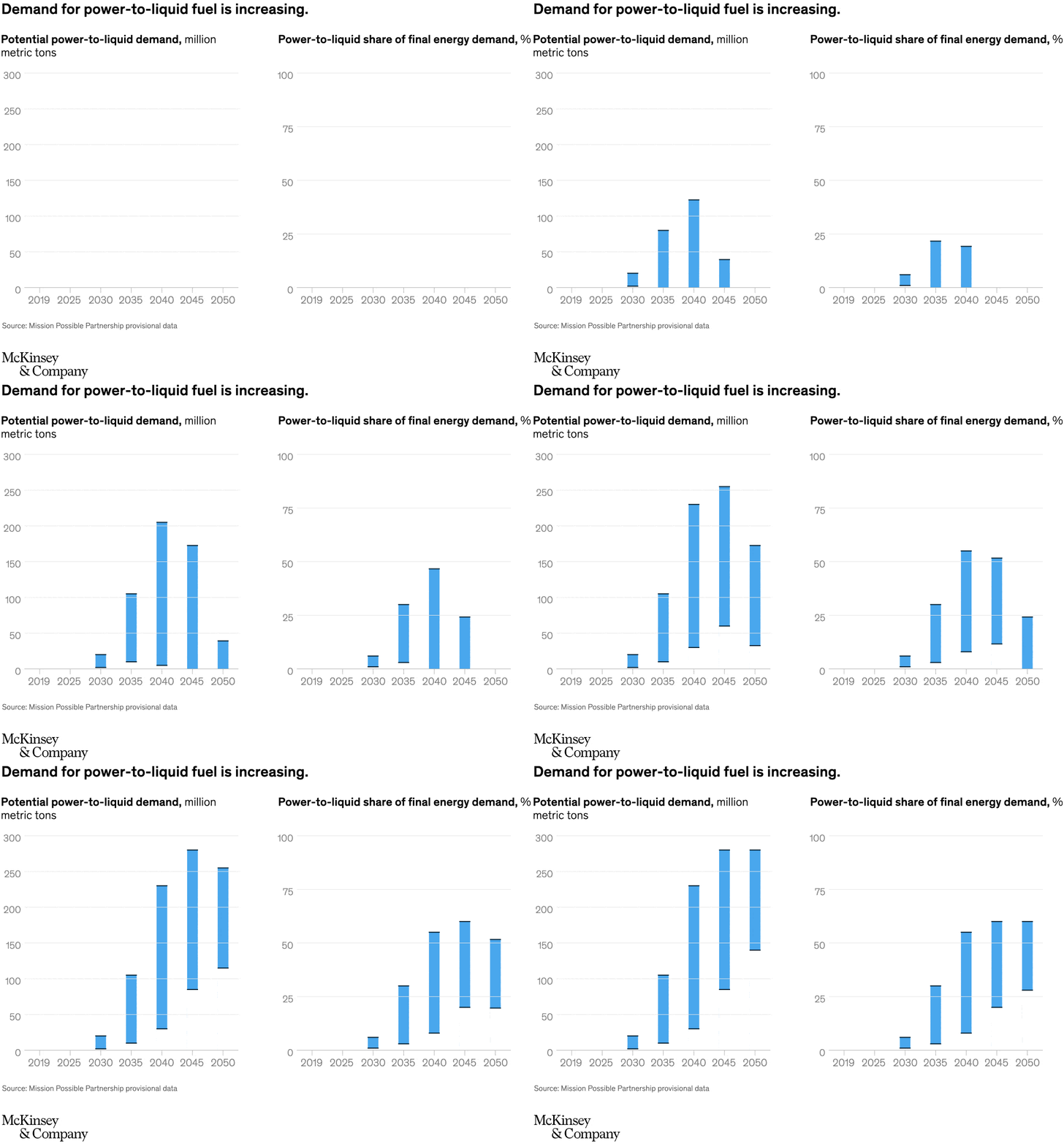
October 18, 2022 – The aviation industry has a significant role to play in the quest for a net-zero future. Power-to-liquid (PtL) fuel, made from captured CO2 and renewable electricity from green energy sources such as solar and wind, could be key in the sector’s efforts toward sustainability, according to McKinsey senior partner Bernd Heid and colleagues. Annual jet fuel demand is expected to reach 500 million metric tons (Mt) by 2050. By that time, demand for PtL could reach 280 Mt—with about $4 trillion needed in capital to meet those needs.
To read the article, see “Clean skies for tomorrow: Delivering on the global power-to-liquid ambition,” August 25, 2022.
customizer here
Visual form
Demand-growth chart.
Layout / body structure
The chart is organized as a forward demand comparison for power-to-liquid fuel, with the reader moving from today’s smaller base toward the much larger aviation-fuel requirement ahead. The reading order is from current development to future need.
What is being compared
It compares the emerging supply and role of power-to-liquid fuel with the future scale of overall jet-fuel demand in aviation.
Measurement system
The page uses volume, specifically annual jet-fuel demand in metric tons, and pairs that with the implied growth in power-to-liquid fuel demand.
Visible structure inside the graphic
The internal pieces are the projected jet-fuel demand totals and the portion or pathway associated with power-to-liquid fuel. The chart is structured to show that the cleaner fuel pathway must scale dramatically to matter at aviation-market size.
Main takeaway from the visual
The page shows that greener jet fuel is not a small niche if aviation is serious about net zero. The comparison between current PtL development and the enormous future fuel requirement makes the scale challenge very visible.
Key standout values or extremes
The article framing notes that annual jet-fuel demand is expected to reach 500 million metric tons by 2050. The chart uses that scale to show why demand for power-to-liquid fuel will keep increasing sharply.
Controls / sequence, when applicable
This is a static chart image with no in-chart controls to operate.
Companion media, when applicable
There is no separate companion audio or video; the chart image is the full visual on this page.