Source page: McKinsey & Company
Commentary
Race and the frontline experience
Jobs | Diversity & Inclusion
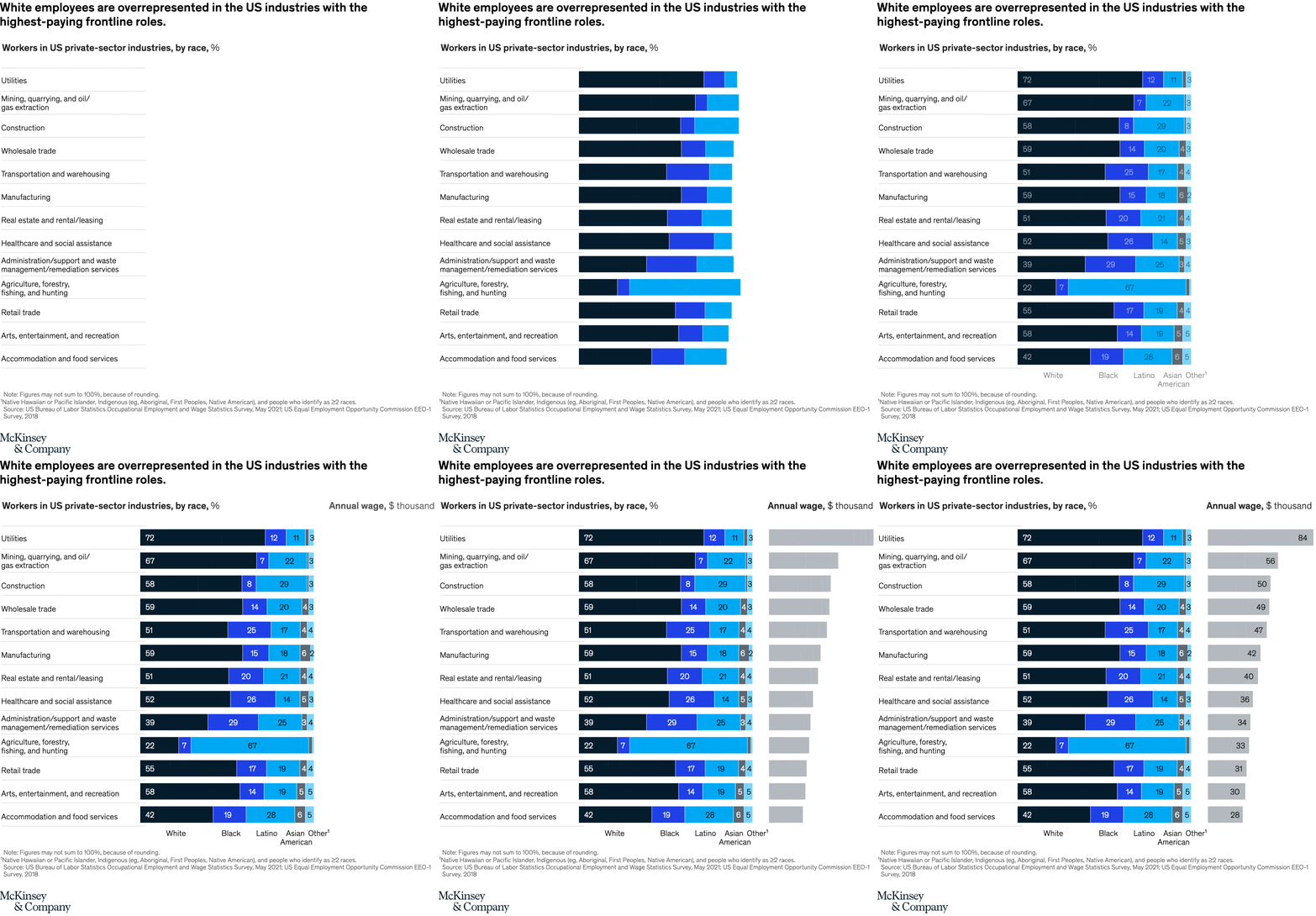
October 3, 2022 – Black and Latino workers are overrepresented in industries with low-paying frontline roles, making 20 percent less than White frontline workers, according to McKinsey analysis. And within certain industries, there is a higher concentration of Latino workers compared with Black workers. For example, Latino workers dominate the agriculture, forestry, fishing, and hunting industries with the highest proportion of employees at 67 percent.
To read the report, see “Race in the workplace: The frontline experience” July 30, 2022.
customizer here
Visual form
Bar chart.
Layout / body structure
A single chart fills the main display area, with the comparison read across the plotted categories and then down to the short source note.
What is being compared
The chart compares frontline pay and representation across racial groups and industries, with a particular focus on Black and Latino workers in lower-paying frontline roles.
Measurement system
The reader is tracking both percentage shares and pay gaps, so the chart is built around representation levels and relative earnings rather than around a single unit system.
Visible structure inside the graphic
The graphic is structured as grouped comparisons by industry or worker group, allowing the reader to see where Black and Latino workers are concentrated and how those concentrations line up with pay levels.
Main takeaway from the visual
The chart makes the inequity visible by showing workers of color concentrated in lower-paying frontline roles rather than in the highest-paying frontline industries.
Key standout values or extremes
The strongest values surfaced on the page are that Black and Latino frontline workers earn about 20 percent less than White frontline workers, and that Latino workers make up 67 percent of employees in agriculture, forestry, fishing, and hunting.
Controls / sequence, when applicable
This is a static chart image with no in-chart controls to operate.
Companion media, when applicable
There is no separate companion audio or video; the chart image is the full visual on this page.