Source page: McKinsey & Company
Commentary
Careers constrained
Work-life balance | Parenting
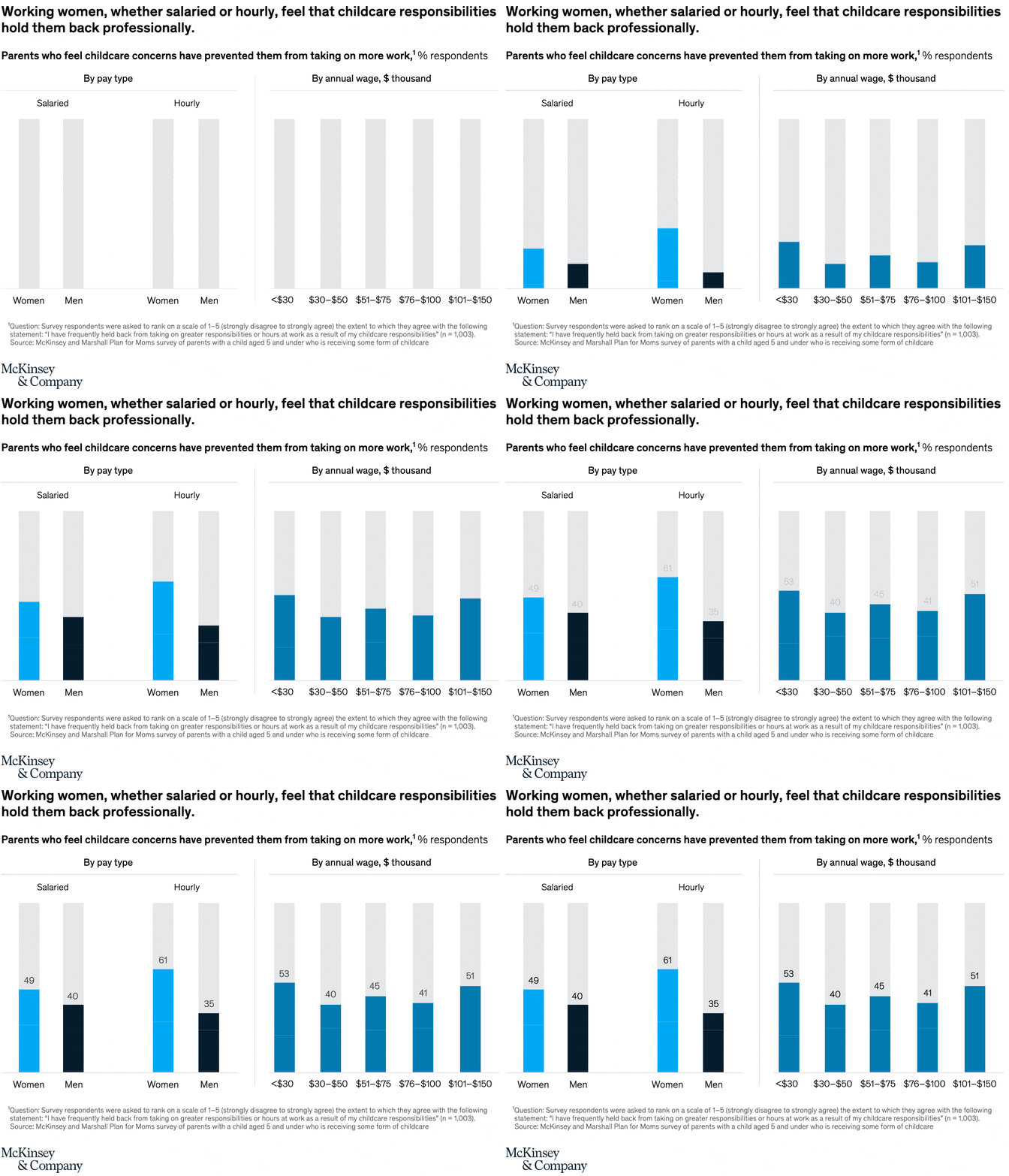
June 13, 2022 – Working mothers miss out on career advancement more often than employed dads. In a survey of American workers by McKinsey and the Marshall Plan for Moms, 57 percent of mothers with young kids cited childcare responsibilities as the reason they feel held back from professional opportunities. Less than 40 percent of working fathers said the same.
To read the article, see “The childcare conundrum: How can companies ease working parents’ return to the office?,” May 9, 2022.
customizer here
Visual form
Two-panel vertical bar chart.
Layout / body structure
The chart is split into a left pay-type panel and a right wage-band panel. Read the salaried and hourly gender comparisons first, then move right across the five annual-wage columns from below $30 thousand to $101 – $150 thousand.
What is being compared
The left panel compares women and men who say childcare concerns have prevented them from taking on more work, separated into salaried and hourly workers. The right panel compares the same response across five annual wage groups.
Measurement system
Every bar is plotted as a percent of respondents, with the values printed directly on the columns. Color separates women from men in the pay-type panel, while the wage panel uses one consistent bar color across income bands.
Visible structure inside the graphic
The pay-type side uses four bars arranged in two gender pairs under Salaried and Hourly headers, and the wage side uses five standalone columns labeled <$30, $30 – $50, $51 – $75, $76 – $100, and $101 – $150. All bars sit against pale full-height backdrops that make the filled share stand out.
Main takeaway from the visual
The chart shows that childcare constraints are heavier for women than for men in both employment formats, and especially severe for hourly women. The wage panel then shows that the pressure is widespread rather than concentrated in only one income band.
Key standout values or extremes
Hourly women are the highest group at 61 percent, followed by salaried women at 49 percent, while salaried men and hourly men sit lower at 40 percent and 35 percent. By wage band, the highest shares are 53 percent for below $30 thousand and 51 percent for $101 – $150 thousand, while the lowest point is 40 percent for the $30 – $50 thousand group.
Controls / sequence, when applicable
This is a static chart image with no in-chart controls to operate.
Companion media, when applicable
There is no separate companion audio or video; the chart image is the full visual on this page.