Source page: McKinsey & Company
Commentary
Millennials go organic
Consumer | Retail | Food
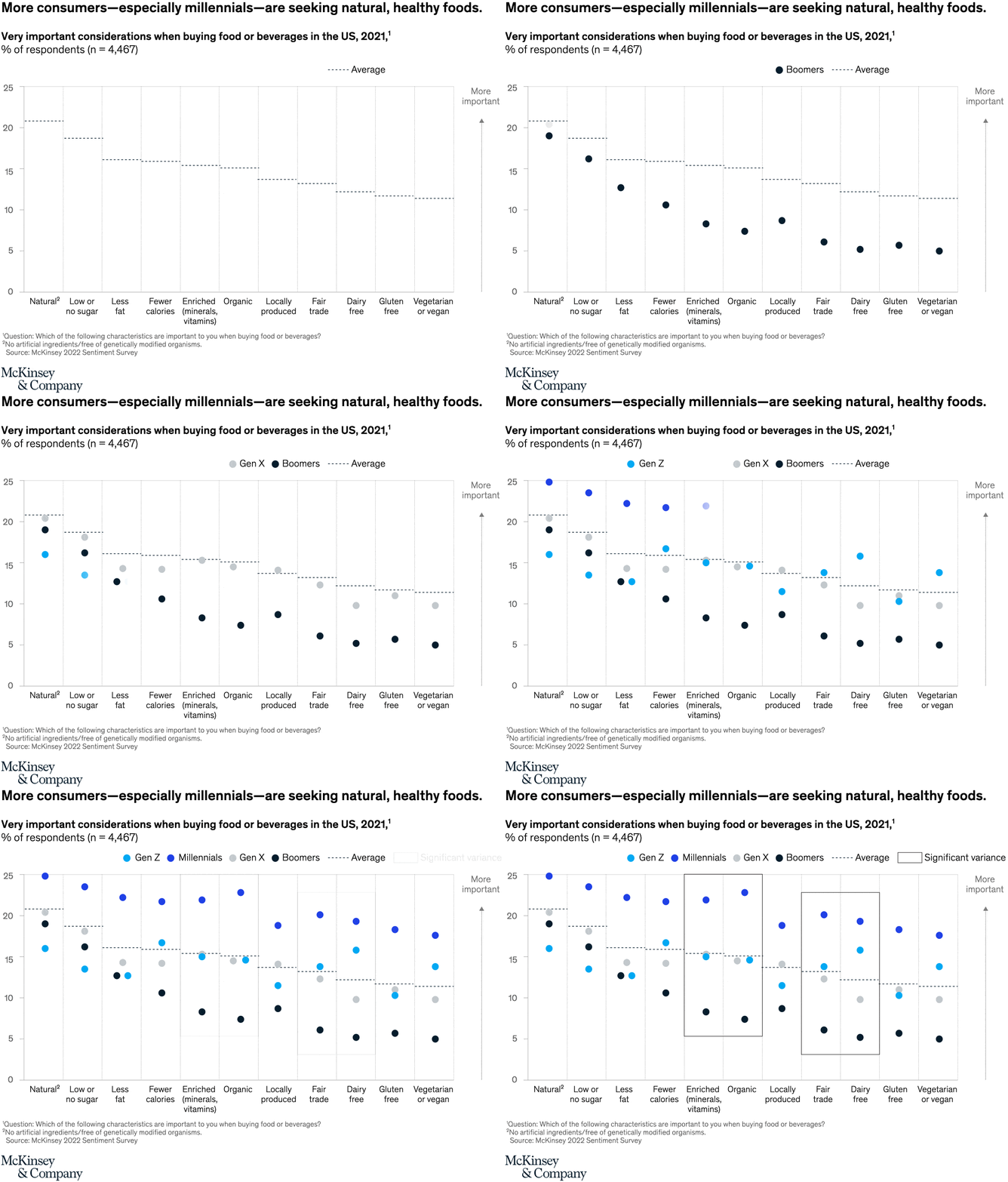
June 9, 2022 – During the pandemic consumers increasingly sought healthier food, particularly millennials. According to a McKinsey survey, this segment is especially interested in enriched and organic foods, relative to Gen Z, Gen X, and boomers.
To read the article, see “How to stay cool as competition heats up in ice cream and yogurt,” May 13, 2022.
customizer here
Visual form
Multi-series dot plot.
Layout / body structure
The chart is a single wide chart read left to right across eleven food-attribute categories. Within each category, compare the four generational dots against the dashed average line, and then notice the outlined significance boxes around the middle-right categories.
What is being compared
The chart compares how important different food and beverage attributes are to Gen Z, millennials, Gen X, and boomers, spanning natural ingredients, sugar, fat, calories, enriched nutrients, organic, local production, fair trade, dairy free, gluten free, and vegetarian or vegan choices.
Measurement system
The vertical scale is percent of respondents, and each color maps to one generation. A dashed horizontal marker shows the average for each category, while outlined boxes flag areas of significant variance.
Visible structure inside the graphic
Each category contains four colored dots stacked against the same percentage grid, with the dashed average marker running across that category only. The two outlined boxes highlight Enriched and Organic together, then Fair trade and Dairy free together, drawing attention to where the cohort spread is most pronounced.
Main takeaway from the visual
Millennials sit at or near the top of almost every category, especially on organic, enriched, and fair-trade preferences, while boomers usually occupy the lowest position. Natural ingredients and low or no sugar rank highly for all groups, but the premium on organic and adjacent attributes is most visible among younger consumers and strongest for millennials.
Key standout values or extremes
Millennials reach about 25 percent on Natural, just under 24 percent on Low or no sugar, and roughly 23 percent on Organic, while boomers on those same attributes sit closer to 19, 16, and 7 percent. The biggest middle-chart gaps appear on Enriched and Organic, where millennials are around 22 to 23 percent and boomers around 7 to 8 percent. At the right edge, Vegetarian or vegan is still about 18 percent for millennials but only about 5 percent for boomers.
Controls / sequence, when applicable
This is a static chart image with no in-chart controls to operate.
Companion media, when applicable
There is no separate companion audio or video; the chart image is the full visual on this page.