Source page: McKinsey & Company
Commentary
Working moms bear the care burden
Parenting | Work-life balance
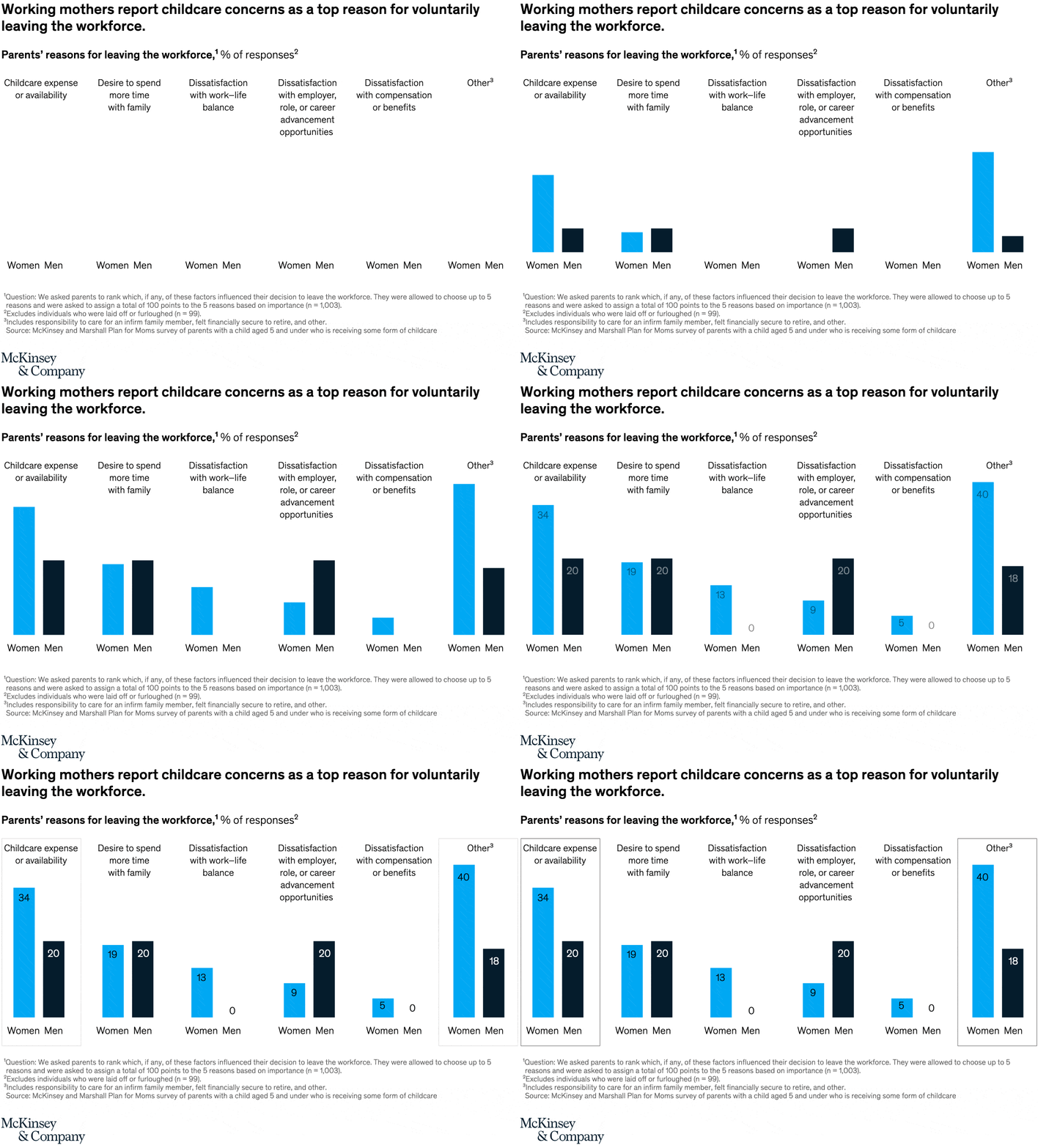
May 27, 2022 – Many working moms in the United States pointed to the same cause for deciding to leave their jobs during the COVID-19 pandemic: childcare that is unaffordable or unavailable. In a recent survey, 34 percent of mothers cited childcare concerns for why they stopped working, compared with 20 percent of fathers.
To read the article, see “The childcare conundrum: How can companies ease working parents’ return to the office?,” May 9, 2022.
customizer here
Visual form
Grouped bar chart.
Layout / body structure
The chart is a single horizontal sequence of six reason categories spread across the page. Read left to right by category, and within each category compare the bright blue bar for women with the dark bar for men.
What is being compared
The chart compares parents’ reported reasons for leaving the workforce across women and men. The categories are childcare expense or availability, desire to spend more time with family, dissatisfaction with work-life balance, dissatisfaction with employer role or career advancement opportunities, dissatisfaction with compensation or benefits, and other reasons.
Measurement system
The measurement is percent of responses, printed directly on or next to the bars. Color separates women from men, and the categories are treated as side-by-side comparisons rather than a shared time series.
Visible structure inside the graphic
Each reason is shown as a two-bar group, with the same color assignment repeated across all six categories. The first and last reasons are visually boxed, and the direct value labels make the gaps visible without needing a y-axis scale.
Main takeaway from the visual
Childcare stands out as a much stronger driver for women than for men, which is why the women bar in the childcare group towers above the men bar. Men, by contrast, only surpass women clearly in dissatisfaction with employer role or career advancement opportunities, while the family-time category is almost even.
Key standout values or extremes
Childcare expense or availability is 34 percent for women versus 20 percent for men. Desire to spend more time with family is nearly tied at 19 percent for women and 20 percent for men, work-life balance is 13 percent for women and 0 for men, dissatisfaction with employer role or advancement is 9 for women and 20 for men, dissatisfaction with compensation or benefits is 5 for women and 0 for men, and other reasons are 40 for women and 18 for men.
Controls / sequence, when applicable
This is a static chart image with no in-chart controls to operate.
Companion media, when applicable
There is no separate companion audio or video; the chart image is the full visual on this page.