Source page: McKinsey & Company
Commentary
Bargain hunting abroad
E-commerce | Global Trade
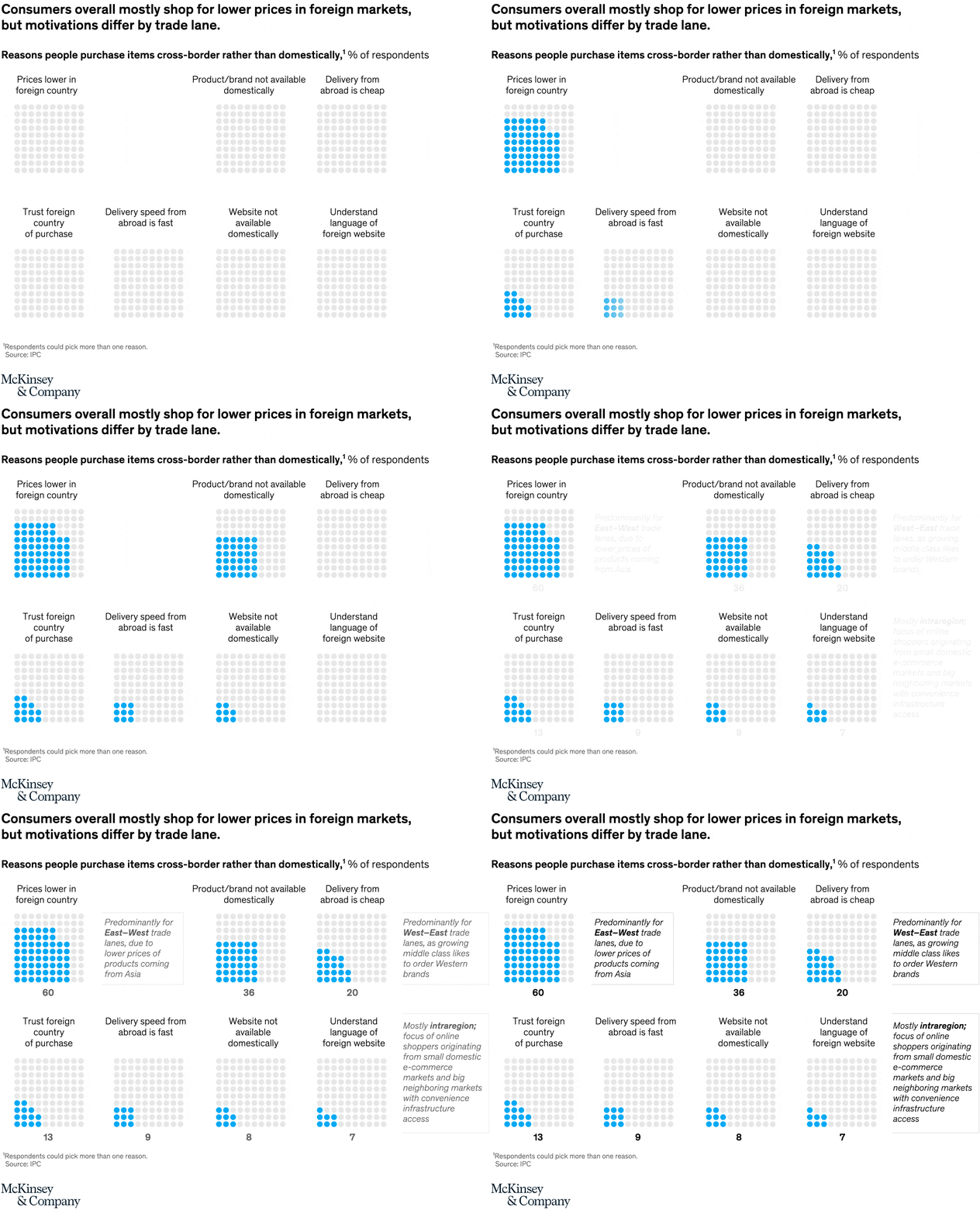
April 7, 2022 – The pandemic has accelerated online purchases and package deliveries, with shoppers increasingly buying goods from foreign markets. The reasons vary based on region. Consumers in Western countries, for example, cite lower product prices as a primary motivation for buying from Asian countries. Shoppers in Asian countries say products not being available domestically and lower delivery costs are top reasons to purchase from Western countries.
To read the article, see “Signed, sealed, and delivered: Unpacking the cross-border parcel market’s promise,” March 17, 2022.
customizer here
Visual form
Seven-panel dot-matrix comparison chart.
Layout / body structure
The chart is arranged as a grid of seven square dot matrices, each labeled with one purchase reason and a direct percentage. Read across the top row first and then continue through the lower row, using the density of filled blue dots and the number beneath each matrix together.
What is being compared
The chart compares the reasons consumers buy products cross-border rather than domestically. It contrasts price, product availability, delivery cost, trust, delivery speed, domestic website availability, and foreign-language comprehension as motives for cross-border shopping.
Measurement system
Each panel is a 10 by 10 dot matrix, so the filled dots represent the percent of respondents citing that reason. The numerical labels under the panels provide the exact shares while the dot fill makes the ranking visible at a glance.
Visible structure inside the graphic
The top-left matrix is the densest by far, with more than half of its dots filled, while the remaining panels step down sharply in density. Short side notes explain that the top row reasons are stronger on East-West trade lanes and that the lower-row trust and convenience reasons matter more for traffic from smaller domestic e-commerce offerings into markets with better infrastructure.
Main takeaway from the visual
Cross-border shopping is driven overwhelmingly by lower prices first and product availability second, with all of the trust and convenience reasons trailing well behind. The visual spread between the top two matrices and the rest makes price and assortment look like the dominant engines of cross-border demand.
Key standout values or extremes
Lower prices in the foreign country lead at 60 percent, followed by products or brands not available domestically at 36 percent and cheap foreign delivery at 20 percent. The smaller tail reasons are trust in the foreign country of purchase at 13 percent, fast delivery abroad at 9 percent, no domestic website availability at 8 percent, and understanding the language of the foreign website at 7 percent.
Controls / sequence, when applicable
This is a static chart image with no in-chart controls to operate.
Companion media, when applicable
There is no separate companion audio or video; the chart image is the full visual on this page.