Source page: McKinsey & Company
Commentary
Space tourism, you're go for launch
Technology | Travel | Aerospace
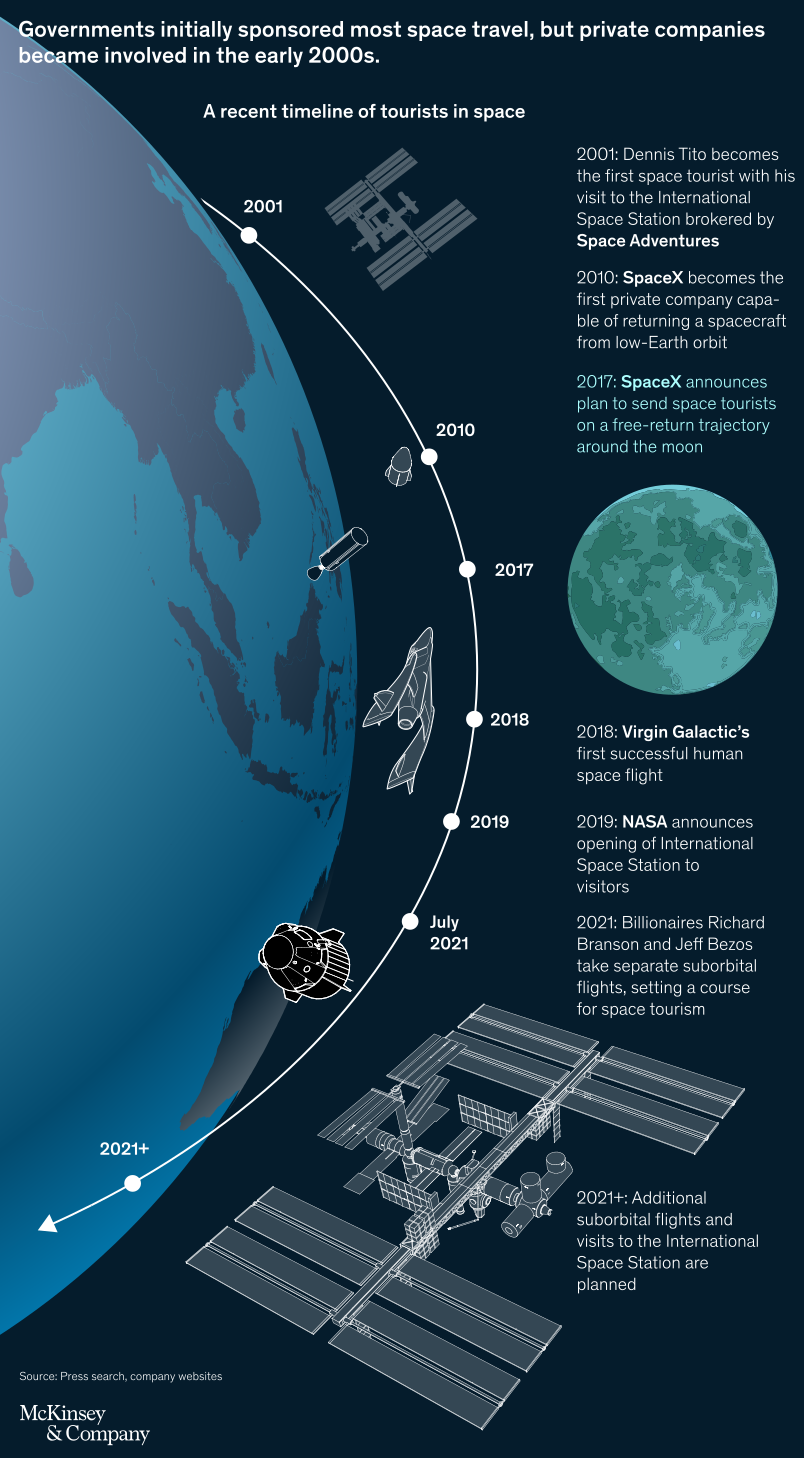
July 28, 2021 – Two billionaires soared into suborbital space in separate trips this month, ushering in a new era of space exploration for private citizens. Richard Branson reached the edge of space first, on July 11, in a rocket operated by Virgin Galactic. Jeff Bezos’ suborbital flight followed nine days later in a shuttle operated by his business, Blue Origin. If test flights continue to go smoothly, commercial trips to space—for those with the financial means to book a seat—are on the horizon.
To read the commentary, see “Wall Street to Mission Control: Can space tourism pay off?”, May 12, 2021.
customizer here
Visual form
Illustrated timeline infographic.
Layout / body structure
The chart is a single curved timeline running from the upper left toward the lower left, with milestone labels placed along the arc and explanatory text arranged in a right-hand column. Read the dated points in order along the curve while matching them to the narrative callouts on the right.
What is being compared
The timeline compares stages in the development of space tourism over time, from government-dominated travel to a more active role for private companies and planned tourist flights. It is comparing milestone years and the organizations associated with those shifts.
Measurement system
The chart is chronological rather than numeric. Time is marked by dated points along the arc, beginning in 2001 and moving through 2010, 2017, 2018, 2019, July 2021, and 2021 plus planned future activity.
Visible structure inside the graphic
A large globe anchors the left side, while a bright curved path carries dated nodes past illustrations of spacecraft and the International Space Station. The right side contains milestone text blocks naming Dennis Tito, SpaceX, Virgin Galactic, NASA, and the 2021 billionaire suborbital flights, while the 2021-plus endpoint extends beyond the visible Earth with an arrow.
Main takeaway from the visual
The timeline shows a clear shift from government-backed space travel toward private-sector participation and then toward a broader tourist market. The early milestones are sparse, but the sequence becomes denser and more commercially focused after 2010, culminating in multiple private-spaceflight milestones around 2021.
Key standout values or extremes
The first major point is 2001, when Dennis Tito becomes the first space tourist. The timeline then marks 2010 for SpaceX’s return capability, 2017 for SpaceX’s announced lunar tourist plan, 2018 for Virgin Galactic’s successful human flight, 2019 for NASA opening the ISS to visitors, July 2021 for the Branson and Bezos suborbital flights, and a 2021-plus marker for additional planned flights and station visits.
Controls / sequence, when applicable
This is a static chart image with no in-chart controls to operate.
Companion media, when applicable
There is no separate companion audio or video; the chart image is the full visual on this page.