Source page: McKinsey & Company
Commentary
Preparing for future pandemics now can help minimize the economic damage
COVID-19 | Economics | Public Health
July 27, 2020 – The COVID-19 pandemic is expected to inflict $9 trillion to $33 trillion in economic damage. Relatively smaller investments in preventive measures could substantially reduce the economic damage caused by future pandemics.
To read the article, see “Not the last pandemic: Investing now to reimagine public-health systems,” July 13, 2020.
customizer here
Visual form
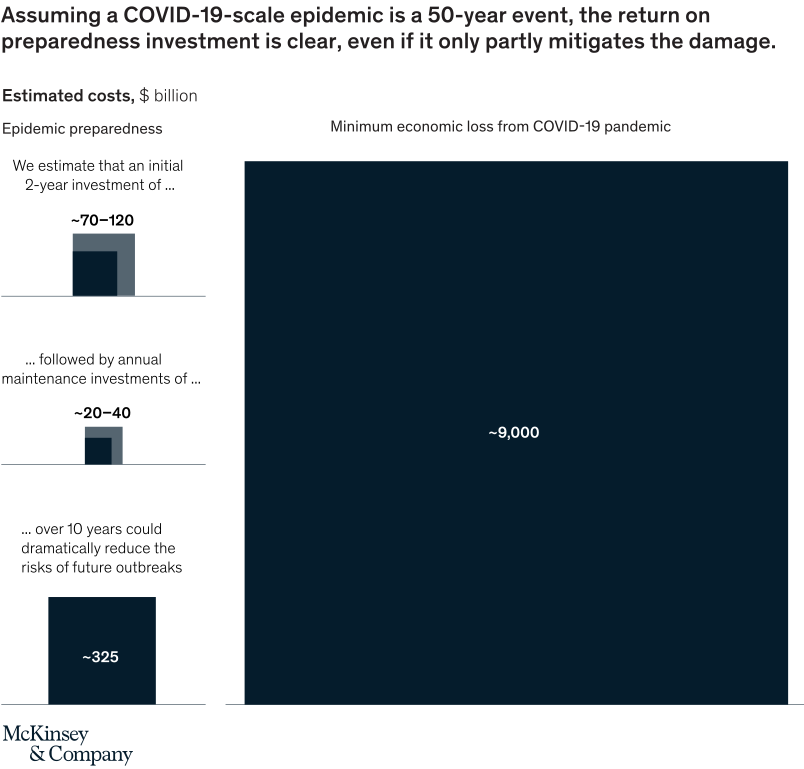
Bar Chart: preparedness investment versus COVID-19-scale economic-loss comparison.
Layout / body structure
The left side shows estimated preparedness investment and annual maintenance cost as small bars. The right side shows the minimum economic loss from a COVID-19-scale pandemic as a much larger bar, making the scale difference the central visual feature.
What is being compared
It compares the cost of pandemic preparedness with the economic damage from a COVID-19-scale pandemic and the potential value of reducing future outbreak risk.
Measurement system
All values are measured in billions of dollars. The chart compares initial investment, annual maintenance, reduced future outbreak risk, and minimum pandemic economic loss.
Visible structure inside the graphic
The preparedness bars are small relative to the pandemic-loss bar, which dominates the right side. The visual imbalance makes the investment case immediately visible.
Main takeaway from the visual
The chart shows that the cost of prevention is tiny compared with the cost of another pandemic-scale event. Even partial mitigation can justify preparedness spending because the downside loss is so large.
Key standout values or extremes
Initial preparedness investment is estimated at about 70 billion to 120 billion dollars, followed by 20 billion to 40 billion dollars annually. The minimum economic loss from the pandemic is shown around 9,000 billion dollars.
Controls / sequence, when applicable
This is a static bar-chart comparison; there are no in-chart controls to operate.
Companion media, when applicable
There is no separate companion audio or video; the preparedness-cost bar chart is the full visual on this page.