Source page: McKinsey & Company
Commentary
Black Americans face disproportionate share of disruption from coronavirus
COVID-19 | Public Health | Inequality | North America | Jobs
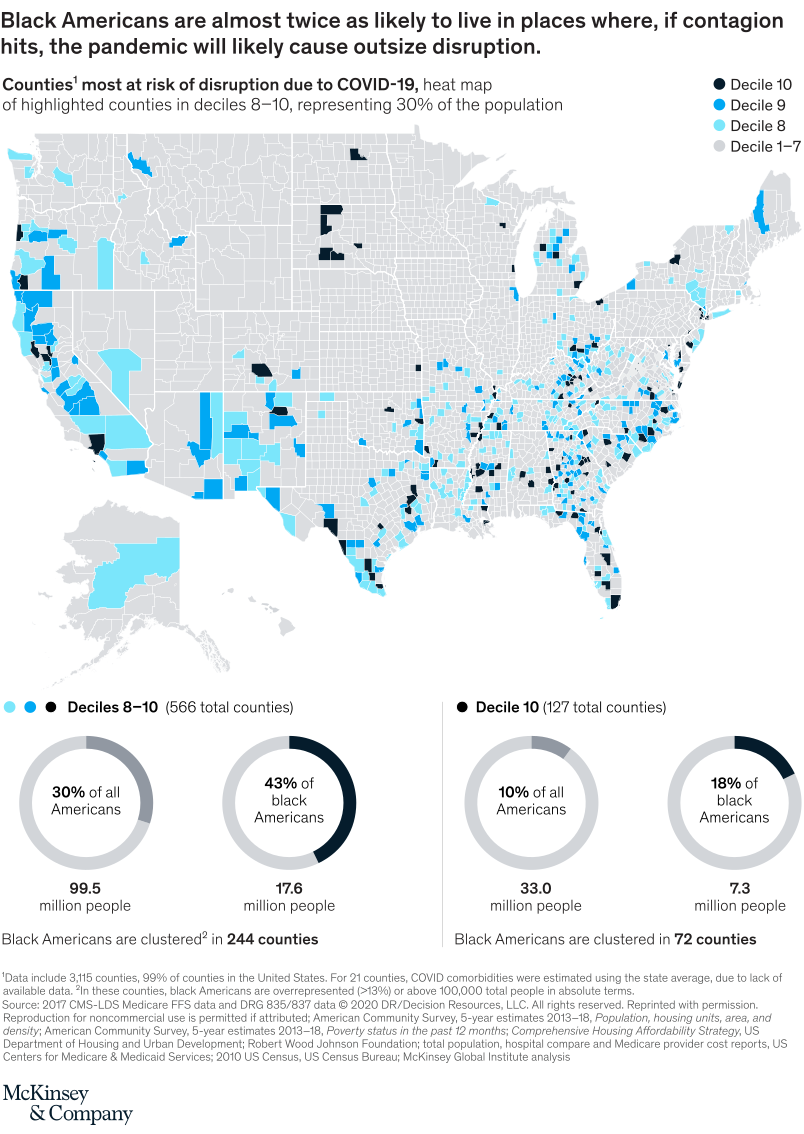
May 8, 2020 – McKinsey analysis shows that black Americans are almost twice as likely to live in the counties at highest risk of health and economic disruption, if or when the pandemic hits those counties. Nationally, black Americans are not only more likely to be at higher risk for contracting COVID-19 but also have lower access to testing. In addition, they are likely to experience more severe complications from the infection; black Americans are on average about 30 percent likelier to have health conditions that exacerbate the effects of COVID-19. We also found that 39 percent of all jobs held by black Americans—compared with 34 percent held by white Americans—are now threatened by reductions in hours or pay, temporary furloughs, or permanent layoffs, totaling 7 million jobs.
To read the article, see “COVID-19: Investing in black lives and livelihoods,” April 2020.
customizer here
Visual form
Choropleth Map and Pie / Donut Chart: US county disruption-risk map with population-exposure callouts.
Layout / body structure
The main field is a county-level map of the United States colored by COVID-19 contagion-disruption risk deciles. Beneath the map, two donut-style callouts compare the share of all Americans and Black Americans living in the highest-risk county groups.
What is being compared
It compares geographic exposure to COVID-19 disruption risk for Black Americans versus the overall US population. The map shows where high-risk counties are, while the callouts quantify how much of each population lives in those counties.
Measurement system
County color uses risk deciles, with the highest decile groups called out in the lower annotations. The donut callouts report both population share percentages and population counts in millions.
Visible structure inside the graphic
High-risk counties appear in clusters across metro and regional areas, especially in parts of the East and South. The lower callouts make the disparity visible by placing the all-population and Black-population percentages side by side.
Main takeaway from the visual
The visual shows that pandemic disruption risk was not evenly distributed across the US population. Black Americans were more concentrated in counties where contagion, if it hit, was likely to cause outsized health and economic disruption.
Key standout values or extremes
The callouts show 30 percent of all Americans versus 43 percent of Black Americans living in deciles 8 to 10, and 10 percent of all Americans versus 19 percent of Black Americans living in decile 10 counties.
Controls / sequence, when applicable
This is a static choropleth map with donut-style callouts; there are no in-chart controls to operate.
Companion media, when applicable
There is no separate companion audio or video; the county map and callouts are the full visual on this page.