Philosophy School
Harranian Neoplatonism
Late antique and early Islamic Harranian Sabian tradition joining astral religion, Hellenic pagan learning, Neoplatonic and Pythagorean metaphysics, Hermetic materials, mathematics, astronomy, translation culture, and the Baghdad intellectual world around Thabit ibn Qurra.
Structural Factors
- Shared Core Claims
- Harranian Neoplatonism preserves and reworks Greek pagan, mathematical, astral, Hermetic, Pythagorean, and Neoplatonic learning within an early Islamic setting, treating the ordered cosmos as mathematically, ritually, and metaphysically intelligible.
- Shared Methods
- Mathematical demonstration, astronomical calculation, Greek-Arabic translation and correction, astral-symbolic interpretation, Neoplatonic and Pythagorean hierarchy, Hermetic reception, philosophical theology, and preservation of pagan learning under Abbasid rule.
- Shared Lineage
- The lineage is reconstructed from late antique Hellenic and Syriac learning, Harranian Sabian communities, Thabit ibn Qurra and his family, Abbasid translation culture, mathematical-astronomical schools, Hermetic materials, and later Arabic and Latin reception.
- Shared Problems
- Identity of the Harranian Sabians, relation to Quranic Sabians, paganism and protected religious status, astral religion, Greek science in Arabic, Neoplatonism and Hermetism, magic and mathematics, and whether Harran names a school, community, or reconstructive category.
- Shared Vocabulary
- Harran, Sabian, Thabit ibn Qurra, astral religion, Neoplatonism, Pythagoreanism, Hermetica, Picatrix, images, mathematics, astronomy, translation, Greek wisdom, paganism, planetary cult, and Abbasid learning.
- Shared Historical Context
- The tradition belongs to late antique and early Islamic Harran, Syriac-Arabic scholarly exchange, Abbasid Baghdad, the translation movement, Islamic science, and medieval debates over pagan learning, religious classification, and Greek philosophical inheritance.
Defining Axes
- Doctrine
- Its doctrine joins a hierarchical, mathematically ordered cosmos with astral symbolism, pagan cultic inheritance, Neoplatonic and Pythagorean themes, and scientific-philosophical inquiry in Arabic.
- Method
- Its method combines mathematical proof, astronomical modeling, translation correction, philosophical commentary, astral interpretation, Hermetic image theory, and learned preservation of Greek sciences.
- Lineage
- The lineage axis runs from Greek and late antique pagan philosophy through Harran, Syriac and Arabic scholarly mediation, Thabit ibn Qurra and his descendants, Abbasid Baghdad, and later Islamic and Latin transmission.
- Subject Focus
- Harranian Neoplatonism focuses on metaphysics, mathematics, astronomy, cosmology, astral religion, philosophical theology, translation, Hermetic texts, and the relation between science and ritual practice.
- Geography / Culture
- Its centers include Harran, northern Mesopotamia, Syriac-speaking scholarly worlds, Abbasid Baghdad, and later Arabic and Latin contexts in which Harranian materials were cataloged, criticized, or transmitted.
- Historical Reaction
- It reacts to Islamic imperial classification of non-Muslim communities, the Abbasid demand for Greek science, the survival of pagan learning, and the need to translate, defend, and adapt Hellenic cosmology and mathematics.
Internal Structure
- Foundational Texts
- There is no single surviving Harranian Neoplatonic canon; evidence comes from reports on Harran and the Sabians, Thabit's works, Arabic translation and revision activity, mathematical and astronomical writings, De imaginibus and image-magic reception, al-Masudi and other medieval witnesses, and modern reconstruction.
- Core Vocabulary
- Core vocabulary includes Harran, Sabian, star, image, talisman, Hermetic, Neoplatonic, Pythagorean, mathematical proof, celestial order, translation, correction, Greek wisdom, pagan cult, Baghdad, and Thabit.
- Metaphysics
- Its metaphysics is reconstructed as a cosmic hierarchy in which mathematical order, celestial powers, divine or semi-divine intelligences, and symbolic images connect astronomy, ritual, and philosophical theology.
- Epistemology
- Its epistemology privileges exact mathematical and astronomical knowledge, inherited Greek learning, translation and correction, scholarly demonstration, and symbolic interpretation of celestial and ritual signs.
- Ethics
- Its ethical profile is indirect but includes learned discipline, fidelity to ancestral cult and texts, preservation of wisdom, mathematical rigor, patronage service, and negotiation of communal identity under Islamic rule.
- Method
- The school works through translation, revision of Greek scientific texts, mathematical treatise, astronomical problem-solving, apologetic classification, ritual-astral interpretation, commentary, and later historical reconstruction from external reports.
- Internal Debates
- Internal and reconstructive debates concern the identity of the Sabians, the status of Harranian paganism, relation to Quranic Sabians, the role of Thabit, authenticity of image-magic materials, Greek science and religion, and the boundaries between philosophy, astronomy, and ritual.
- Successors
- Successors and related formations include Thabit's family of mathematicians and astronomers, Arabic astronomy, Hermetic and Picatrix reception, medieval Latin image-magic traditions, histories of Islamic science, and modern studies of Harran and Sabian identity.
External Classification Context
- History of Philosophy
- Harranian Neoplatonism is a specialized but important bridge between late antique pagan philosophy, Syriac-Arabic transmission, Abbasid science, Hermetic materials, and medieval cosmological speculation.
- Philosophy of Philosophy
- It treats philosophy as inseparable from mathematical science, cosmology, inherited wisdom, and religious-symbolic practice, challenging modern separations between philosophy, science, and ritual.
- Intellectual History
- Its intellectual history depends on Harran's religious community, Abbasid patronage, the translation movement, Greek mathematical and astronomical texts, Islamic classifications of Sabians, and later Arabic and Latin receptions.
- University Classification
- Usually classified under Islamic philosophy, history of science, Arabic philosophy, Neoplatonism, Hermetism, astronomy, mathematics, religious studies, late antique studies, and medieval intellectual history.
- Classical Sources
- Classical evidence comes from Thabit's mathematical and astronomical writings, medieval Arabic historians and bibliographers, reports on Harran and Sabians, Hermetic and image-magic traditions, manuscript catalogs, and modern critical scholarship.
- Sociology of Knowledge
- The tradition persisted through family networks, translation workshops, court patronage, religious minority strategies, manuscript transmission, astronomical and mathematical teaching, cataloging, and modern history-of-science scholarship.
Linked Philosophers
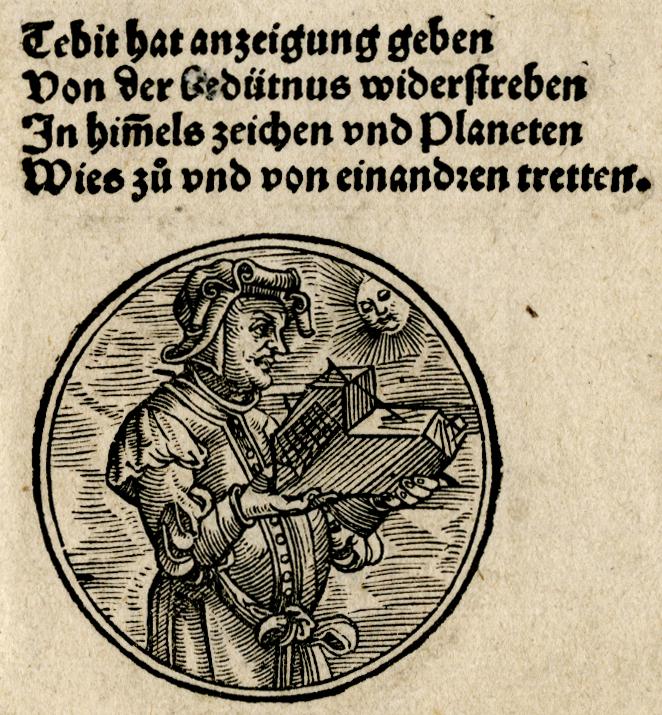
Thābit ibn Qurra
826 CE – 901 CE
Harran, Upper Mesopotamia
Harranian Sabian polymath of Baghdad, Greek-Syriac-Arabic translation, geometry, number theory, ratios, astronomy, statics, medicine, Galenic summaries, De imaginibus, and Latin/Hebrew reception.