Illuminationism
Suhrawardi's Persian-Islamic wisdom of illumination centered on light metaphysics, knowledge by presence, imaginal worlds, symbolic cosmology, critique of Avicennian Peripateticism, and the union of disciplined demonstration with contemplative disclosure.
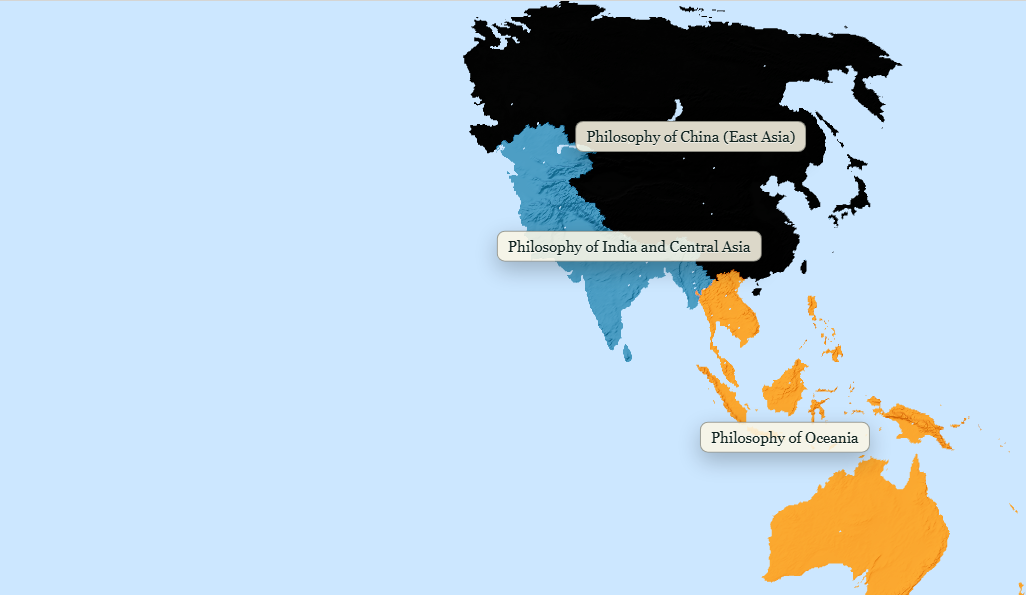

Structural Factors
- Shared Core Claims
- Reality is ordered as degrees of light and darkness; philosophy reaches truth through demonstration joined to purification, presential knowledge, symbolic interpretation, and visionary disclosure beyond merely discursive acquisition.
- Shared Methods
- Logical analysis, critique of definition, demonstration, presential knowledge, illumination, visionary intuition, symbolic hermeneutics, ascetic and contemplative discipline, philosophical narrative, and commentary.
- Shared Lineage
- Illuminationism draws on Suhrawardi, Avicennian and Farabian philosophy, Platonist and Neoplatonic motifs, Persian symbolic kingship, Sufi vocabulary, Shahrazuri, Qutb al-Din al-Shirazi, Dawwani, Safavid philosophy, and later Sadrian reception.
- Shared Problems
- Essence and existence, knowledge by presence, acquired knowledge, light and darkness ontology, hylomorphism, imaginal world, definition, Peripateticism, Avicennism, Platonism, Sufism, Persian symbolism, orthodoxy, and Mulla Sadra reception.
- Shared Vocabulary
- ishraq, light, darkness, nur al-anwar, knowledge by presence, acquired knowledge, imaginal world, suspended images, barzakh, illumination, hikma, Peripatetic, Avicennian, symbolic narrative, and presential awareness.
- Shared Historical Context
- The school formed in twelfth-century Persianate Islam and Ayyubid Aleppo, developed through post-Avicennian commentary, Maragha and Iranian scholarly culture, Safavid philosophy, and modern scholarship by Corbin, Ziai, Walbridge, and others.
Defining Axes
- Doctrine
- Its doctrine centers on a hierarchy of lights, presential self-awareness, imaginal forms, cosmic mediation, symbolic geography, and a critique of Peripatetic definitions and matter-form accounts.
- Method
- The method combines strict logic and demonstration with spiritual discipline, illumination, vision, symbolic story, commentary, and the philosophical use of Persianate and Platonic images.
- Lineage
- The lineage runs from Suhrawardi through Shahrazuri, Qutb al-Din al-Shirazi, Dawwani, Mir Damad, Mulla Sadra, Iranian and Ottoman commentary traditions, and modern Islamic philosophy scholarship.
- Subject Focus
- Illuminationism focuses on metaphysics, epistemology, logic, psychology, cosmology, philosophy of religion, symbolic hermeneutics, imaginal ontology, and the conditions of philosophical realization.
- Geography / Culture
- Its centers include Persianate Iran, Aleppo, Anatolia, Maragha, Shiraz, Ottoman and Safavid scholarly worlds, and later global Islamic philosophy research.
- Historical Reaction
- It reacts to Avicennian Peripatetic dominance, technical definitions, purely acquired cognition, Aristotelian hylomorphism, and inherited Greek-Arabic philosophy by reworking them through light, presence, and symbolic wisdom.
Internal Structure
- Foundational Texts
- Foundational texts include Suhrawardi's Hikmat al-Ishraq / The Philosophy of Illumination, al-Talwihat, al-Muqawamat, al-Mashari wa-l-Mutarahat, Hayakil al-Nur, Persian symbolic narratives, Shahrazuri and Qutb al-Din al-Shirazi commentaries, Dawwani's postclassical reception, and later Safavid and Sadrian engagement.
- Core Vocabulary
- Core vocabulary includes ishraq, hikmat al-ishraq, light of lights, knowledge by presence, acquired knowledge, illumination, imaginal world, suspended image, barzakh, hierarchy of lights, darkness, form, definition, symbol, vision, and sage.
- Metaphysics
- Illuminationist metaphysics describes reality as intensities and relations of light, from the Light of Lights through immaterial lights, governing lights, suspended images, bodies, and darkness, with existence understood through presence and manifestation.
- Epistemology
- Its epistemology distinguishes acquired representational knowledge from knowledge by presence, grounding certainty in immediate self-awareness, illumination, disciplined demonstration, purification, and the disclosure of intelligible reality.
- Ethics
- Its ethics links philosophical knowledge to ascetic discipline, purification, detachment from bodily darkness, intellectual virtue, contemplative practice, symbolic self-transformation, and the sage's movement toward luminous presence.
- Method
- Illuminationist method uses logical critique, demonstrations, commentary, visionary report, symbolic Persian narratives, cosmological allegory, and disciplined contemplation to connect proof, presence, and spiritual realization.
- Internal Debates
- Internal debates concern Suhrawardi's relation to Avicenna, Platonism, Sufism, and Zoroastrian imagery; whether light is metaphor or ontology; how presence relates to concepts; the status of the imaginal world; and Sadrian reinterpretation.
- Successors
- Successors include Shahrazuri and Shirazi commentary traditions, postclassical Iranian philosophy, Dawwani, Mir Damad, Mulla Sadra, Safavid metaphysics, Persian philosophical theology, and modern studies of Islamic illuminationism.
External Classification Context
- History of Philosophy
- Illuminationism is a major post-Avicennian Islamic philosophical school, important for medieval metaphysics, epistemology, symbolism, and later Iranian philosophy.
- Philosophy of Philosophy
- It treats philosophy as both demonstrative science and transformative wisdom: true philosophy requires argument, discipline, contemplative disclosure, and direct presence rather than only scholastic dispute.
- Intellectual History
- Its history depends on Suhrawardi's corpus, commentaries, manuscript transmission, Persianate courts, madrasas, Sufi and philosophical circles, Safavid scholarly culture, Orientalist rediscovery, and contemporary Islamic philosophy research.
- University Classification
- Usually classified under Islamic philosophy, medieval philosophy, Persian philosophy, metaphysics, epistemology, philosophy of mind, philosophy of religion, Neoplatonism, Sufism, and history of Islamic intellectual traditions.
- Classical Sources
- Classical evidence comes from Suhrawardi's Arabic treatises and Persian narratives, biographical reports, Shahrazuri and Qutb al-Din al-Shirazi commentaries, Dawwani and later Iranian texts, manuscripts, and postclassical citations.
- Sociology of Knowledge
- Illuminationism spread through manuscript copying, philosophical commentaries, Iranian and Ottoman teaching networks, Sufi-philosophical circles, Safavid institutions, libraries, cataloging projects, editions, translations, and modern scholarship.
Linked Philosophers
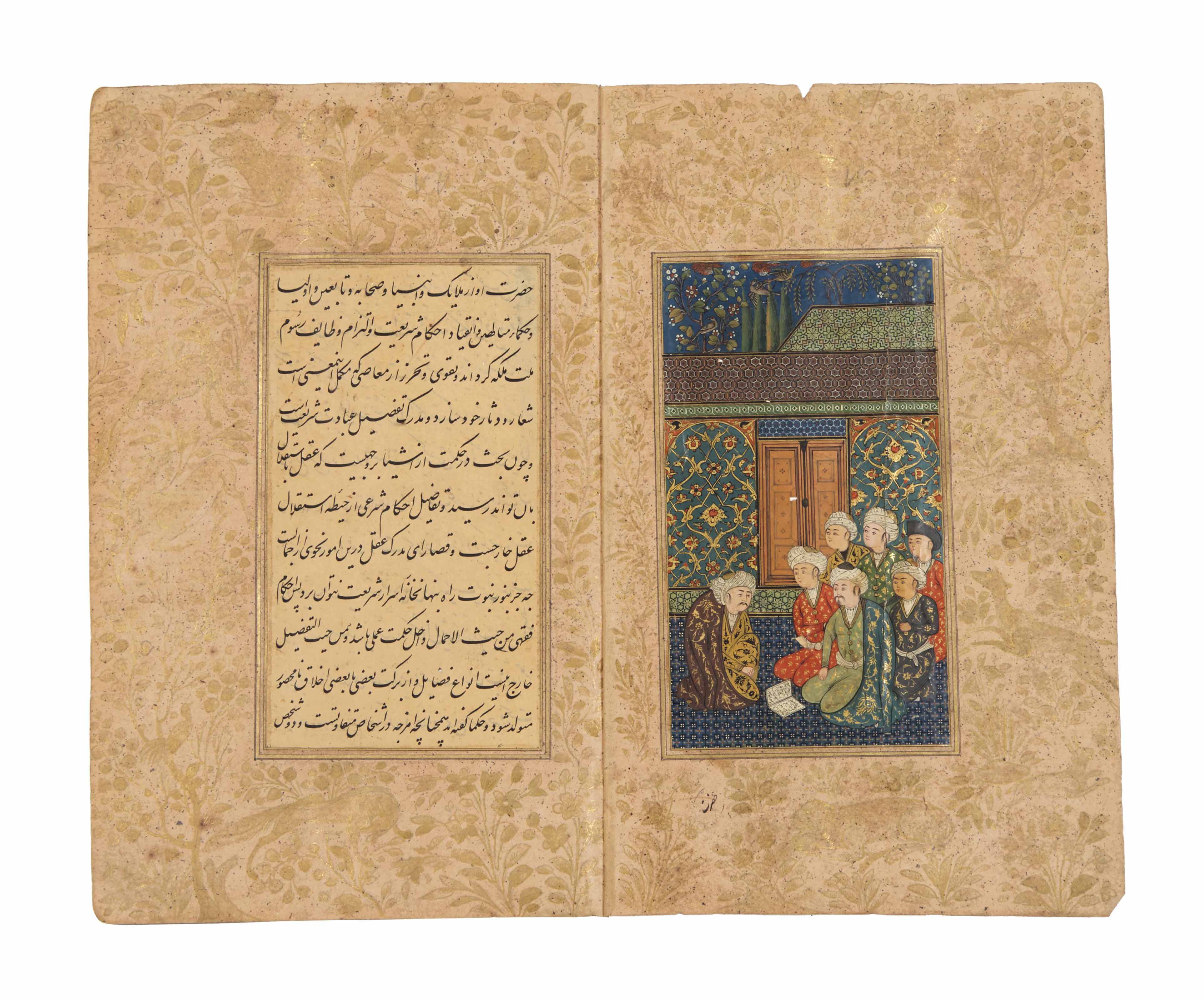
Jalal al-Din al-Dawwani
1427 CE – 1502 CE
Dawan (near Kazerun, Fars)
Persian philosopher and theologian from Dawan whose post-Avicennian metaphysics, Illuminationist commentary, logic, ethics, and philosophical theology shaped late medieval Islamic philosophy.
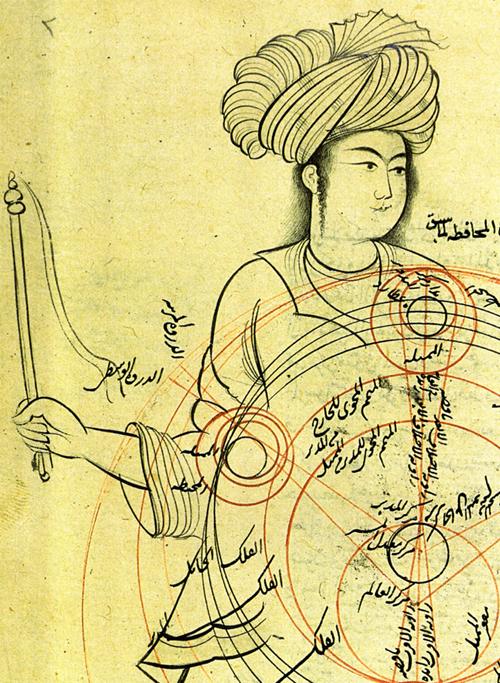
Qutb al-Din al-Shirazi
1236 CE – 1311 CE
Shiraz
Persian Islamic polymath of Shiraz, Maragha astronomy, Avicennan medicine, Illuminationist commentary, planetary models, optics, rhetoric, Quran commentary, and Durrat al-Taj.
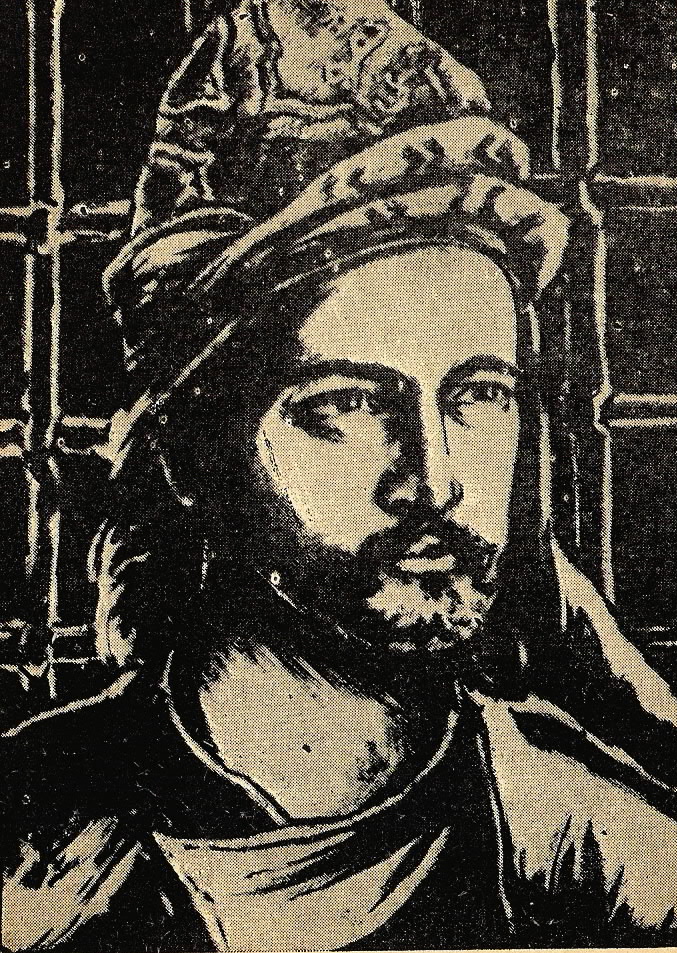
Shihāb al-Dīn Suhrawardī
1154 CE – 1191 CE
Suhraward (Zanjan region)
Persian Illuminationist philosopher of presential knowledge, ontology of lights, Avicennan critique, imagination, symbolic narrative, and later ishraqi reception.