Islamic Peripateticism
Islamic Peripateticism centers al-Kindi and al-Farabi here and frames falsafa through Greek-Arabic transmission, Aristotelian logic, demonstration, metaphysics, intellect, causality, prophecy, political order, and later Avicenna/Ibn Rushd reception as context.
Structural Factors
- Shared Core Claims
- Islamic Peripateticism develops philosophical inquiry in Arabic-Islamic settings through Aristotelian and Neoplatonic inheritance, demonstration, logic, metaphysics, intellect, causality, prophecy, political order, and the relation between philosophical reason and revealed religion. This page centers al-Kindi and al-Farabi as linked philosophers while treating Avicenna, Ibn Rushd/Averroes, Baghdad Aristotelians, and Greek-Arabic transmission as source context.
- Shared Methods
- Logical demonstration, syllogistic analysis, classification of sciences, Greek-Arabic source comparison, metaphysical analysis, commentary and reception history, political-philosophical comparison, language and logic analysis, catalog review, and source/scholarship review.
- Shared Lineage
- Al-Kindi and al-Farabi are preserved as the linked philosophers. The school context includes the translation movement, Baghdad intellectual culture, Greek philosophical sources, Aristotelian curriculum, Neoplatonic mediation, later Avicenna/Ibn Sina and Ibn Rushd/Averroes reception, and Baghdad Peripatetic scholarship without adding those figures as linked philosophers.
- Shared Problems
- Falsafa, demonstration, logic, language, metaphysics, First Cause, emanation, Active Intellect, human intellect, prophecy, religion and philosophy, political order, causality, essence and existence, Greek sources, Aristotle, Baghdad intellectual culture, and Greek-Arabic transmission.
- Shared Vocabulary
- Islamic Peripateticism, falsafa, mashsha'i, aql, demonstration, syllogism, First Cause, Active Intellect, emanation, prophecy, logic, language, metaphysics, political philosophy, Aristotle, Baghdad, and Greek-Arabic transmission.
- Shared Historical Context
- Islamic Peripateticism belongs to Arabic-Islamic philosophy and develops through translation, commentary, classification of sciences, and philosophical synthesis. It receives Greek philosophical materials through Arabic intellectual culture and becomes a major context for later Avicenna and Averroes reception.
Defining Axes
- Doctrine
- Aristotelian and Neoplatonic philosophical inheritance adapted to Arabic-Islamic questions about reason, metaphysics, intellect, causality, prophecy, and political order.
- Method
- Logical demonstration, syllogistic reasoning, classification of sciences, text and translation comparison, metaphysical analysis, and reception-history synthesis.
- Lineage
- Al-Kindi and al-Farabi as linked philosophers; Greek sources, Baghdad translation culture, Aristotelian curriculum, Avicenna/Ibn Sina, Ibn Rushd/Averroes, and Baghdad Peripatetics as source context.
- Subject Focus
- Logic, metaphysics, language, intellect, natural philosophy, politics, prophecy, religion and philosophy, causality, science, and Greek-Arabic philosophical transmission.
- Geography / Culture
- Arabic-Islamic philosophical culture, especially Abbasid and Baghdad contexts, with reception across Islamic, Latin, and university philosophical traditions.
- Historical Reaction
- A constructive reception of Greek philosophy in Arabic-Islamic settings, answering questions about how demonstrative reason, metaphysics, science, prophecy, and political religion can be held together.
Internal Structure
- Foundational Texts
- Source evidence includes SEP al-Farabi and al-Kindi rows, MuslimPhilosophy al-Kindi rows, Arabic/Islamic philosophy context, Greek sources, Avicenna and Averroes context rows, Baghdad Peripatetic search/context rows, Open Library, WorldCat, Internet Archive, PhilPapers, Cambridge, Oxford, JSTOR, and catalog/scholarship surfaces.
- Core Vocabulary
- Falsafa, mashsha'i, aql, demonstration, syllogism, logic, metaphysics, language, First Cause, Active Intellect, emanation, prophecy, political philosophy, Greek sources, Aristotle, Baghdad, Avicenna/Ibn Sina, Ibn Rushd/Averroes, and Greek-Arabic transmission.
- Metaphysics
- The metaphysical frame includes First Cause, emanation, intellect, causality, essence and existence, natural philosophy, and the reception of Aristotelian and Neoplatonic structures in Arabic-Islamic philosophy.
- Epistemology
- Knowledge is framed through demonstration, logic, syllogism, language analysis, classification of sciences, intellect, scientific inquiry, and the relation between philosophical proof and religious discourse.
- Ethics
- Ethical and political stakes include the relation between philosophy and religion, the role of prophecy, virtuous political order, intellectual perfection, and the public organization of knowledge and authority.
- School Method
- This pass combines direct al-Farabi and newly seeded al-Kindi rows with Arabic/Islamic philosophy, Greek-source, Avicenna, Averroes, and Baghdad Peripatetic context rows while holding out image/audio rows and unrelated school takeovers.
- Internal Debates
- Internal tensions include how Aristotelian demonstration relates to prophecy and religious law, how Neoplatonic emanation relates to Aristotelian causality, how logic structures language and science, and how later Avicenna/Averroes reception changes the Peripatetic inheritance.
- Successors
- Later reception includes Avicennian metaphysics, Averroist Aristotelianism, Latin university debates, Jewish and Christian philosophical reception, and modern scholarship on Arabic-Islamic philosophy and the Baghdad Peripatetic tradition.
External Classification Context
- History of Philosophy
- Classify under Arabic and Islamic philosophy, Islamic Peripateticism, falsafa, medieval philosophy, Aristotelianism, Neoplatonic reception, history of logic, metaphysics, and philosophy of religion.
- Philosophy of Philosophy
- Shows philosophy as demonstrative inquiry, textual transmission, translation, classification of sciences, and rational synthesis across linguistic, religious, and institutional contexts.
- Intellectual History
- Connects al-Kindi, al-Farabi, Greek philosophical sources, Arabic translation culture, Baghdad school context, Avicenna/Ibn Sina, Ibn Rushd/Averroes, and modern catalog and scholarship rows.
- University Classification
- Islamic Peripateticism, Arabic-Islamic philosophy, medieval philosophy, Aristotelianism, history of logic, metaphysics, philosophy of religion, political philosophy, philosophy of language, and history of science.
- Classical Sources
- Evidence includes SEP, Britannica, MuslimPhilosophy, IEP, Open Library, WorldCat, Internet Archive, PhilPapers, Cambridge, Oxford, JSTOR, Treccani, DFG, Google Books, and selected Arabic/Islamic philosophy context rows.
- Sociology of Knowledge
- The source set documents the school through encyclopedia, profile, public text, catalog, academic-search, archive, and scholarship rows while excluding image rows, audio rows, al-Biruni/Islamic Rationalism takeover rows, and broader Latin Averroism rows not approved for this pass.
Linked Philosophers
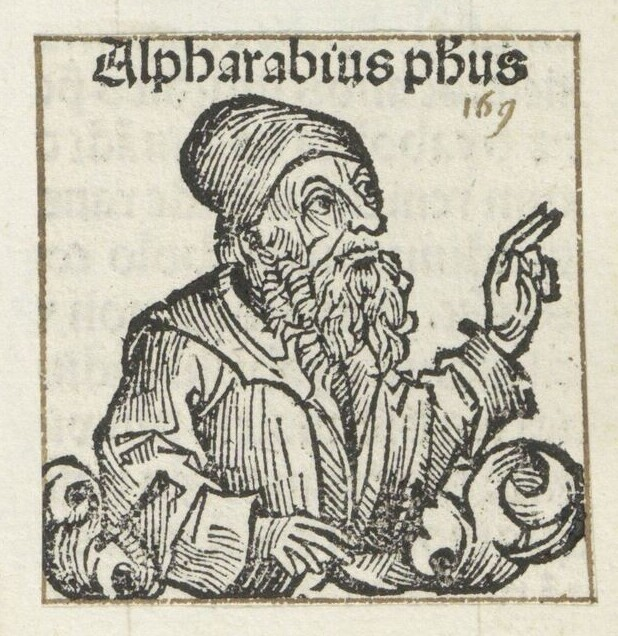
Abu Nasr al-Farabi
872 CE – 950 CE
Farab (Otrar), Transoxiana
Persian (Farab) philosopher from Farab (Otrar) associated with metaphysics, epistemology, and logic.

Abu Yusuf al-Kindi
801 CE – 873 CE
Kufa
Kufa-born Abbasid philosopher who turned Greek metaphysics, logic, medicine, optics, mathematics, music, and theology into an Arabic philosophical program, arguing for divine unity, finite creation, intellect, soul, and disciplined ethical life.
Other Voices
Reference entries, public text surfaces, catalog rows, and scholarship connected to Islamic Peripateticism, al-Farabi, al-Kindi, falsafa, demonstration, logic, metaphysics, Aristotle, Greek-Arabic transmission, and Baghdad Peripatetic context.