Samkhya
Classical Indian philosophical school, one of the orthodox darśanas, associated with Kapila and Īśvarakṛṣṇa, teaching a dualism of puruṣa and prakṛti, twenty-five tattvas, three guṇas, causation through evolution, and liberation through discriminative knowledge.
Structural Factors
- Shared Core Claims
- Samkhya holds that conscious puruṣas are distinct from unconscious prakṛti, that prakṛti evolves through the interplay of the three guṇas, and that suffering ends when discriminative knowledge separates pure witness-consciousness from material and mental processes.
- Shared Methods
- The school uses enumeration of principles, metaphysical analysis, inference, scriptural and teacher testimony, causal reasoning, analysis of experience, psychology of mind and senses, debate with rival darśanas, and systematic commentary on the Sāṃkhyakārikā.
- Shared Lineage
- Samkhya traces legendary origins to Kapila, early transmission through Āsuri and Pañcaśikha, classical formulation by Īśvarakṛṣṇa, commentarial development through Gauḍapāda, Vācaspati Miśra, Vijñānabhikṣu, and close relation to Yoga and wider Hindu philosophical debate.
- Shared Problems
- Central problems include the relation of consciousness and nature, why experience arises, how prakṛti evolves, how the guṇas explain change, whether God is necessary, how bondage occurs, how liberation is possible, and how many selves exist.
- Shared Vocabulary
- Key terms include Sāṃkhya, puruṣa, prakṛti, tattva, guṇa, sattva, rajas, tamas, buddhi, ahaṃkāra, manas, tanmātra, mahat, indriya, kaivalya, viveka, duḥkha, pariṇāma, satkāryavāda, and prakṛti-puruṣa viveka.
- Shared Historical Context
- Samkhya developed in ancient and classical India as a systematic metaphysical and soteriological school, interacting with Upaniṣadic speculation, Buddhism, Jainism, Yoga, Nyāya, Vedānta, epic literature, medical thought, and later Hindu scholastic commentary.
Defining Axes
- Doctrine
- Doctrinally, Samkhya is defined by dualism between puruṣa and prakṛti, plurality of selves, evolution of twenty-five tattvas, three guṇas, satkāryavāda causation, nontheistic explanation in classical form, and liberation through discriminative insight.
- Method
- Its method is analytic and enumerative: classify the constituents of experience, infer unmanifest causes from manifest effects, distinguish consciousness from mental matter, trace causal evolution, and use disciplined knowledge to undo misidentification.
- Lineage
- The lineage runs from legendary Kapila through Āsuri, Pañcaśikha, early epic and medical Sāṃkhya materials, Īśvarakṛṣṇa's Sāṃkhyakārikā, classical commentaries, Yoga synthesis, medieval theistic reinterpretations, and modern studies of Indian metaphysics.
- Subject Focus
- Samkhya focuses on metaphysics, cosmology, philosophy of mind, consciousness, psychology, causation, epistemology, soteriology, Indian philosophy, Yoga theory, comparative dualism, and the analysis of suffering and liberation.
- Geography / Culture
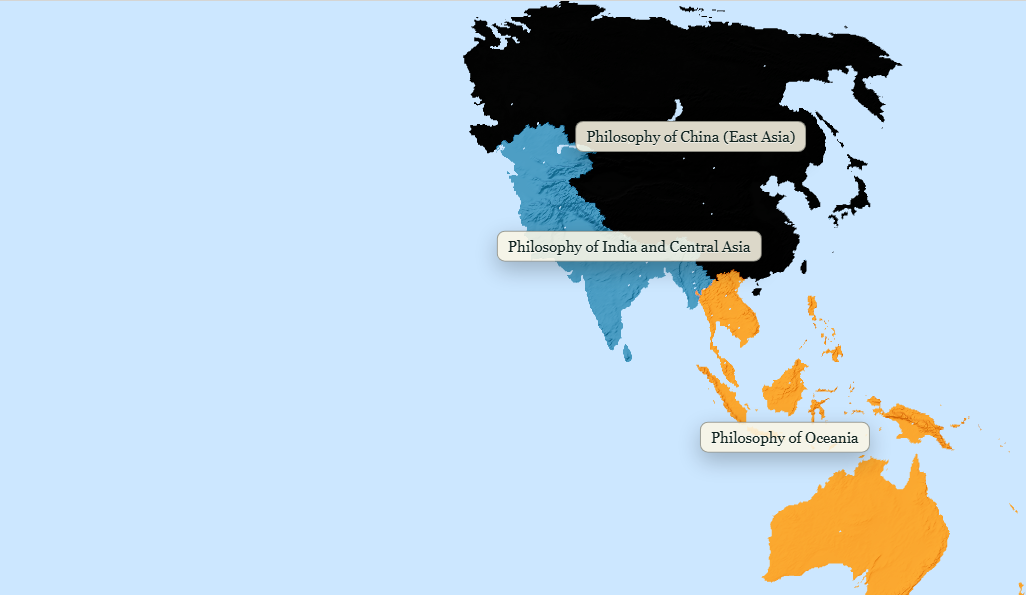
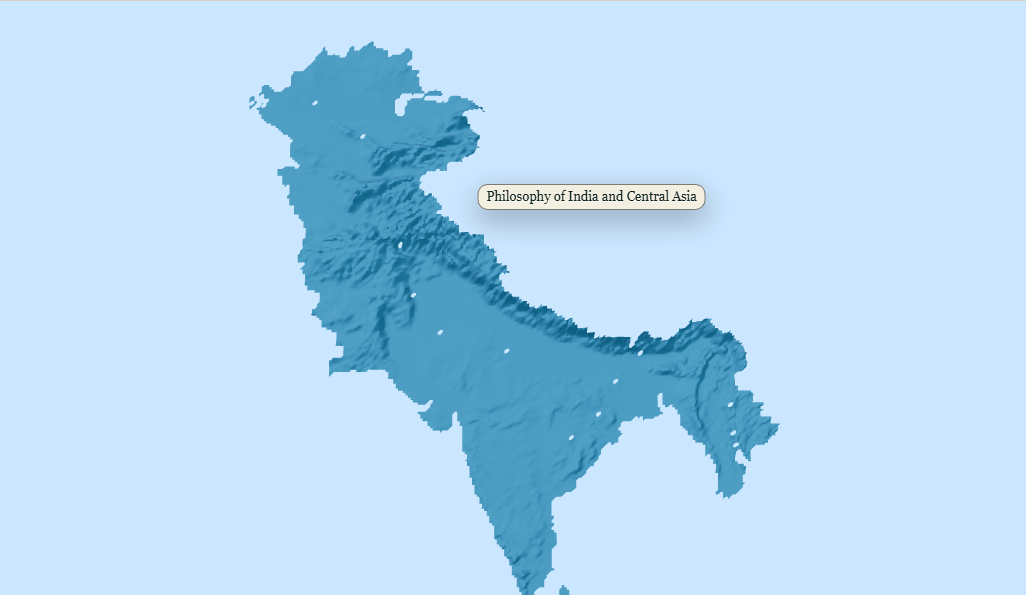
- Samkhya is centered in classical Indian Sanskrit intellectual culture, circulating through philosophical schools, epic and Purāṇic traditions, ascetic contexts, medical and Yoga traditions, commentarial lineages, and later global Indological scholarship.
- Historical Reaction
- Samkhya responds to Vedic and Upaniṣadic questions about self and cosmos, Buddhist and Jain analyses of bondage, rival Hindu accounts of causation and self, Yoga practice theory, Vedāntic monism, and debates over whether theistic explanation is needed.
Internal Structure
- Foundational Texts
- Foundational texts include the Sāṃkhyakārikā of Īśvarakṛṣṇa, reports of Kapila, Āsuri, Pañcaśikha, the Ṣaṣṭitantra tradition, Sāṃkhya passages in the Mahābhārata and Purāṇas, Gauḍapāda's Bhāṣya, Vācaspati Miśra's Tattvakaumudī, and Vijñānabhikṣu's commentaries.
- Core Vocabulary
- Core vocabulary includes consciousness, nature, witness, matter, evolution, principle, intellect, ego, mind, senses, subtle elements, gross elements, guṇa, equilibrium, disturbance, suffering, bondage, discrimination, isolation, liberation, and enumeration.
- Metaphysics
- Samkhya metaphysics treats reality as the conjunction of many conscious puruṣas with one or many forms of prakṛti, whose guṇas evolve into intellect, ego, mind, senses, subtle elements, and gross elements without needing creation from nothing.
- Epistemology
- Samkhya epistemology recognizes perception, inference, and reliable testimony as means of knowledge, while emphasizing inference from effects to causes and discriminative insight into the difference between pure consciousness and prakṛti's evolutes.
- Ethics
- Samkhya ethics centers on overcoming suffering, detachment from misidentified mental and bodily processes, cultivation of sattva, clarity of discernment, and liberation through knowledge rather than ritual, possession, or worldly achievement.
- Method
- The school proceeds by enumerating tattvas, analyzing the guṇas, explaining causal evolution, distinguishing puruṣa from buddhi and ahaṃkāra, interpreting classical kārikās, and comparing its account with Yoga, Vedānta, Buddhist, Jain, and Nyāya positions.
- Internal Debates
- Internal debates concern theistic versus nontheistic Samkhya, the number and status of prakṛti, how puruṣa can appear bound without acting, whether liberation requires practice or knowledge alone, and how classical Samkhya relates to Yoga and Vedānta.
- Successors
- Successors include Yoga philosophy, Vedāntic critiques and appropriations, Purāṇic cosmologies, Ayurvedic and medical uses of guṇa theory, modern Hindu thought, comparative philosophy of mind, and contemporary scholarship on consciousness and dualism.
External Classification Context
- History of Philosophy
- Samkhya is one of the central classical Indian philosophical systems, offering a powerful dualist metaphysics and psychology that shaped Yoga, Hindu cosmology, theories of causation, and cross-cultural debates about consciousness and matter.
- Philosophy of Philosophy
- Samkhya treats philosophy as discriminative analysis: inquiry liberates by correctly enumerating reality and seeing that consciousness is not the body, mind, ego, or changing field of nature.
- Intellectual History
- The tradition links early Indian soteriology, Sanskrit scholasticism, epic and Purāṇic cosmology, Yoga theory, Buddhist and Jain debate, medical psychology, medieval commentary, colonial Indology, and modern comparative philosophy of consciousness.
- University Classification
- Classify Samkhya under Indian philosophy, Hindu philosophy, classical philosophy, metaphysics, philosophy of mind, consciousness studies, epistemology, cosmology, Yoga studies, philosophy of religion, and comparative philosophy.
- Classical Sources
- Classical sources include the Sāṃkhyakārikā, Sāṃkhya commentaries, Mahābhārata materials, Purāṇic accounts of Kapila, Yoga Sūtra contexts, Sanskrit doxographies, Vācaspati Miśra, Vijñānabhikṣu, and modern translations and Indological scholarship.
- Sociology of Knowledge
- Samkhya survived through Sanskrit verse, teacher lineages, commentaries, Yoga transmission, doxographies, manuscript and print circulation, Hindu scholastic debate, colonial translation, university Indology, and modern global interest in Yoga and consciousness.
Linked Philosophers
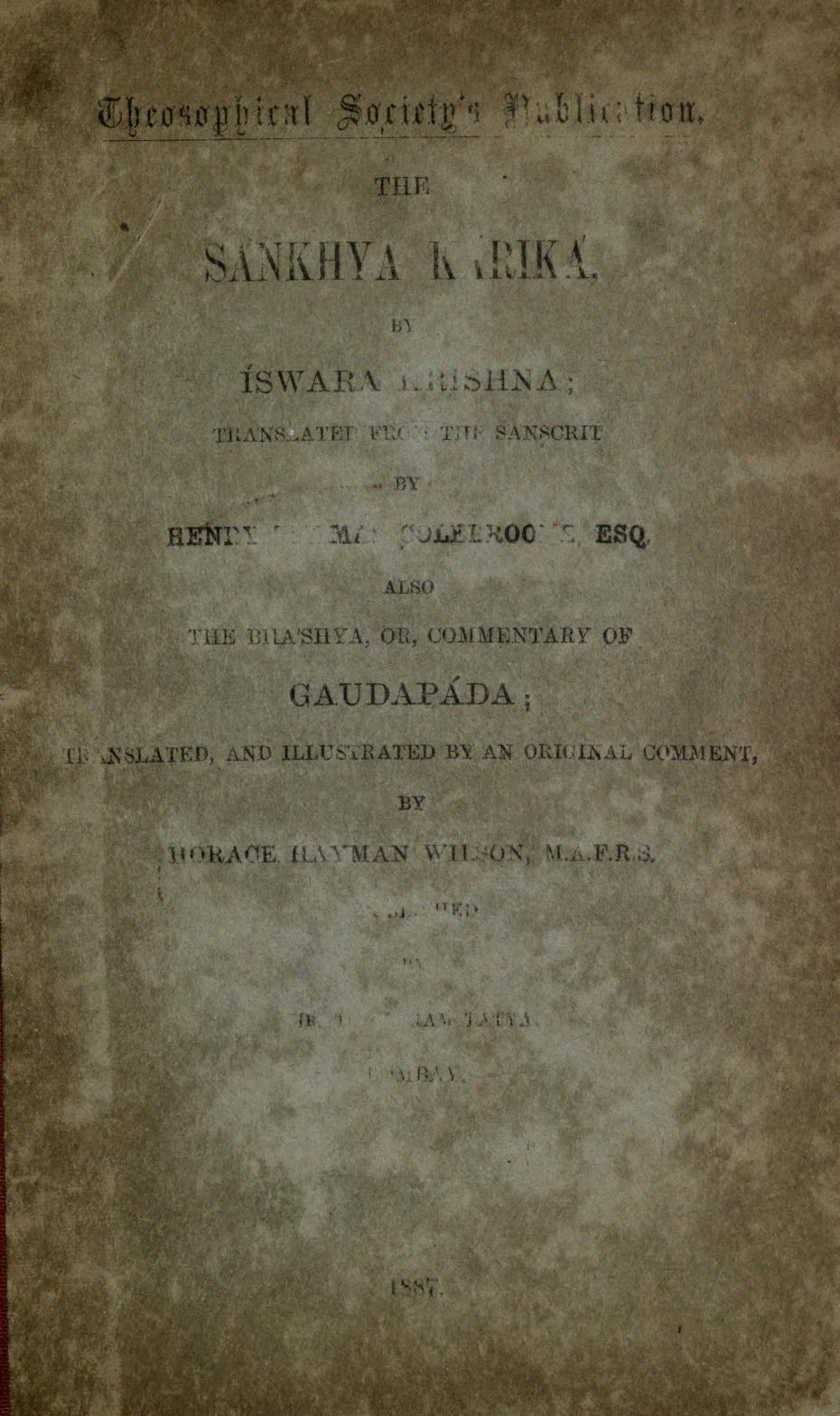
Īśvarakṛṣṇa
350 CE – 425 CE
probably northern India; exact birthplace unknown
Classical Indian Sāṃkhya philosopher credited with the Sāṃkhyakārikā, a compact verse synthesis of prakṛti, puruṣa, guṇas, pramāṇas, causation, mind, bondage, suffering, and liberation through discriminative knowledge.
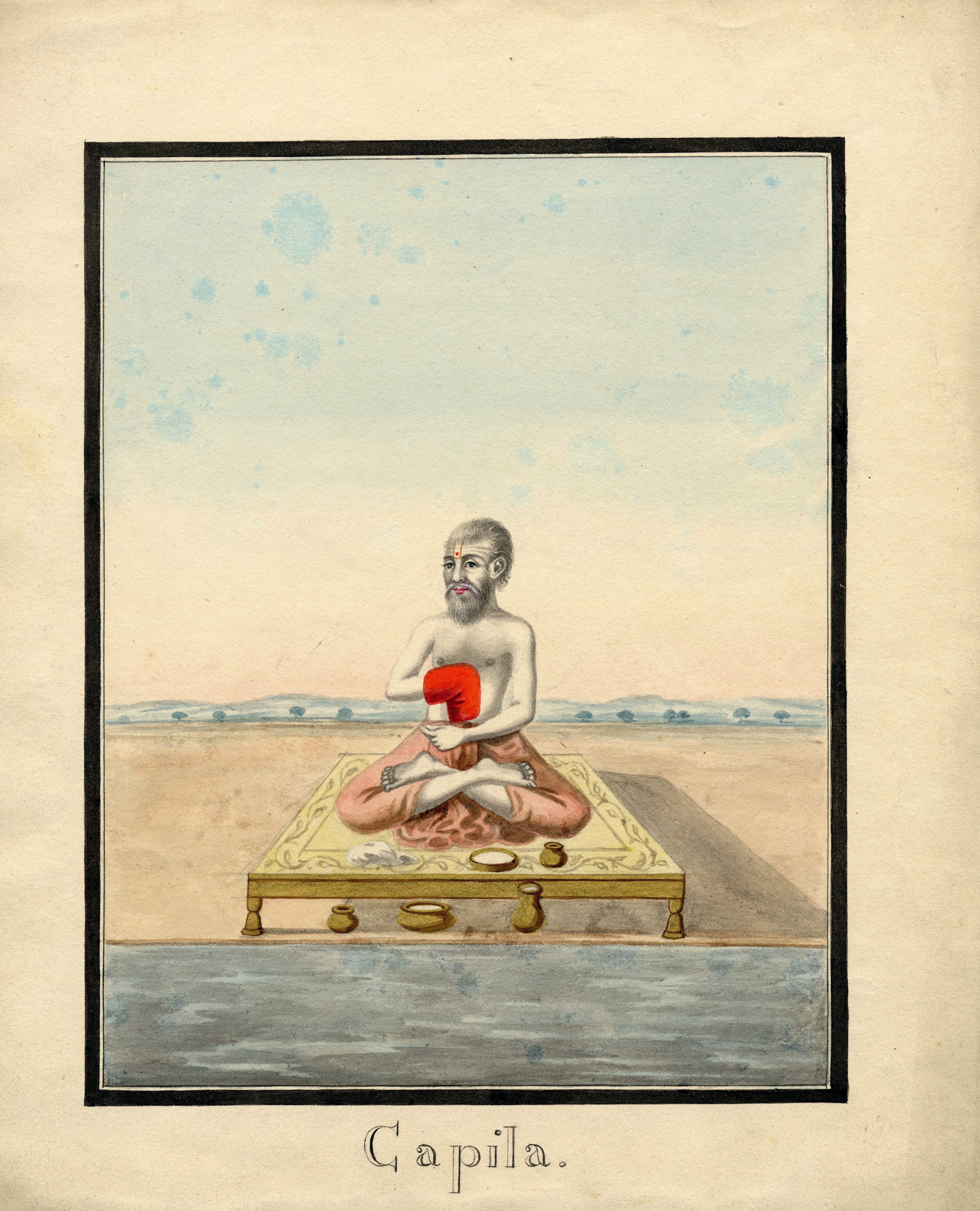
Kapila
700 BCE – 600 BCE
probably northern India or the Indo-Gangetic region; exact birthplace unknown
Legendary early Sāṃkhya founder associated with puruṣa, prakṛti, guṇas, discriminative knowledge, liberation, and later Sāṃkhya-pravacana transmission.