Philosophy School
Skepticism
Cross-cultural philosophical orientation questioning certainty, dogmatic metaphysics, and unexamined claims to knowledge, spanning Greek Pyrrhonian and Academic traditions, Indian skeptical currents such as Sañjaya Belaṭṭhiputta, and later epistemological debates over doubt, suspension, appearance, and inquiry.


Structural Factors
- Shared Core Claims
- Skepticism holds that many claims outrun available reasons and that philosophy should examine the grounds of belief before assenting. Its traditions emphasize doubt, equipollence, suspension of judgment, fallibilism, or therapeutic freedom from dogmatic disturbance.
- Shared Methods
- The school uses argument from disagreement, regress, relativity, hypothesis, circularity, conflicting appearances, counterexample, dialectical testing, skeptical tropes, debate with dogmatists, and disciplined attention to how things appear without overclaiming what they are.
- Shared Lineage
- Skepticism runs from early Greek and Indian doubting traditions through Pyrrho, Arcesilaus, Carneades, Aenesidemus, Agrippa, Sextus Empiricus, Sañjaya Belaṭṭhiputta, Buddhist and Jain debates, early modern skepticism, Hume, and contemporary epistemology.
- Shared Problems
- Central problems include whether knowledge is possible, how certainty differs from belief, whether perception reveals reality, how to answer disagreement and infinite regress, whether reason can justify itself, and whether suspension of judgment is livable.
- Shared Vocabulary
- Key terms include skepticism, doubt, inquiry, epochē, aporia, ataraxia, equipollence, appearance, criterion, assent, dogmatism, suspension, fallibilism, pyrrhonism, academic skepticism, trope, regress, relativity, perception, and judgment.
- Shared Historical Context
- Skepticism developed in ancient Greek, Hellenistic, Indian, Buddhist, Jain, and later early modern contexts where philosophers confronted rival schools, religious authority, metaphysical claims, sensory conflict, and the limits of argument.
Defining Axes
- Doctrine
- Doctrinally, Skepticism is defined by resistance to dogmatic assent, scrutiny of criteria of truth, the use of opposing arguments, and varying accounts of doubt, suspension, probability, appearances, tranquility, or epistemic humility.
- Method
- Its method is dialectical and therapeutic: set claims against counterclaims, expose underjustified assumptions, compare appearances, test criteria, suspend judgment where reasons balance, and continue inquiry without premature closure.
- Lineage
- The lineage runs from Presocratic and Sophistic questioning, Socrates and the Academy, Pyrrho and Pyrrhonism, Arcesilaus and Carneades, Aenesidemus, Agrippa, Sextus Empiricus, Indian skeptical interlocutors, early modern doubt, Hume, and modern epistemology.
- Subject Focus
- Skepticism focuses on epistemology, metaphysics, philosophy of perception, logic, ethics of belief, philosophy of religion, language, practical life under uncertainty, comparative philosophy, and the critique of philosophical systems.
- Geography / Culture
- Skepticism appears in Greek, Hellenistic, Roman, South Asian, Buddhist, Jain, Islamic, early modern European, and contemporary analytic contexts, often where plural traditions and rival authorities make certainty contested.
- Historical Reaction
- Skepticism responds to dogmatic metaphysics, rival schools' truth claims, sophistic and Socratic argument, Stoic epistemology, Buddhist and Jain debates, scholastic certainty, Cartesian method, empiricism, and modern foundationalism.
Internal Structure
- Foundational Texts
- Foundational evidence includes Sextus Empiricus' Outlines of Pyrrhonism and Against the Logicians, Cicero's Academica, Diogenes Laertius on Pyrrho, reports on Arcesilaus and Carneades, early Buddhist accounts of Sañjaya Belaṭṭhiputta, and later works by Montaigne, Descartes, Hume, and modern epistemologists.
- Core Vocabulary
- Core vocabulary includes knowledge, belief, doubt, certainty, assent, inquiry, criterion, appearance, judgment, reason, perception, disagreement, regress, circularity, hypothesis, suspension, tranquility, probability, fallibility, and dogma.
- Metaphysics
- Skepticism often refrains from positive metaphysics, instead challenging claims about reality that exceed appearances or justification and asking whether being, causation, substance, self, God, or external world can be securely known.
- Epistemology
- Skeptical epistemology examines perception, inference, testimony, memory, criteria of truth, disagreement, infinite regress, circular justification, probability, fallibilism, and the conditions under which assent or suspension is rational.
- Ethics
- Skeptical ethics asks how to live without certainty, whether tranquility follows from suspension, whether ordinary customs can guide action, and how intellectual humility, non-dogmatism, and caution should shape belief and conduct.
- Method
- The school proceeds by collecting opposing arguments, testing every proposed criterion, analyzing appearances, refusing premature assent, using tropes against dogmatism, and distinguishing practical orientation from metaphysical commitment.
- Internal Debates
- Internal debates concern Pyrrhonian versus Academic skepticism, global versus local skepticism, whether skeptics can act or believe, whether suspension is itself a doctrine, the status of appearances, and the relation between skepticism and relativism.
- Successors
- Successors include early modern skeptical crises, Cartesian doubt, empiricism, Humean skepticism, Kantian responses, fallibilism, pragmatism, ordinary language replies, external world debates, contextualism, and contemporary epistemology.
External Classification Context
- History of Philosophy
- Skepticism is one of philosophy's recurring self-critical traditions, forcing every theory of knowledge, reality, religion, ethics, and science to explain what justifies belief and how inquiry should proceed under uncertainty.
- Philosophy of Philosophy
- Skepticism treats philosophy as ongoing inquiry rather than final possession of truth: its task is to test claims, unsettle false certainty, and discipline assent.
- Intellectual History
- The tradition links ancient debate, Hellenistic therapy, Roman doxography, Indian śramaṇa disputes, Buddhist and Jain polemics, Renaissance recovery of Sextus, early modern doubt, Enlightenment empiricism, and modern epistemology.
- University Classification
- Classify Skepticism under epistemology, ancient philosophy, Hellenistic philosophy, Indian philosophy, comparative philosophy, philosophy of perception, philosophy of religion, ethics of belief, and history of philosophy.
- Classical Sources
- Classical sources include Sextus Empiricus, Cicero, Diogenes Laertius, Plutarch, Galen, reports on Pyrrho, Arcesilaus, Carneades, Aenesidemus, Agrippa, and Buddhist textual accounts of skeptical interlocutors such as Sañjaya.
- Sociology of Knowledge
- Skepticism survives through doxography, commentaries, polemical reports, monastic and school debate, manuscript transmission, Renaissance translation, university curricula, epistemology textbooks, and public uses of doubt.
Linked Philosophers
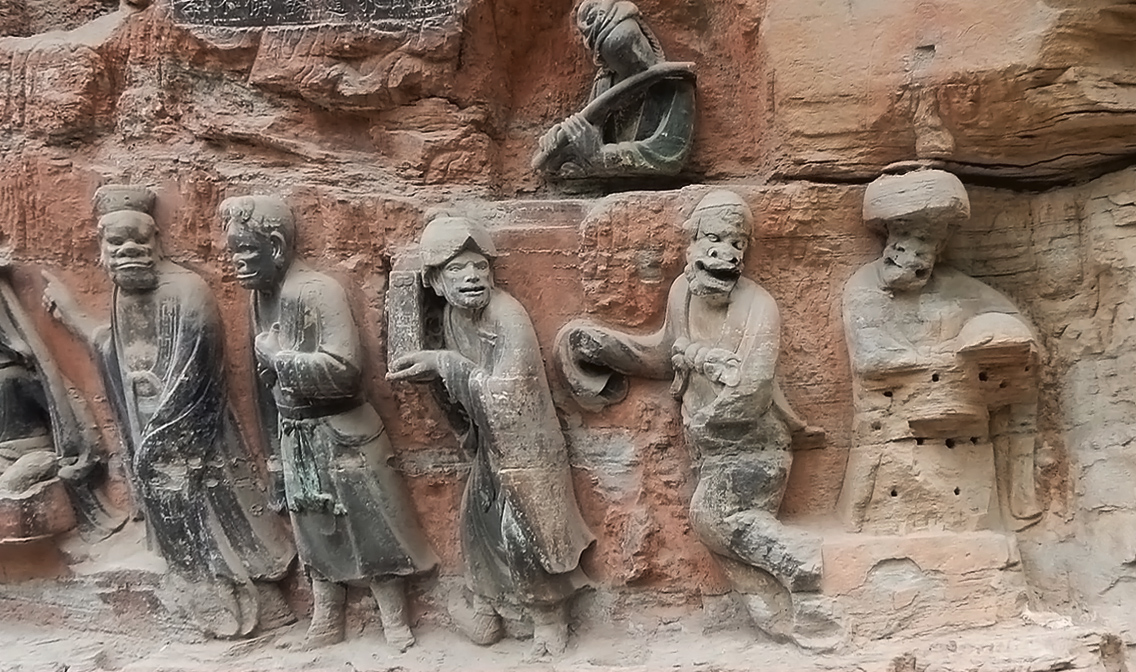
Sañjaya Belaṭṭhiputta
520 BCE – 450 BCE
Magadha region
Early Indian skeptic associated with Ajñāna and the Sāmaññaphala Sutta, where his remembered replies model suspension of judgment and metaphysical non-commitment.