Scale in Aggregation & Dynamics specifies the resolution at which macroeconomic variables must be described and the temporal frame within which system-wide adjustments unfold. At this scale, individual strategic behavior dissolves into aggregate relationships, and outcomes reflect the evolution of macro states rather than the decisions of particular agents. If the scale is set too low, the system’s structural patterns cannot be seen; if set too high, critical propagation channels and adjustment dynamics are lost.
Defining the appropriate scale ensures that analysis captures the behavior of the economy as a whole—how shocks transmit, how policies take effect, how state variables evolve over time, and how constraints shape the system’s trajectory. By stating the scale explicitly, the domain avoids slipping into the logic of Interaction or the modeling assumptions of individual optimization.
The Scale Framework offers the disciplined structure needed to articulate this level correctly and consistently.
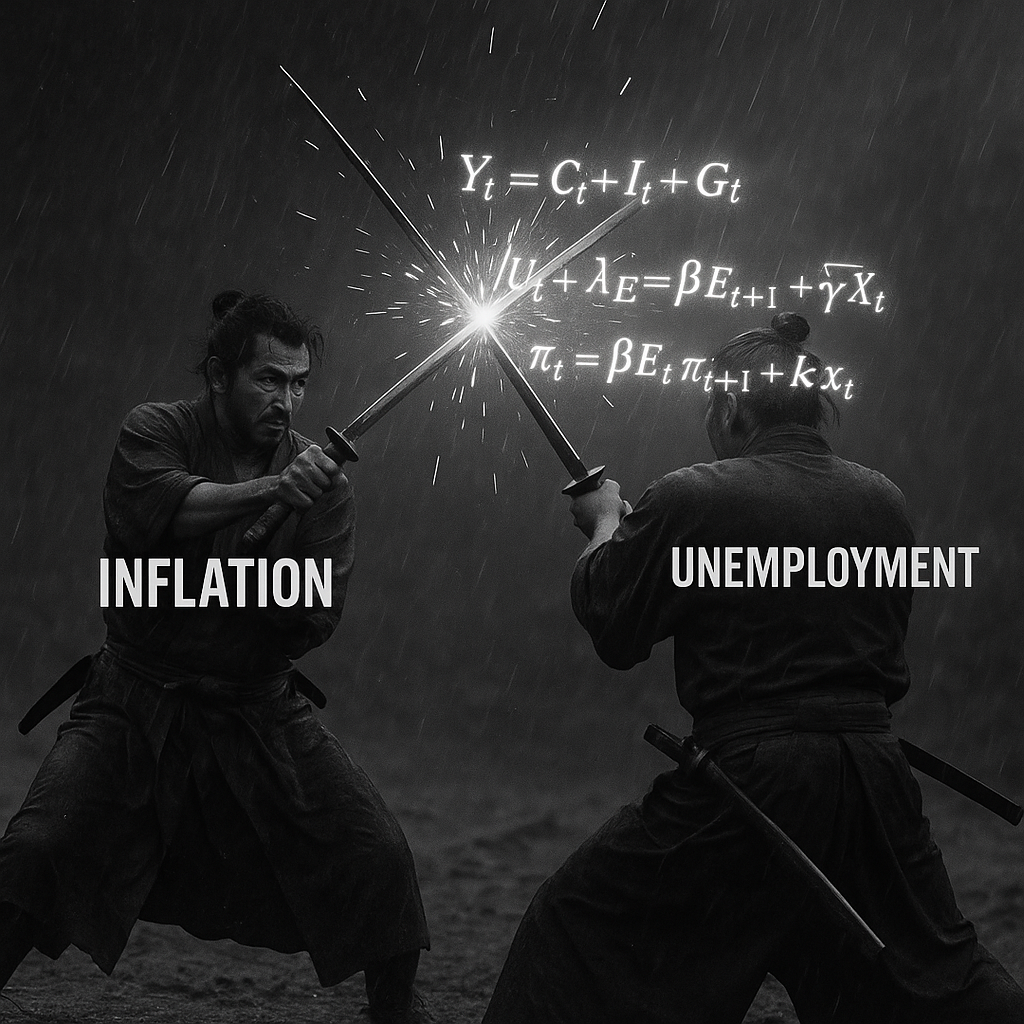


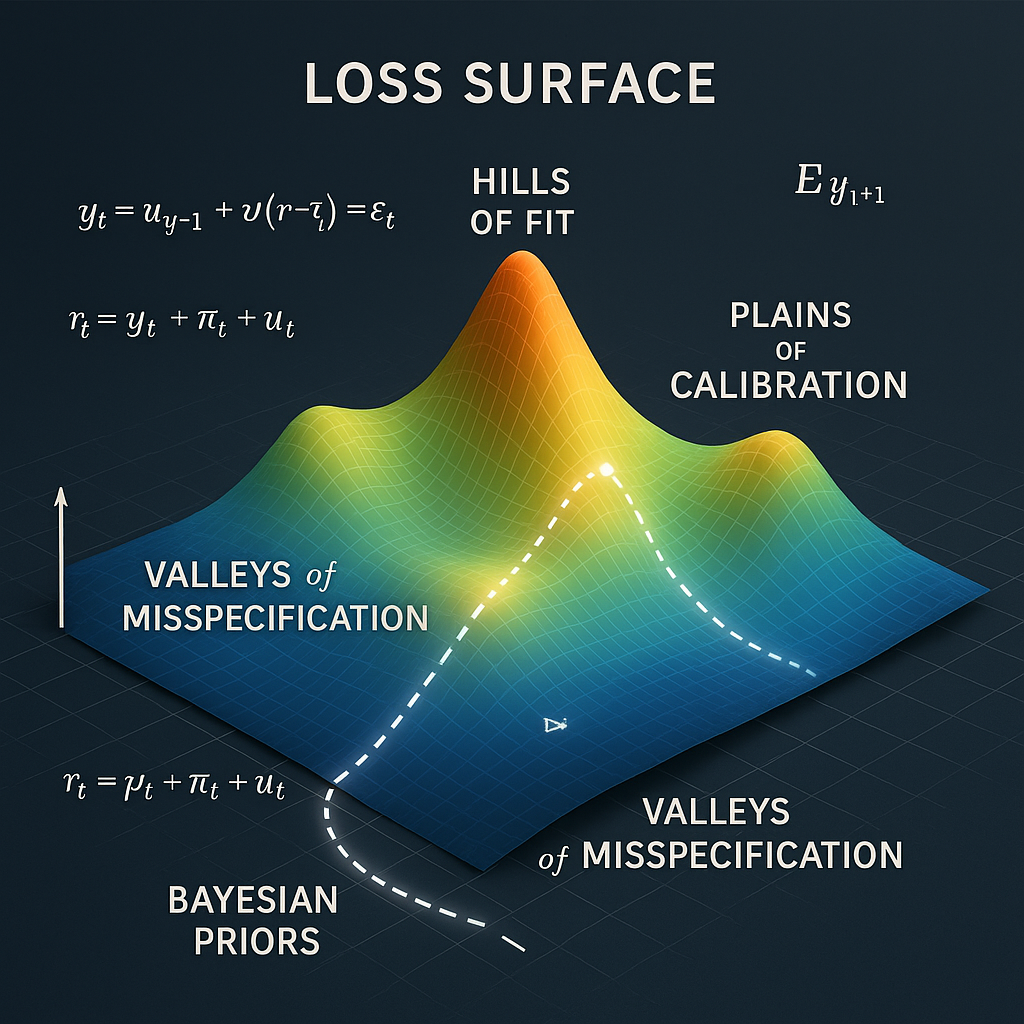
THE SCALE FRAMEWORK
1. Ontological Scale (What exists at this level of analysis?)
At the ontological scale of Aggregation & Dynamics, the primary units of analysis are macro-state variables and system-level structures. Individual agents do not appear as distinct entities; their specific choices, differences, and interactions are absorbed into aggregated relationships, distributions, or representative mappings. The world at this scale is composed not of individual decision-makers but of states of the system and the forces that evolve those states over time.
These states may represent quantities such as levels, flows, stocks, rates, or structural parameters—whatever is necessary to describe the condition of the system as a whole. What “exists” at this scale are the system’s configurations and the mechanisms through which these configurations change: propagation channels, adjustment processes, feedback structures, constraints, frictions, and long-run relationships.
The ontology of Aggregation & Dynamics therefore contains:
- macro-state variables, which encode the system’s condition
- aggregated behavioral relationships, not individual actions
- system-level structures, such as constraints, propagation channels, or equilibrium conditions
- laws of motion, defining how the system transitions from one state to another
Individual agents exist only implicitly as contributors to aggregates; they are not ontological objects at this level of analysis.
This is a system-entity world, where the objects that matter are the states and dynamics of the whole.
2. Resolution of Representation (How finely or coarsely are things described?)
In the domain of Aggregation & Dynamics, the representation must be coarse enough to treat the system as an integrated whole, yet sharp enough to preserve the relationships, frictions, and propagation mechanisms that govern its evolution through time. Individual agents are not represented as distinct units; their behavior appears only through aggregated functions, distributions, or macro-state variables.
The model explicitly represents:
- macro-state variables, which describe the condition of the system
- aggregate behavioral relationships, which summarize the joint effects of many agents
- structural parameters and constraints, which govern system behavior
- propagation channels, which determine how disturbances spread
- laws of motion, which encode how the system transitions between states
Details that do not belong at this scale are abstracted away:
- individual preferences, constraints, or choices (belong to Choice)
- strategic relationships among agents (belong to Interaction)
- agent-level idiosyncrasies that do not shape aggregate behavior
- microdynamics too fine to influence system evolution
The correct resolution must reveal:
- how the system behaves at the level of its aggregate states,
- how disturbances move through structural channels,
- how constraints shape trajectories, and
- how macro relationships evolve over time.
If the resolution is too fine, the model collapses into Interaction or Choice, losing sight of the system-level behavior it is meant to capture.
If it is too coarse, essential dynamics—feedback, adjustment, propagation, stability—are obscured, making the system appear static or trivial.
The proper resolution for this domain is therefore:
- blurred enough to suppress individual distinctions and strategic detail
- sharp enough to preserve the architecture of system-level relationships and dynamics
This is the resolution at which Aggregation & Dynamics becomes meaningful and analytically correct.
3. Temporal Scale (Over what timeframe do processes unfold?)
In the domain of Aggregation & Dynamics, temporal scale concerns the speed at which system-level variables evolve and the horizons over which structural adjustments, propagation mechanisms, and long-run trajectories unfold. Time is no longer tied to the decision moments of individuals or the strategic sequences among agents. Instead, it is the dimension through which the entire system moves.
The relevant forms of time at this scale include:
- short-run adjustments, where certain state variables respond quickly while others remain fixed
- medium-run transitions, where structural relationships begin to shift
- long-run trajectories, where the system approaches equilibria, cycles, steady states, or secular trends
- propagation intervals, measuring how shocks or disturbances travel through the system
- full dynamic paths, governed by laws of motion and stability properties
What does not belong at this temporal scale:
- the moment-to-moment adjustments of a single agent (Choice)
- the back-and-forth timing of strategic interaction among agents (Interaction)
- micro-periods too fine to influence aggregate states
- time horizons that rely on agent-level sequencing rather than system evolution
Within Aggregation & Dynamics, temporal scale determines:
- what counts as meaningful change (movement of state variables, adjustment paths, propagation effects),
- which dynamics require explicit modeling (feedback loops, frictions, transitions, shocks),
- which processes can be treated as instantaneous,
- how stability or instability unfolds,
- and how system behavior must be interpreted across horizons.
If the temporal scale is drawn too narrowly, the system appears static, and the dynamics that define the domain disappear.
If drawn too broadly, essential adjustment processes blur into meaningless trends and lose explanatory power.
The correct temporal scale for this domain is therefore:
- broad enough to capture the evolution of macro-state variables and their transitions,
- structured enough to preserve the timing of propagation, adjustment, and system response,
- and disciplined enough to avoid reintroducing micro-level or strategic timing that this domain intentionally abstracts away.
This is the speed at which reality moves when systems—not individuals—are the objects of analysis.
4. Interpretive Constraints (What conclusions are allowed at this scale?)
At the scale of Aggregation & Dynamics, valid inferences must arise from the behavior of the system as a whole—how macro-state variables evolve, how shocks propagate, and how structural relationships govern dynamic trajectories. Individual agents are not ontological units at this level, and strategic interactions among them are not the drivers of outcomes. Any conclusion that draws on the logic of isolated decision-making (Choice) or cross-agent influence (Interaction) lies outside this domain.
Permitted conclusions include statements about:
- how macro-state variables transition from one configuration to another
- how disturbances propagate through system-level channels
- how constraints, frictions, or structural parameters shape dynamic paths
- how systems approach equilibria, cycles, or steady states
- how long-run patterns, trends, and trajectories emerge
- how aggregate relationships behave under different conditions
Forbidden conclusions include statements that imply:
- outcomes determined by the logic of a solitary agent (Choice)
- outcomes shaped primarily by relational patterns among agents (Interaction)
- strategic responses, coordination, conflict, signaling, or equilibrium among individuals
- detailed agent-level behaviors or decisions
- micro-sequences of events that do not move the macro-state
- conclusions derived from internal psychological or strategic processes
These constraints maintain the coherence of Aggregation & Dynamics as the domain where system-level structure determines outcomes.
At this scale:
- no inference may rely on an individual agent’s decision structure, because individuals are not represented
- no inference may rely on cross-agent influence, because such influence is aggregated away
- no inference may invoke reasoning that depends on detailed strategic behavior, because the system is governed by macro forces
Violating these constraints leads to scale errors such as:
- misattributing macro outcomes to individual motivations,
- treating aggregated behavior as if it reflected strategic interaction,
- or forcing system-level dynamics into one-agent or multi-agent logic.
The interpretive rule is strict:
Only conclusions that follow from the evolution, structure, and behavior of the system itself are valid at this scale.
Everything else belongs to another domain.
5. Canonical Scale Statement
The domain of Aggregation & Dynamics operates at the scale of system-level variables and macro-state structures whose evolution determines outcomes. At this level, representation expresses the behavior of the whole through aggregated relationships, distributions, structural parameters, and laws of motion rather than through the actions of individual agents. Time is modeled as the horizon over which state variables adjust, shocks propagate, and long-run trajectories emerge. Valid inferences concern patterns, constraints, and transitions at the system scale, excluding any reasoning that depends on solitary choice or strategic interaction among agents. This scale is the lawful operating level of Aggregation & Dynamics: a system-entity world in which macro-state configurations and dynamic structure—not individual decisions or cross-agent influence—govern the behavior of the domain.
Science Analysis Template
These are the structural patterns found across all Scientific Disciplines
1. Aggregation & Dynamics occupies the upper rungs of the social-science scale ladder.
Every discipline lives on a scale ladder.
In the social sciences, that ladder runs:
individual → interacting agents → organizations → communities → states → global systems
Choice occupies the individual rung.
Interaction occupies the relational rung.
Aggregation & Dynamics occupies the system rungs, where:
- the unit of analysis is no longer an individual or a pair of agents,
- but a population, sector, economy, or entire social system.
At this scale, the meaningful objects are:
- macro-state variables,
- aggregate flows,
- distributions of characteristics,
- structural constraints,
- propagation channels,
- and long-run patterns.
Just as biology moves from organisms → populations → ecosystems,
Aggregation & Dynamics moves from agents → aggregates → systems.
Here, the whole becomes the object.
2. Scale transitions define the handoff into and out of Aggregation & Dynamics.
Scale creates two clean transition boundaries for this domain:
Downward (Transition to Interaction):
If the phenomena of interest require representing who influences whom—as opposed to how the system behaves as a whole—then the analysis sits below Aggregation and belongs to Interaction.
Strategic structure → Interaction
System structure → Aggregation
Downward (Transition to Choice):
If outcomes can be explained using only a single agent’s preferences, constraints, and internal dynamics, the scale collapses all the way down to Choice.
Upward (Transition to Global Systems):
If the system of interest becomes planetary or trans-societal (e.g., climate-society coupling, demographic transitions over centuries, planetary economics), the scale may transition further upward to global-systems science.
Scale transitions here are not stylistic—they are structural boundaries.
Aggregation ends wherever system-level variables cease to be the dominant drivers of outcomes.
3. Aggregation & Dynamics has its own temporal “window,” defined by system adjustment and propagation.
Time scale in the sciences must be as precise as spatial or organizational scale.
For Aggregation & Dynamics, the relevant time scales are those that govern system-level evolution, not individual decision moments or strategic sequencing.
These include:
- short-run adjustments (quarters, years):
immediate responses of some macro variables while others remain fixed. - medium-run transitions (years to decades):
structural shifts, adjustment processes, propagation of disturbances. - long-run trajectories (decades to centuries):
equilibria, growth paths, demographic or institutional evolution. - propagation intervals:
how shocks move through networks, sectors, or aggregates. - dynamic paths:
the system’s evolution as dictated by its laws of motion.
What does not belong at this temporal scale:
- psychological or instantaneous choice timing (Choice),
- strategic updating and repeated-interaction timing (Interaction),
- microevents too fine to influence system-level states.
Aggregation’s temporal window is the speed of system change, not the speed of individual or relational change.
4. Aggregation uses formal tools anchored to system-level structure, not individuals or strategies.
Just as the template notes that formal sciences operate at abstraction scales, Aggregation uses formal tools anchored at the scale of systems, not agents.
These include:
- dynamic systems,
- differential or difference equations,
- structural equations,
- stability analysis,
- propagation and feedback models,
- equilibrium paths and transition dynamics,
- aggregate constraint systems.
These tools become invalid if:
- the analysis collapses to individual incentives (Choice),
- outcomes depend on strategic relations (Interaction),
- or the temporal scale is too fine for dynamic approximations to hold.
The math of Aggregation is anchored to objects that only exist at the system scale:
stocks, flows, aggregates, distributions, and structural parameters.
5. Aggregation is defined by the highest operational organizational level in the social sciences.
Where biology distinguishes:
molecule → cell → tissue → organ → organism → population → ecosystem → biosphere,
the social sciences parallel:
individual → group → organization → community → state → global system.
Aggregation & Dynamics sits at population, sector, state, or system levels.
At this organizational scale:
- individuals are not modeled separately,
- groups are not modeled relationally,
- institutions are not modeled strategically,
- and no agent’s internal decision structure appears.
Instead, the objects are:
- distributions of behavior,
- aggregates of variables,
- system constraints,
- dynamic couplings,
- and long-run structural patterns.
This clarifies why multiple sciences may study “the same country” or “the same population” without overlap:
they occupy different organizational rungs.
Aggregation stands at the rung where system structure governs behavior.
6. The full result pins Aggregation & Dynamics into a precise operational zone in the multi-scale atlas of science.
With the Scale framework applied, Aggregation is now pinned to:
- its size range: populations, sectors, economies, and large-scale systems;
- its time range: adjustment periods, propagation intervals, long-run trajectories;
- its organizational level: system architecture, aggregate behavior, structural constraints;
- its handoff points:
- ↓ to Interaction when agent-level influence becomes dominant,
- ↓↓ to Choice when only one decision structure matters,
- ↑ to global-system science when the analysis spans beyond a single society or economy.
In the multi-scale atlas of the sciences:
- Choice is the atomic level (individual decision unit).
- Interaction is the relational level (strategic structure).
- Aggregation & Dynamics is the system level, where macro-state evolution and structural dynamics rule.
This placement creates a coherent, layered map of social science in which each domain occupies its lawful scale band—no larger, no smaller.