1. Identity & Scope


- Names: Jainism, Jaina Dharma.
- Scope: Originating in India; survives mainly in Gujarat, Rajasthan, Karnataka, Maharashtra; global diaspora communities.
- Self-understanding: Eternal dharma revealed by tīrthaṅkaras (“ford-makers”).
Jainism represents an Indic tradition in which religious identity coheres around ethical absolutism and ascetic liberation rather than ritual centrality or theism. Emerging from the ancient Śramaṇa milieu, it articulates one of the most rigorous moral systems in world religion, governing conduct at every level of life. Jainism has historically maintained clear boundaries while coexisting alongside other traditions, preserving continuity through disciplined practice and metaphysical consistency. Its durability is best understood through the sustained reproduction of ethical and ascetic life across generations.
2. Historical Context

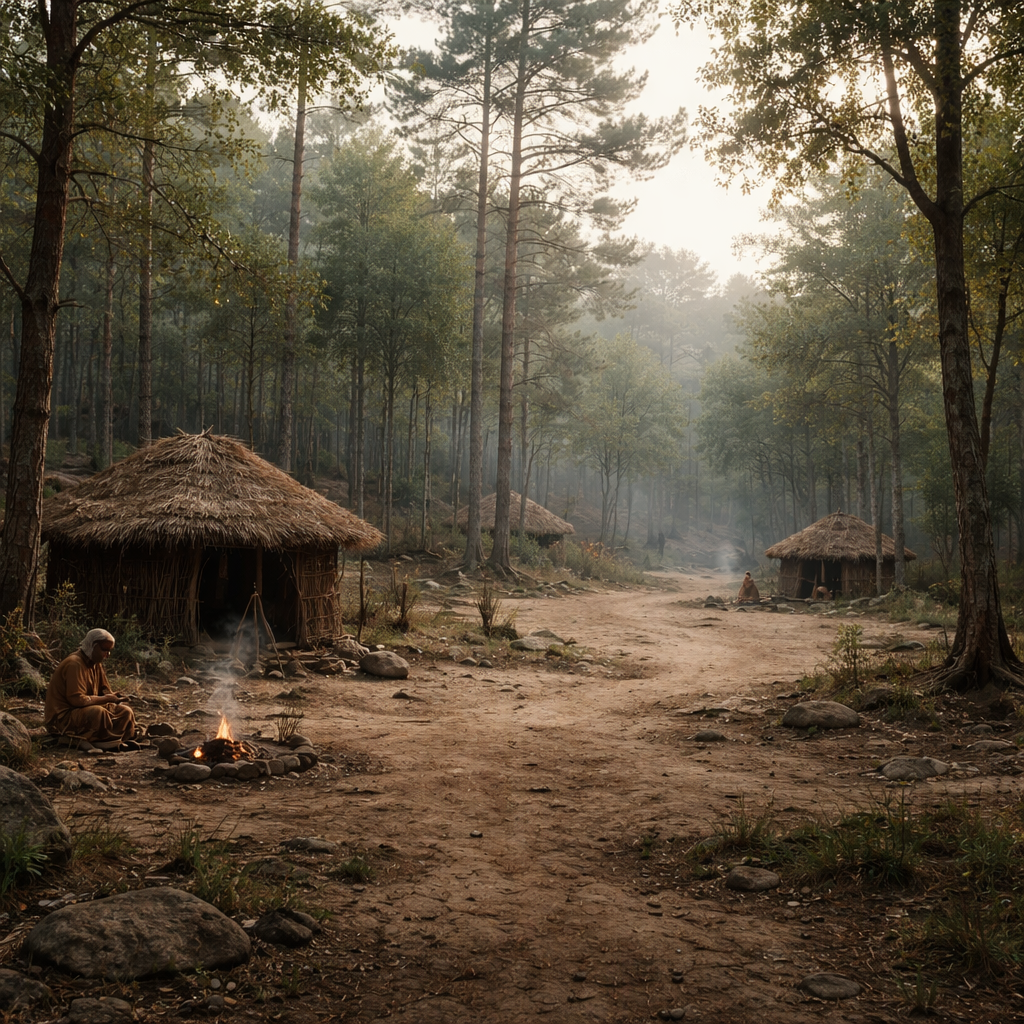
- Roots: Śramaṇa movement in North India (same milieu as Buddhism).
- Founder-figures: 24 tīrthaṅkaras of this world cycle; the last was Mahāvīra (599–527 BCE).
- Classical period: Growth of sects, monasteries, canonical councils.
- Medieval: Influence in Indian courts, art, and philosophy.
- Decline: Marginalized under Hindu and Muslim rule but resilient.
- Modern: Reform, diaspora temples, intellectual contributions to Indian independence (e.g., Gandhi influenced by ahiṃsā).
Jainism develops as a discipline-centered tradition rooted in ascetic practice, non-violence, and liberation through self-control, with Mahāvīra serving as its most recent historical reformer rather than a founder. It consolidates through monastic authority, merchant patronage, and strict ethical regulation rather than state power or conversion, maintains continuity through tightly bounded sectarian traditions, and persists today as a highly cohesive religious community characterized by ethical rigor and long-term stability.
3. Sources of Evidence

- Scriptures: Śvetāmbara canon (Āgamas); Digambara texts (Ṣaṭkhaṇḍāgama, Kaṣāyapāhuda).
- Commentaries: Umāsvāti’s Tattvārthasūtra.
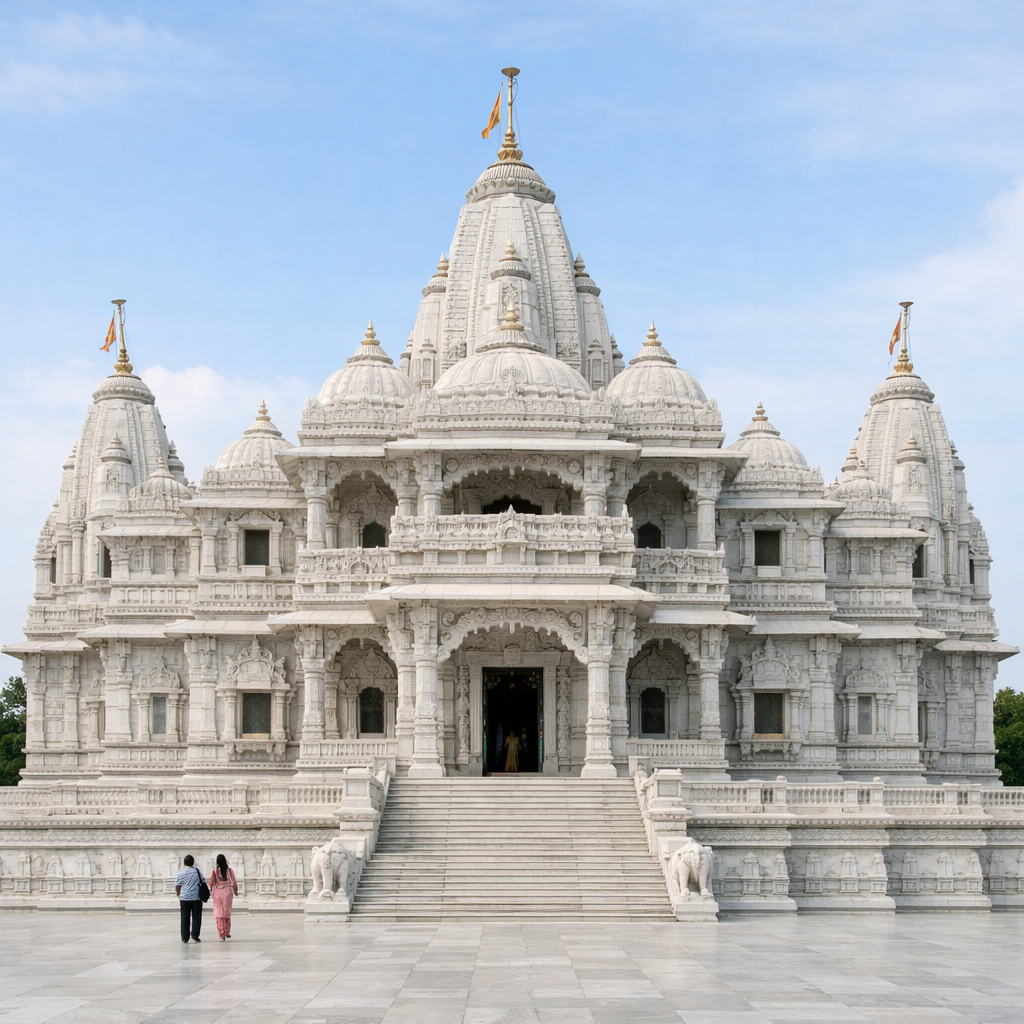
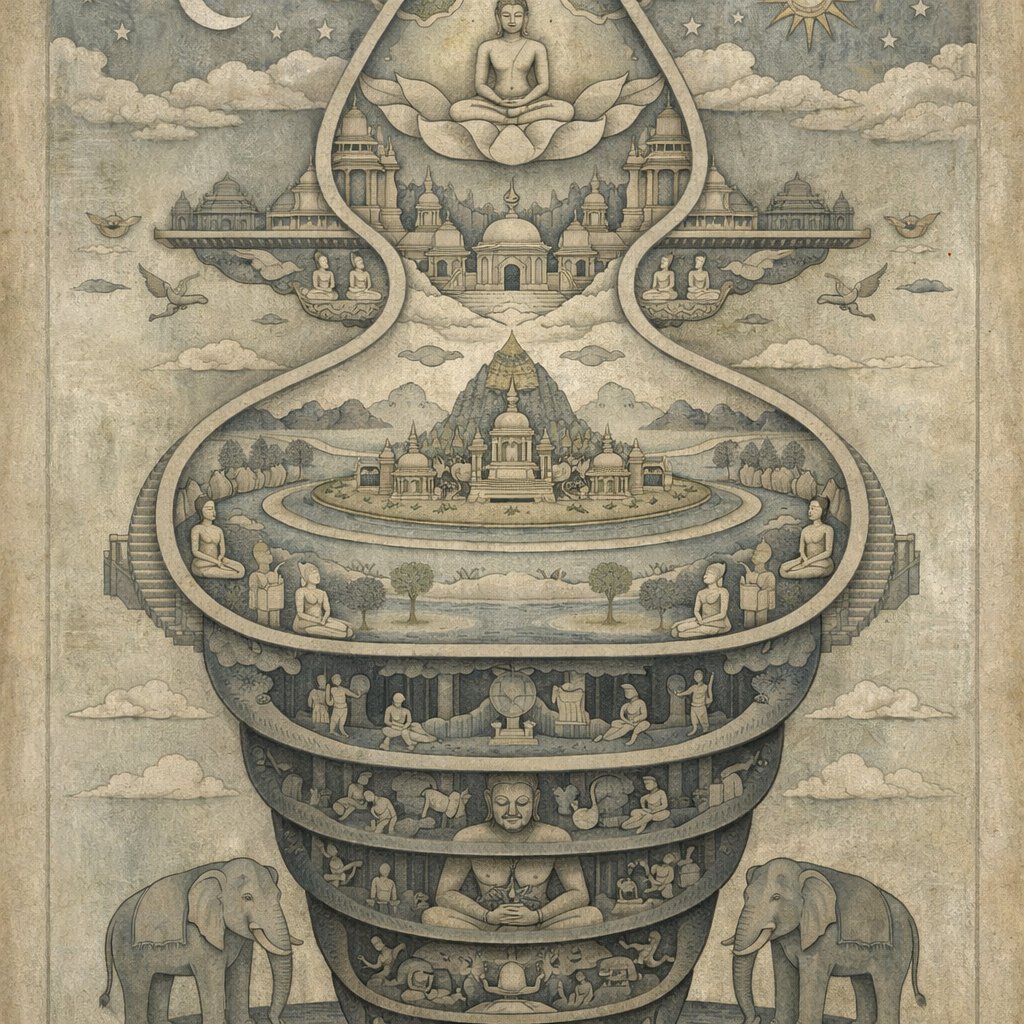
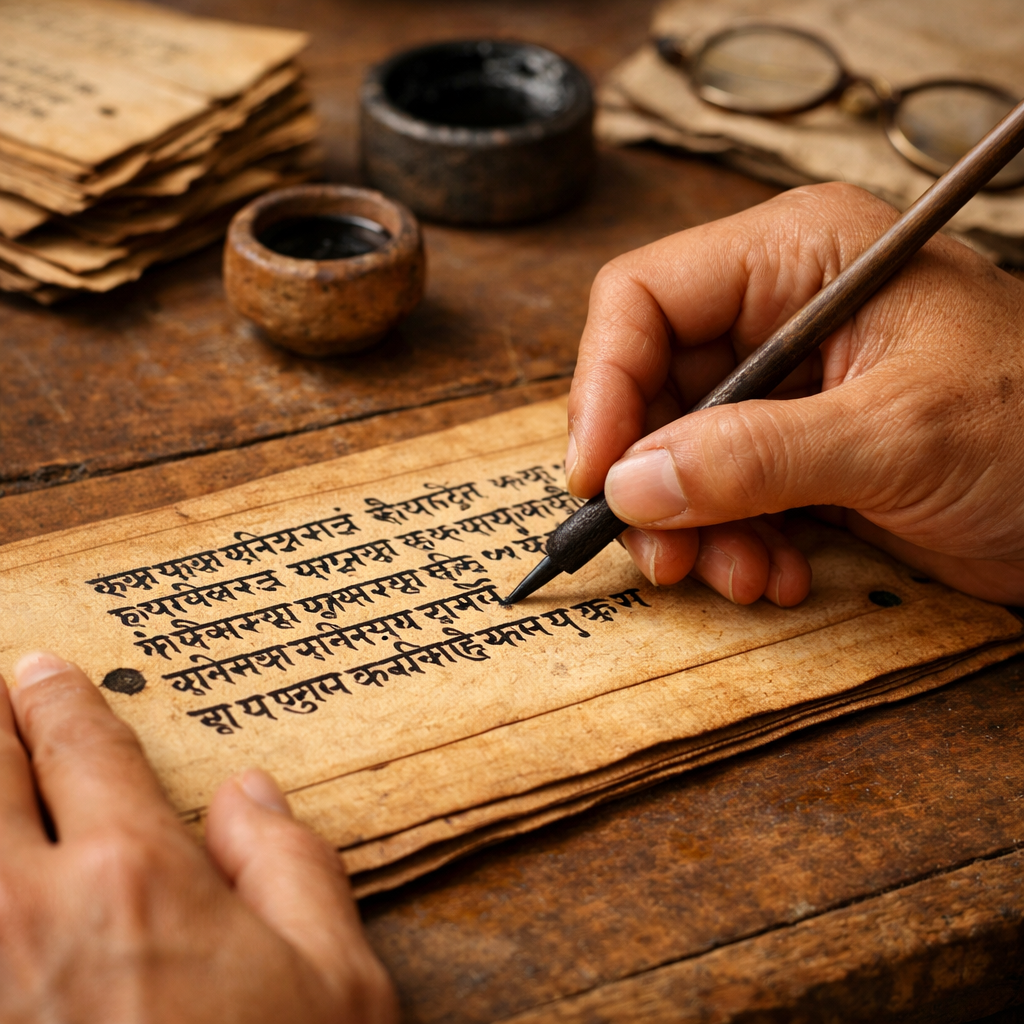
- Archaeology & art: Temple complexes (Dilwara, Palitana, Shravanabelagola); manuscripts, cosmological diagrams.
- Oral/ritual: Monastic recitation, lay prayers, festival songs.
The evidentiary profile of Jainism is defined by the interaction of sect-specific textual canons, highly organized renouncer institutions, and a long material record shaped by mercantile patronage and manuscript preservation. Textual sources are substantial but must be read through the Śvetāmbara–Digambara split: one tradition preserves Āgamas as principal canon, while the other treats those originals as lost and relies on later authoritative works, meaning that “scripture” varies by sect and cannot be assumed to generalize across Jainism as a whole. At the same time, Jain communities produced and preserved extensive commentarial, philosophical, disciplinary, narrative, and vernacular corpora that structure both elite articulation and lay piety. Archaeology and inscriptions often provide firmer anchors than early textual tradition-memory, documenting caves, temples, images, and donor networks that trace Jain geography and institutional durability, even as they underrepresent everyday household practice. Modern ethnography completes the picture by revealing how vow-discipline, fasting regimes, temple economies, and monastic–lay relations operate in contemporary settings and diaspora contexts. Because early Jain history is frequently visible only through later stabilization, any responsible synthesis must keep canon formation, lineage authority, and datably anchored material evidence analytically distinct while triangulating across mediums for independence and representativeness.
4. Pantheon & Supernatural Beings

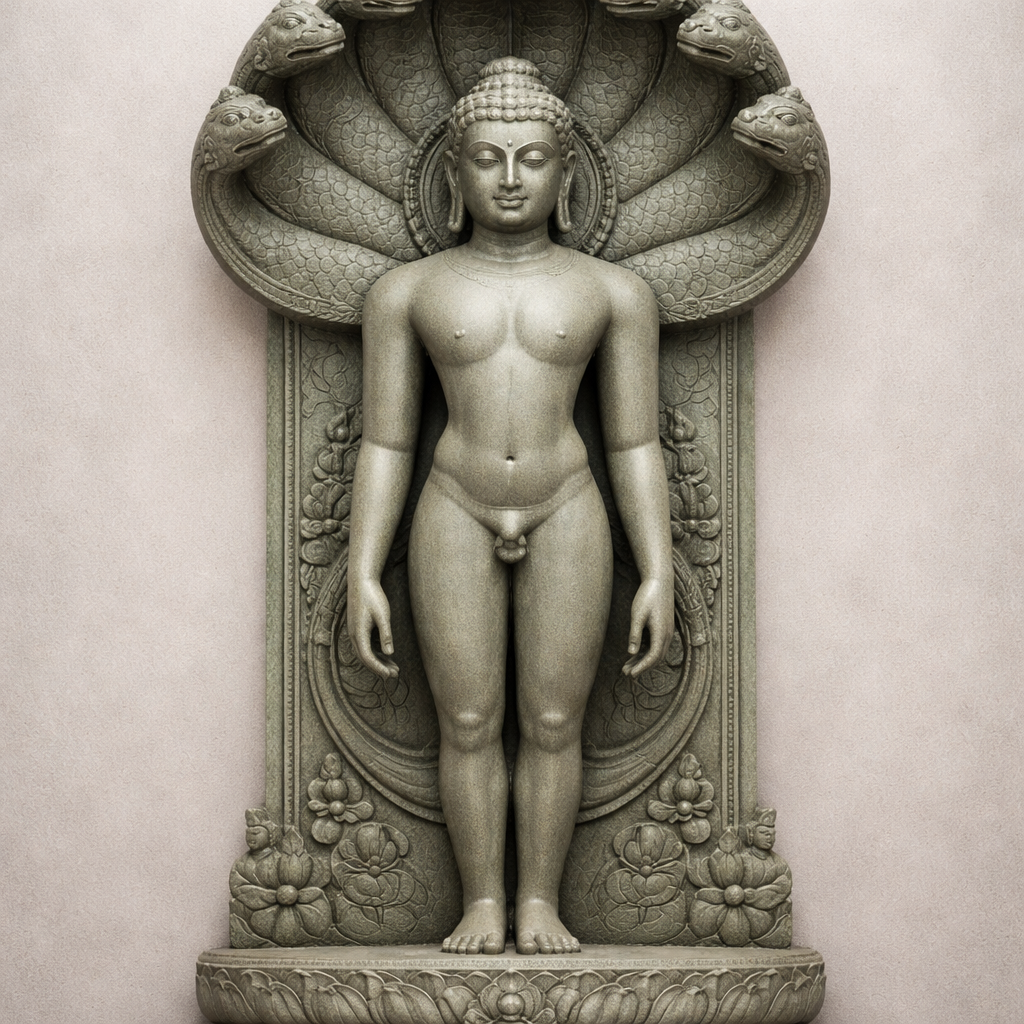
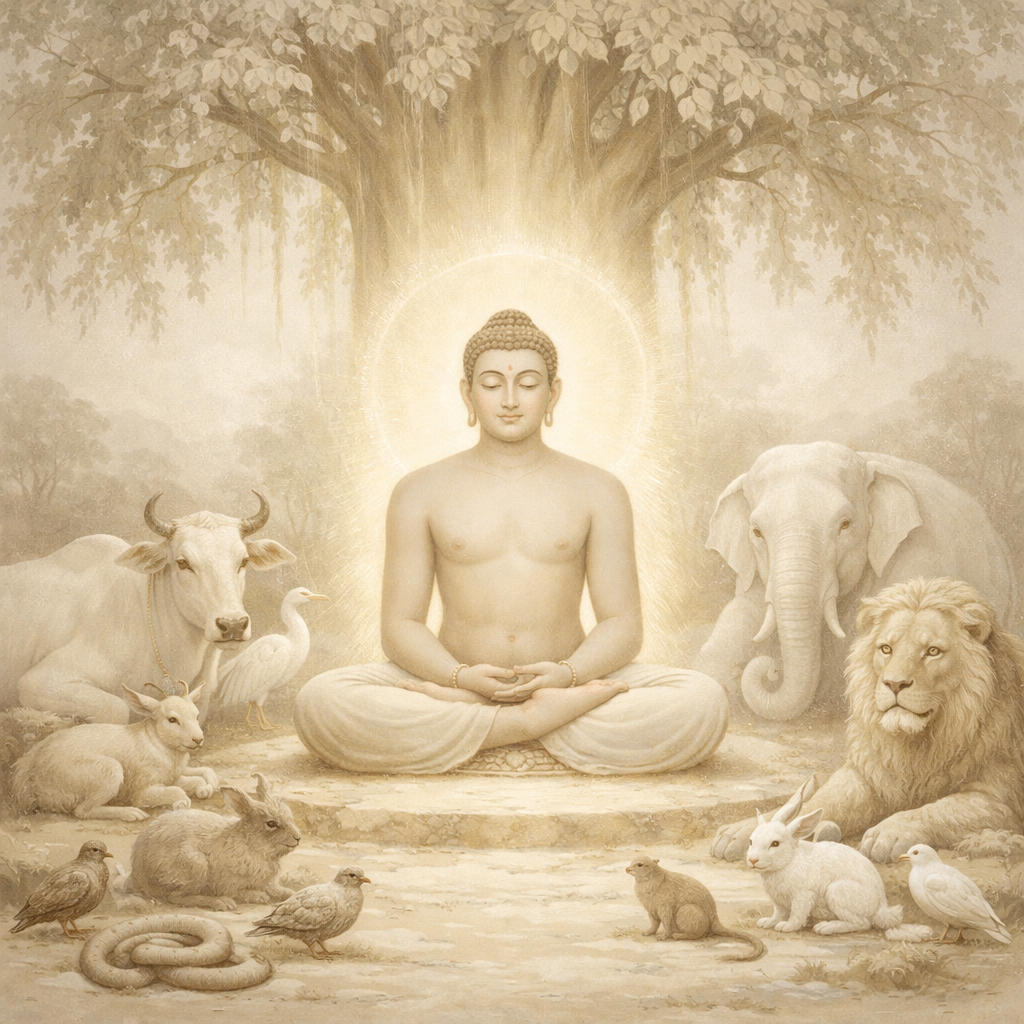
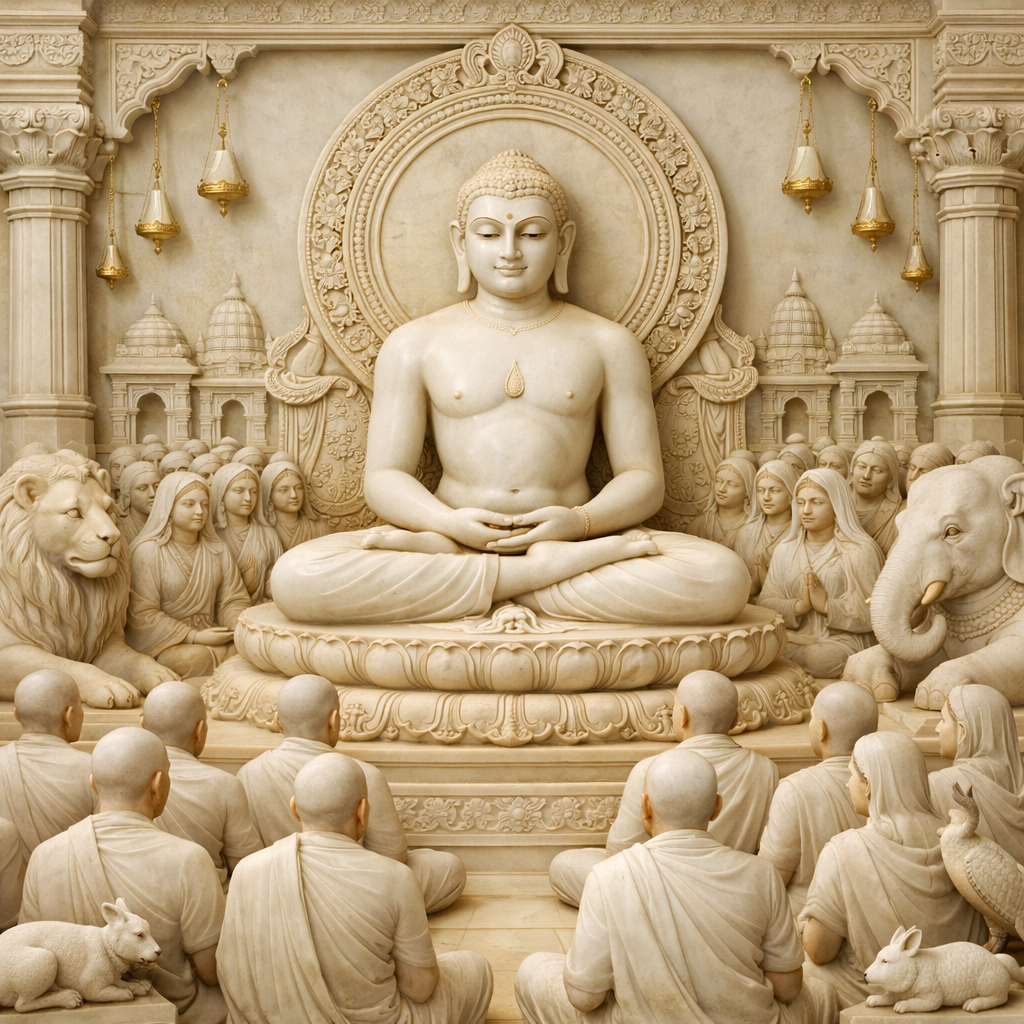
- Tīrthaṅkaras (Jinas): Perfected beings who attained omniscience (kevala-jñāna) and taught the path. Worshipped as exemplars, not gods.
- Celestial beings: Devas and yakṣas/yakṣīs as guardian figures, but themselves bound by karma.
- No creator god: Universe is beginningless, self-sustaining.
Jainism presents one of the most uncompromising supernatural structures in religious history, defined by the absence of divine sovereignty and the primacy of self-responsibility. Gods neither create nor govern the universe, and no being—however powerful—can override karmic law or confer liberation. Celestial beings, spirits, and cosmological realms populate the Jain universe, but they function as occupants of samsāra rather than authorities over it. Spiritual hierarchy is determined not by power, worship, or command, but by purity, discipline, and liberation, with siddhas occupying the highest position while remaining entirely non-intervening. Ritual practice centers on reverence and remembrance rather than petition or grace, reinforcing a system in which ethical conduct, knowledge, and ascetic discipline are the sole means of release. This page outlines a supernatural framework that is densely populated yet deliberately powerless, reflecting Jainism’s radical commitment to moral causality and self-achieved liberation.
5. Cosmology & Myth



- Universe eternal, with cycles of ascent and decline (utsarpiṇī and avasarpiṇī).
- Cosmic geography: vast middle realm with Jambūdvīpa continent; heavens above; hells below.
- Mythic history: succession of 24 tīrthaṅkaras, great cosmic epochs, legendary kings.
- Law of karma: subtle matter binding to soul, shaping rebirth.
Jainism presents one of the most rigorously non-theistic cosmological systems in religious history, describing a universe that is uncreated, eternal, and mechanically ordered. Reality is governed by fixed laws rather than divine intention, with a precisely structured cosmos unfolding through infinite cycles of rise and decline without origin or end. There is no cosmic drama, no salvation of the world, and no final resolution of history; liberation applies only to the individual soul, which escapes saṃsāra while the universe continues unchanged. Order and disorder are fully explained through material karma, eliminating appeals to fate, grace, or metaphysical evil. Jain narratives minimize myth in favor of ethical clarity, presenting liberated teachers as models rather than heroes or divine agents. Across this framework, cosmology serves a single, uncompromising purpose: to enforce absolute accountability, justify radical ethical restraint, and orient life toward liberation within a universe that offers no forgiveness, intervention, or consolation beyond law and consequence.
6. Ritual & Practice
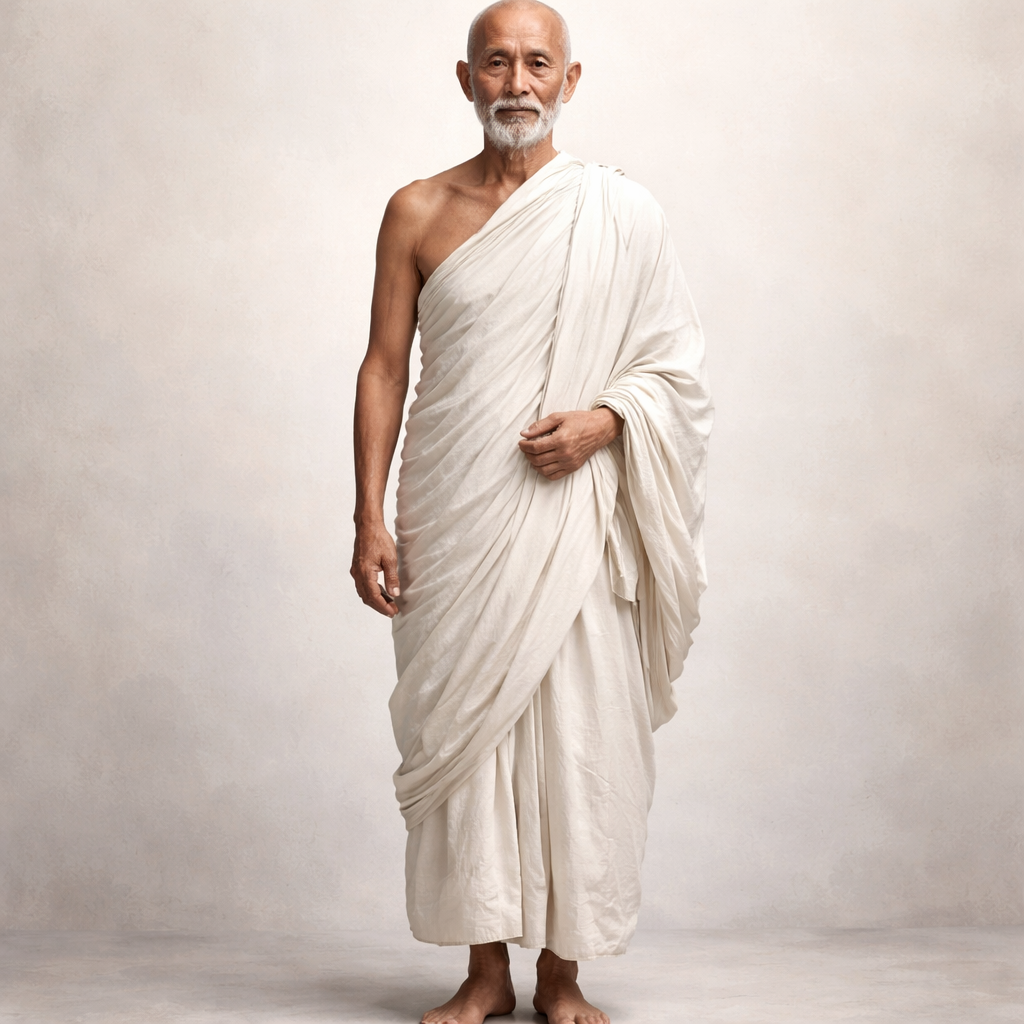




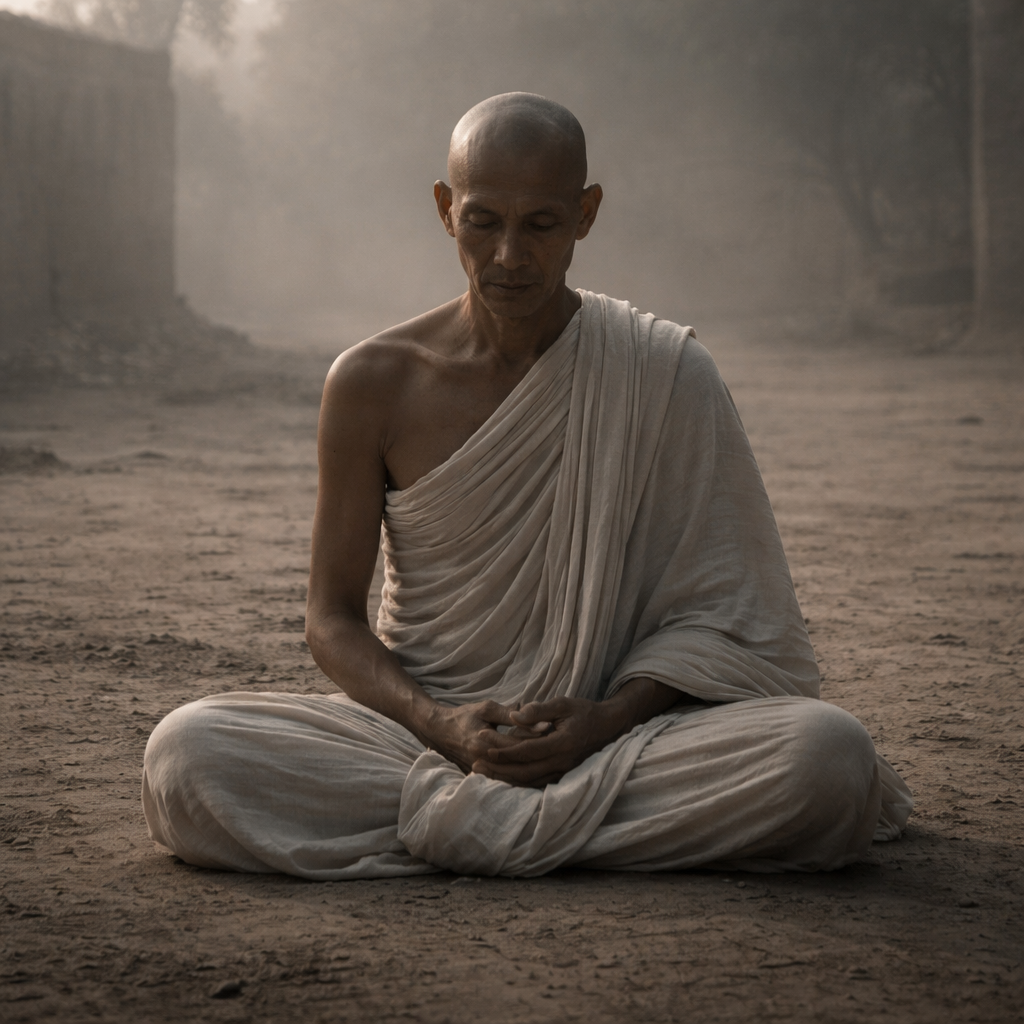
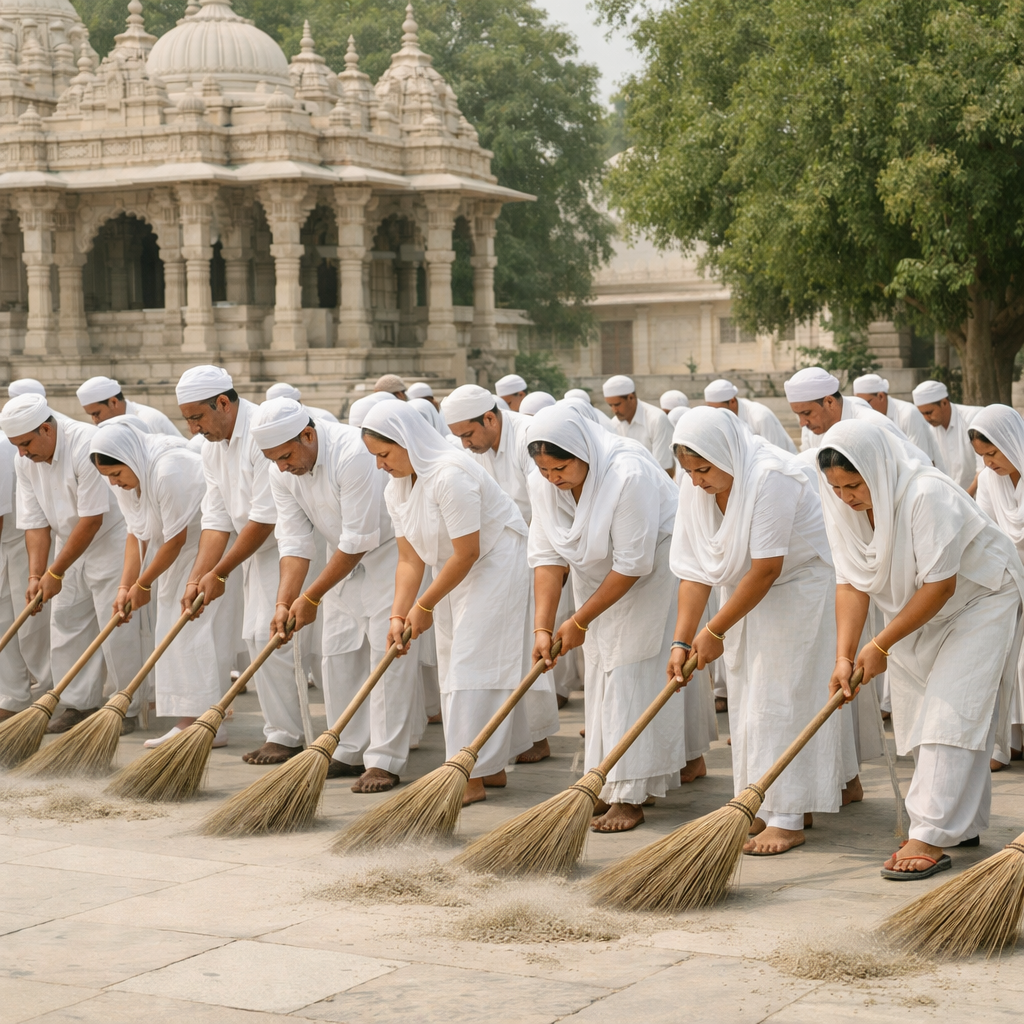
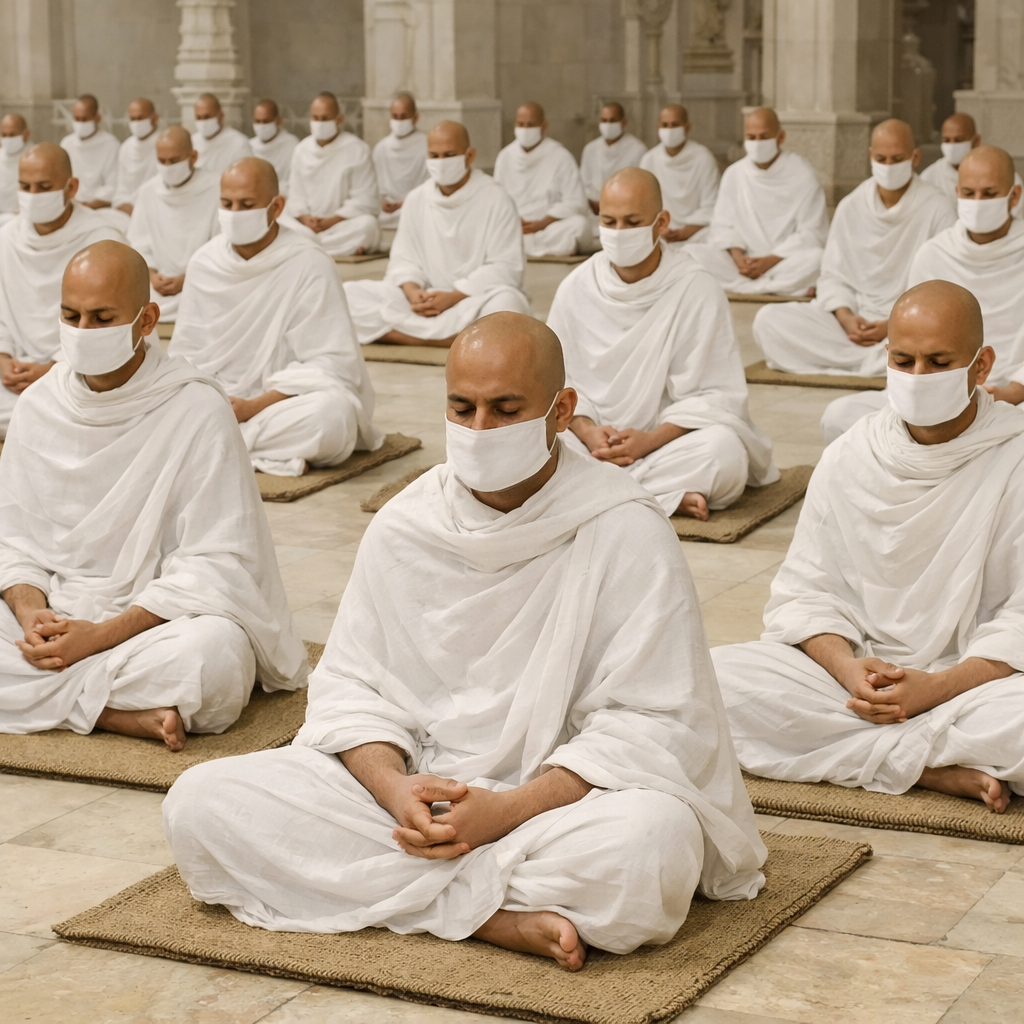
- Monastic discipline: Non-violence, celibacy, poverty, fasting, meditation.
- Lay practice: 12 vows of householders; ahiṃsā in diet (vegetarian/vegan).
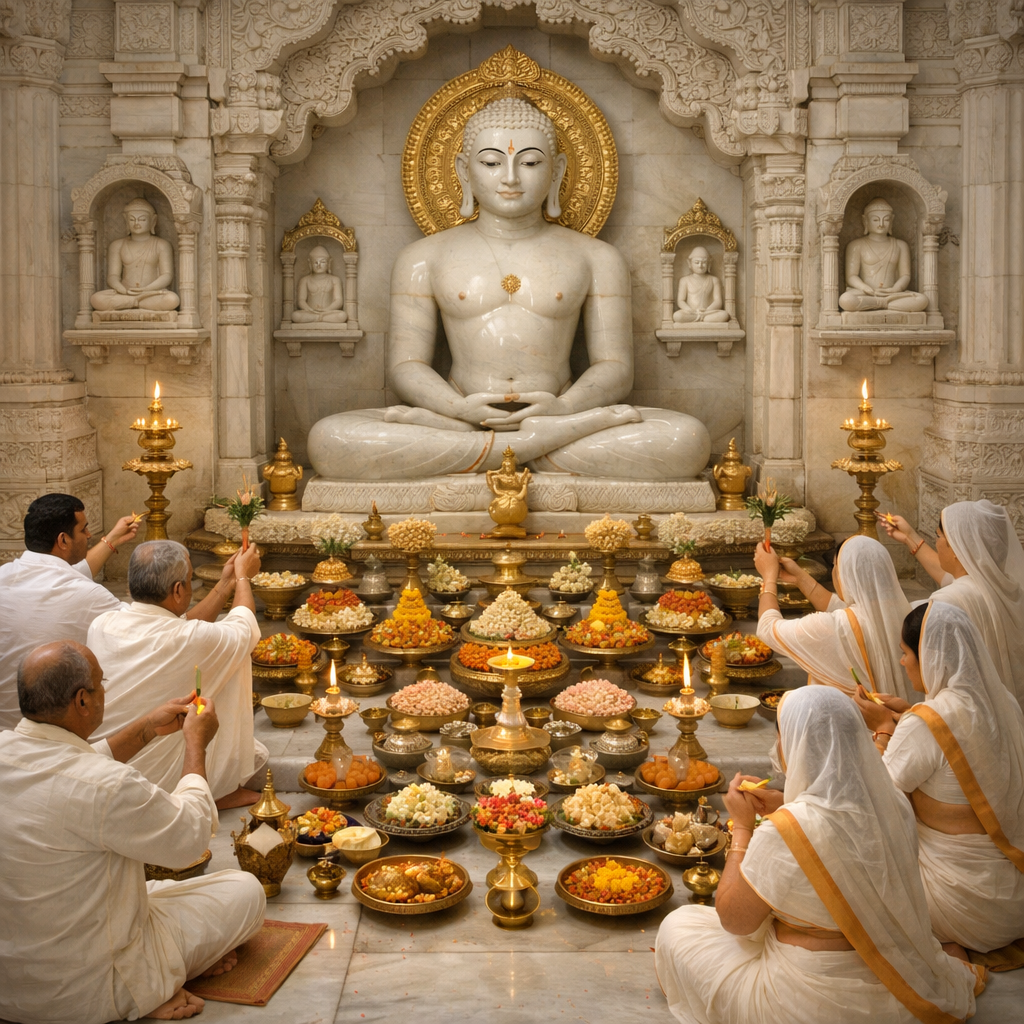
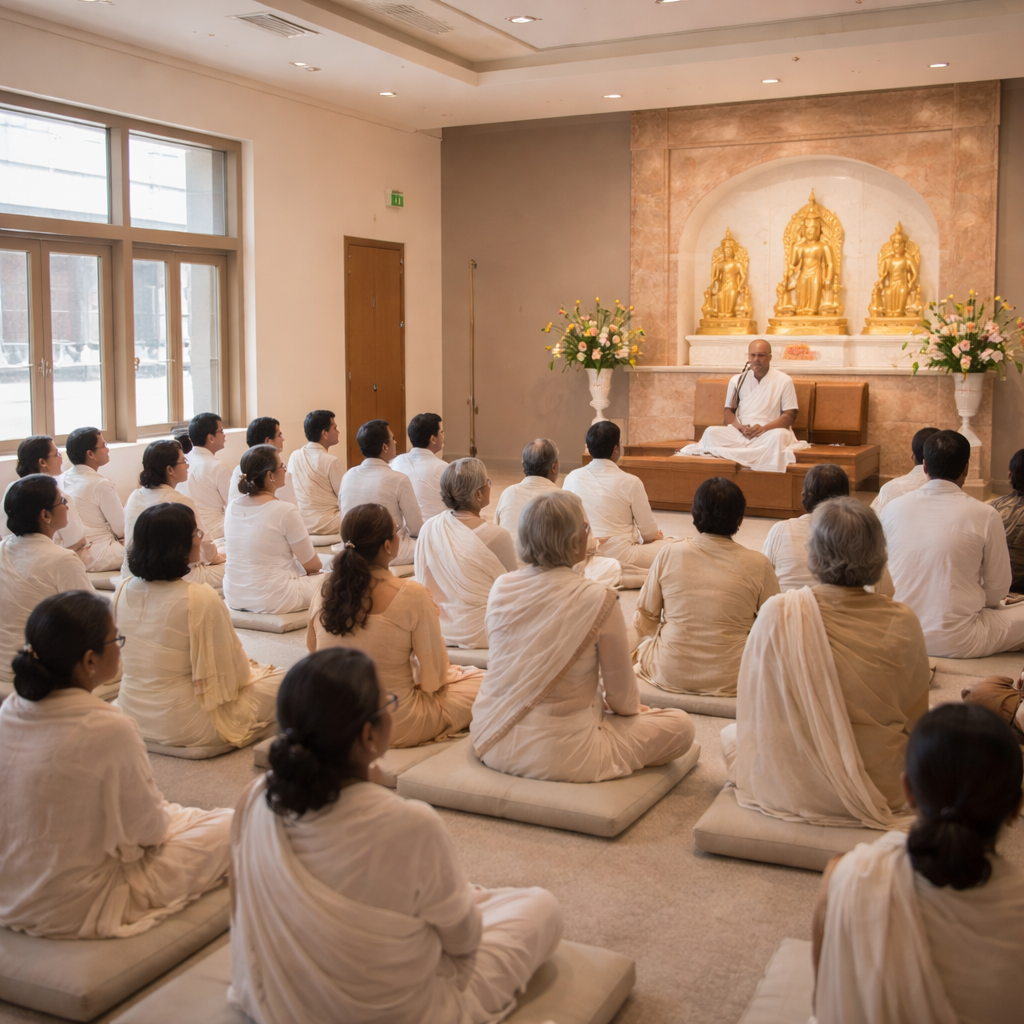
- Daily worship: Pūjā of tīrthaṅkara images, recitation of Namokar Mantra.
- Festivals: Paryuṣaṇa (repentance, fasting), Mahāvīra Jayanti.
- Ascetic practices: Sallekhanā (ritual fast to death), long fasts, pilgrimages.
Jainism approaches religion as a total discipline of conduct, in which liberation is pursued through the rigorous elimination of harm rather than through belief, worship, or ritual mediation. Ritual practice is inseparable from ethics: vows, restraint, fasting, and repentance are not symbolic gestures but the primary means by which Jain life is ordered and sustained.
Unlike traditions that use ritual to negotiate with divine forces or to reenact mythic history, Jain practice functions through negative constraint—limiting action, desire, and attachment to reduce karmic accumulation. Sacred time intensifies discipline rather than celebration; pilgrimage reinforces vows rather than conferring merit; aesthetics emphasize cleanliness and restraint over sensory engagement. Even communal ritual life is shaped by the imperative to minimize harm.
Viewed through ritual and practice, Jainism operates as an extreme ethical architecture: a tradition in which social cohesion, religious identity, and spiritual progress are maintained through shared discipline, graded asceticism, and unwavering commitment to non-violence rather than through worship, doctrine, or institutional authority.
7. Sacred Space & Material Culture

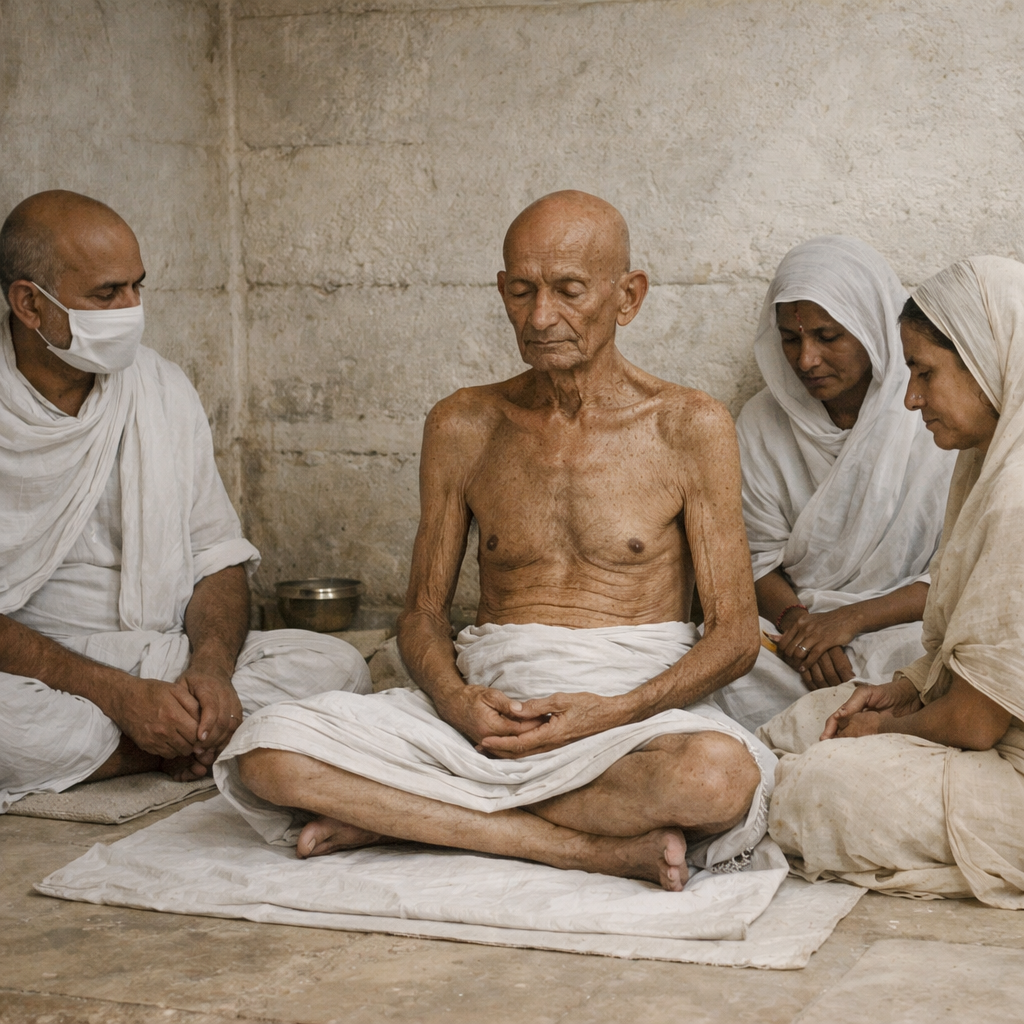

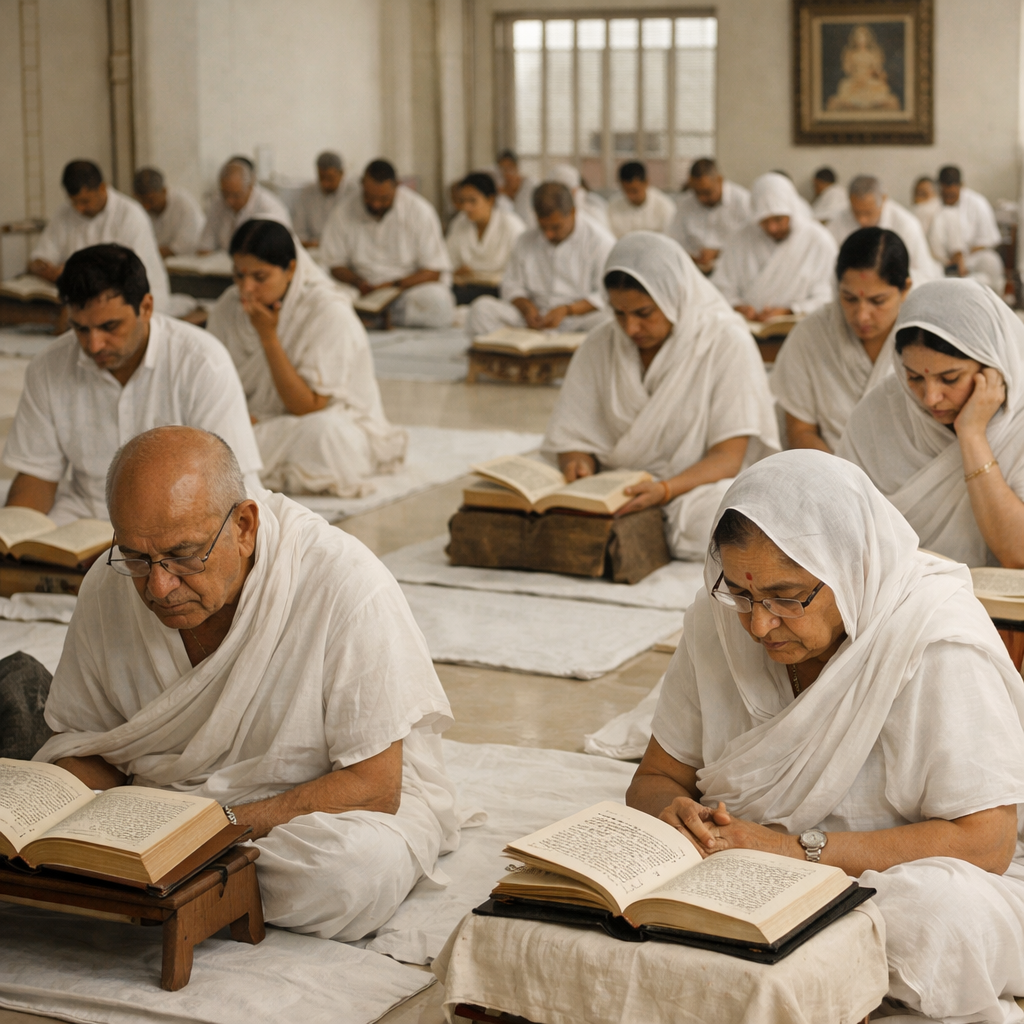
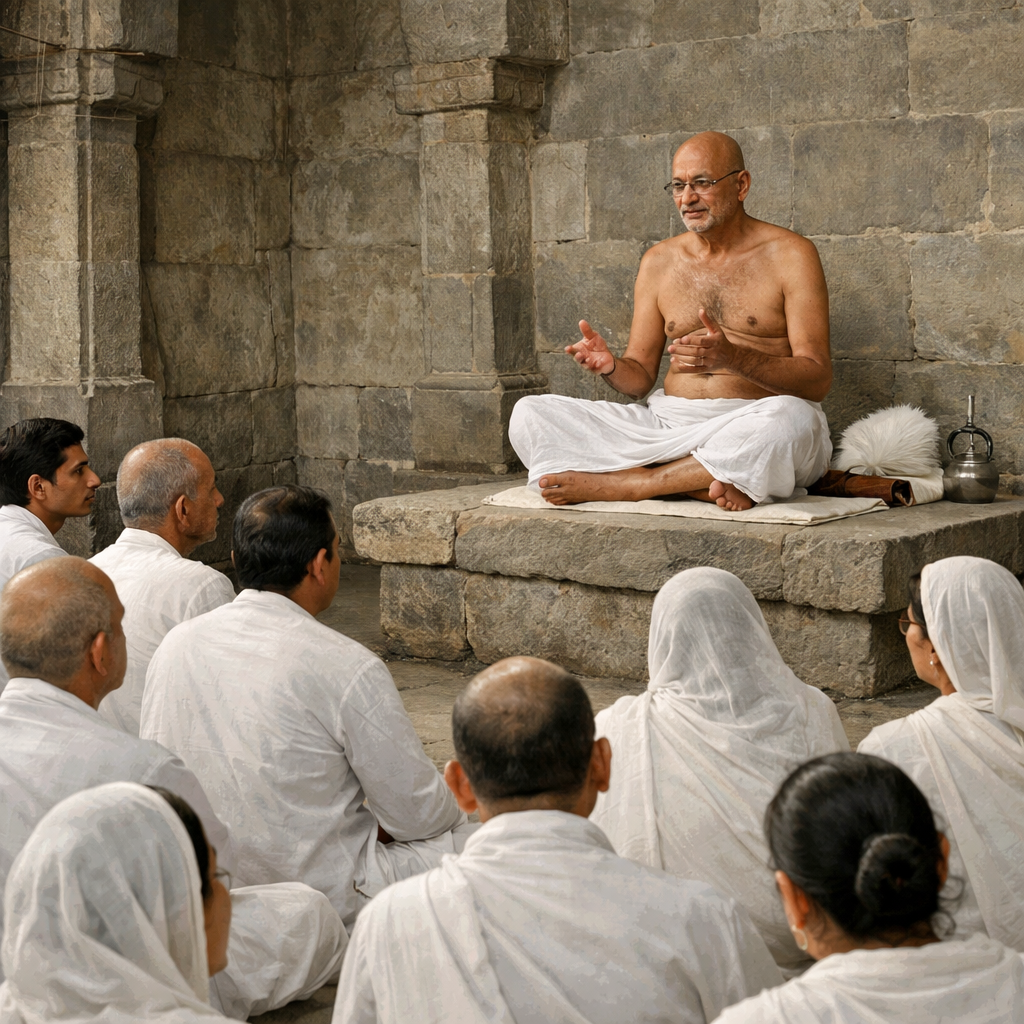
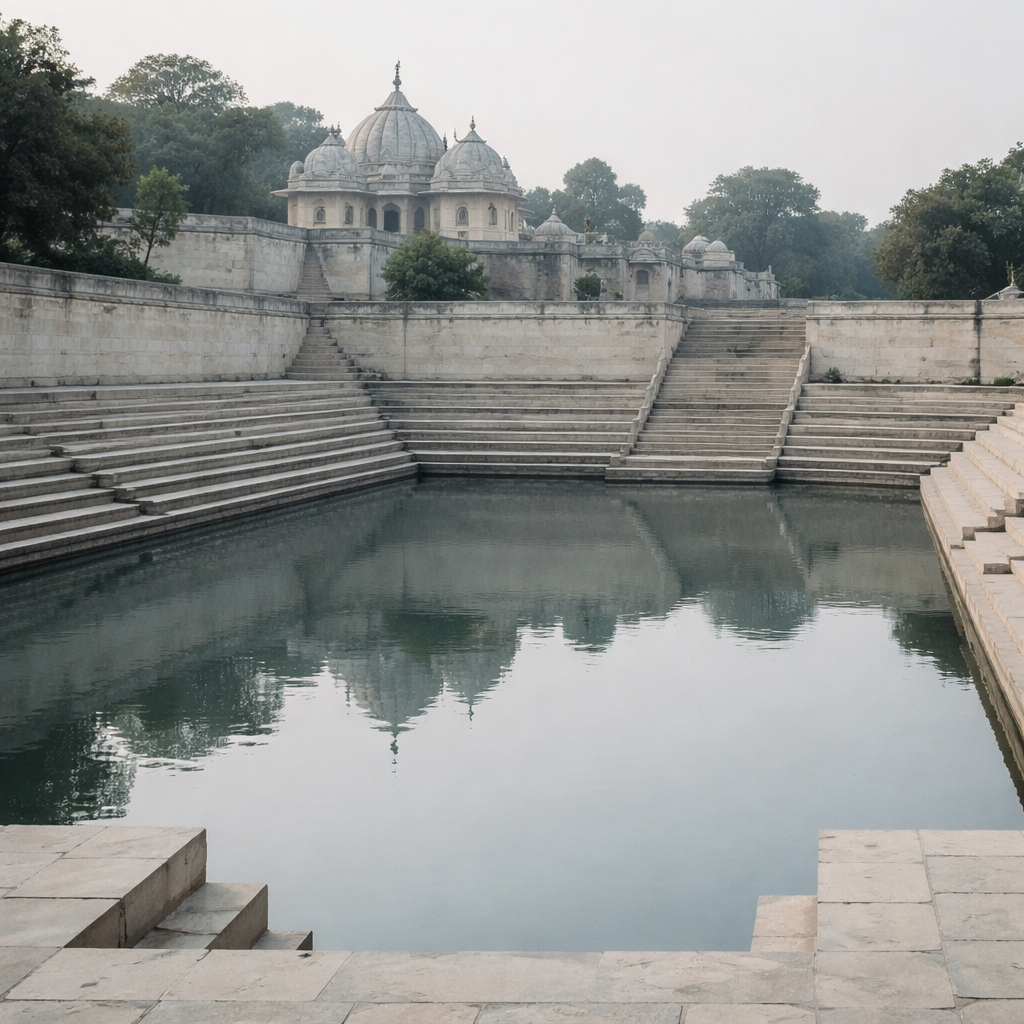
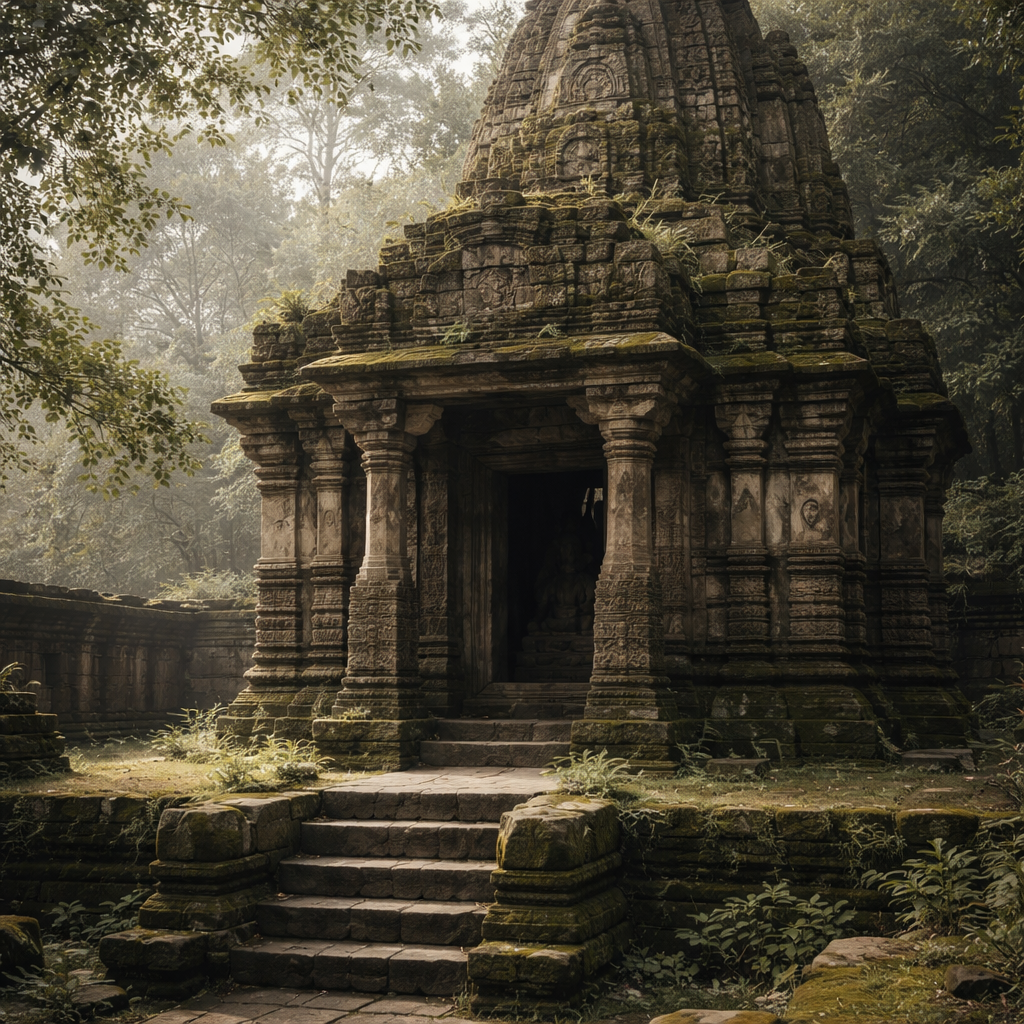
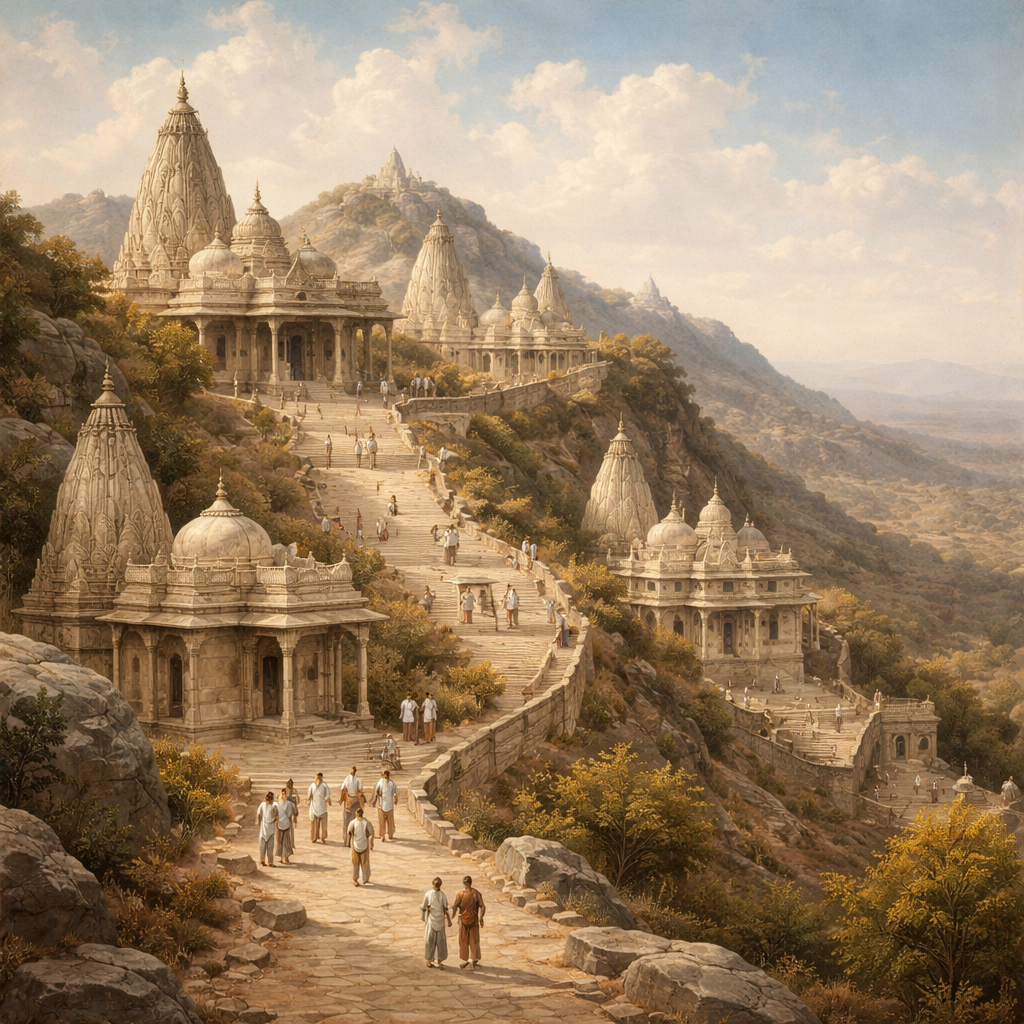
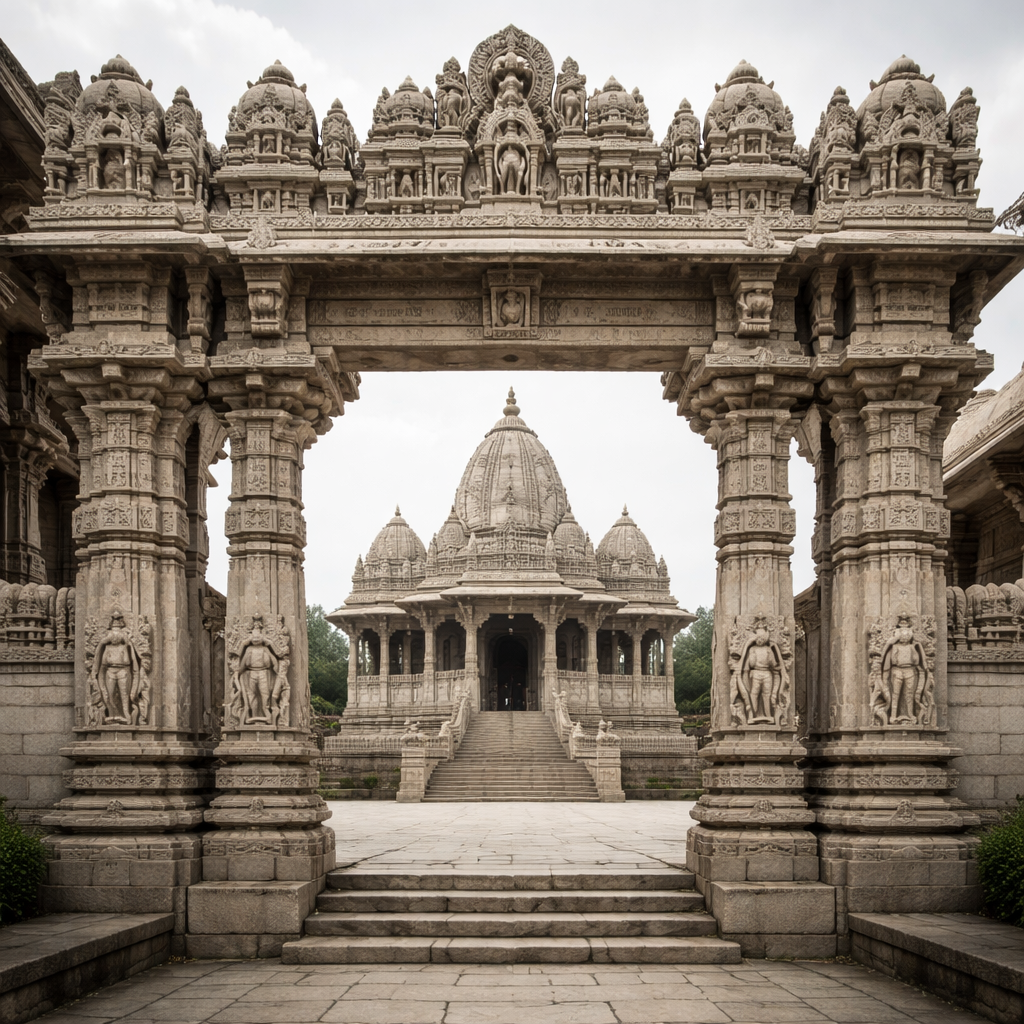
- Temples: Ornate marble temples (Mount Abu, Palitana, Ranakpur).
- Stūpa-like shrines: Early reliquary monuments.
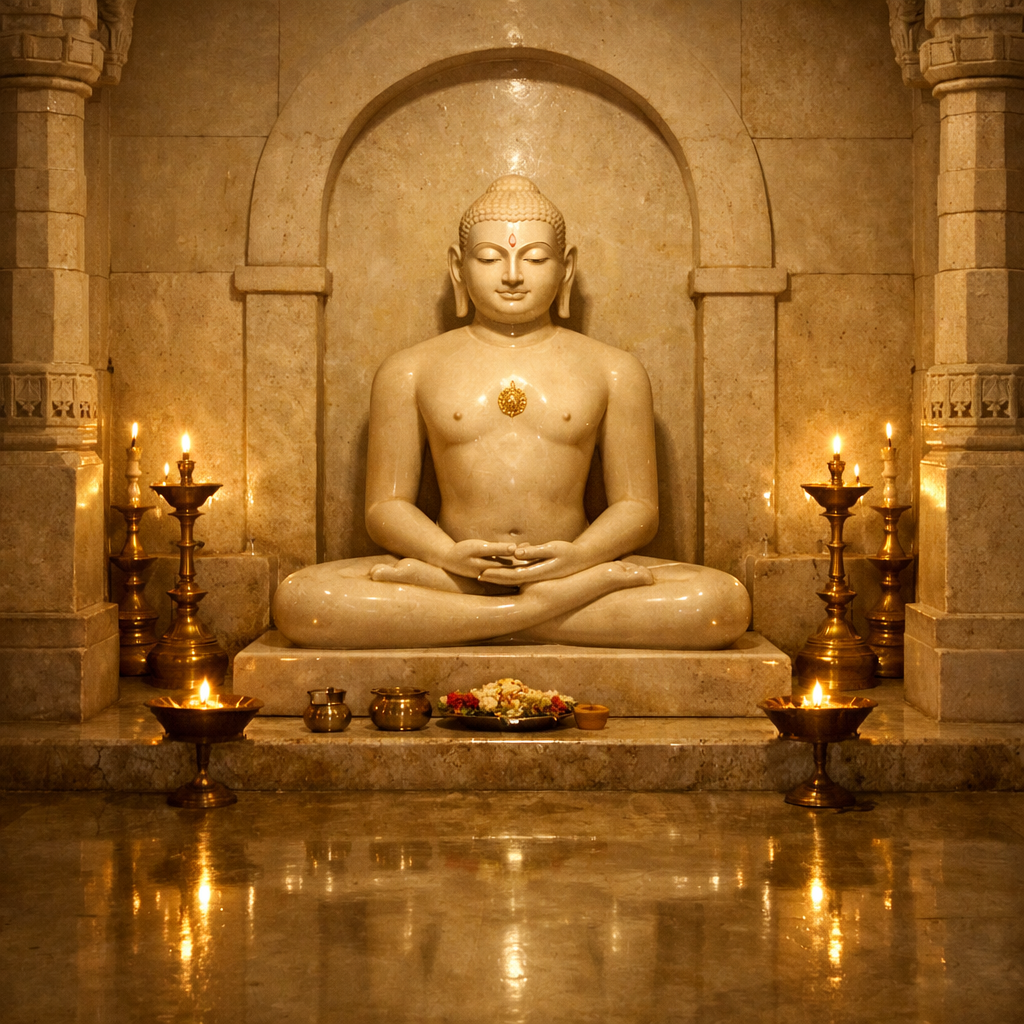
- Icons: Tīrthaṅkaras depicted in meditation postures (padmāsana, kāyotsarga).
- Diagrams: Cosmic maps (cosmographs of Jambūdvīpa).
Jainism approaches sacred space as an extension of its broader commitment to liberation through discipline and non-harm, rather than as a domain of divine encounter or sacral matter. Architecture, domestic practice, objects, and art are tightly regulated to minimize harm, excess, and attachment, functioning primarily as supports for ethical vigilance and ascetic aspiration. Sacred continuity is preserved not through permanent sites or empowered artifacts but through vows, lineage, and repeated disciplined practice, allowing material forms to change without doctrinal rupture. Images and symbols serve contemplative and didactic purposes, reinforcing exemplarity rather than presence, while movement through space—whether in pilgrimage or retreat—prioritizes austerity over celebration. Taken together, Jain sacred space operates as a moral training environment, where material culture is deliberately constrained to serve liberation rather than to attract, mediate, or embody power.
8. Religious Specialists & Institutions


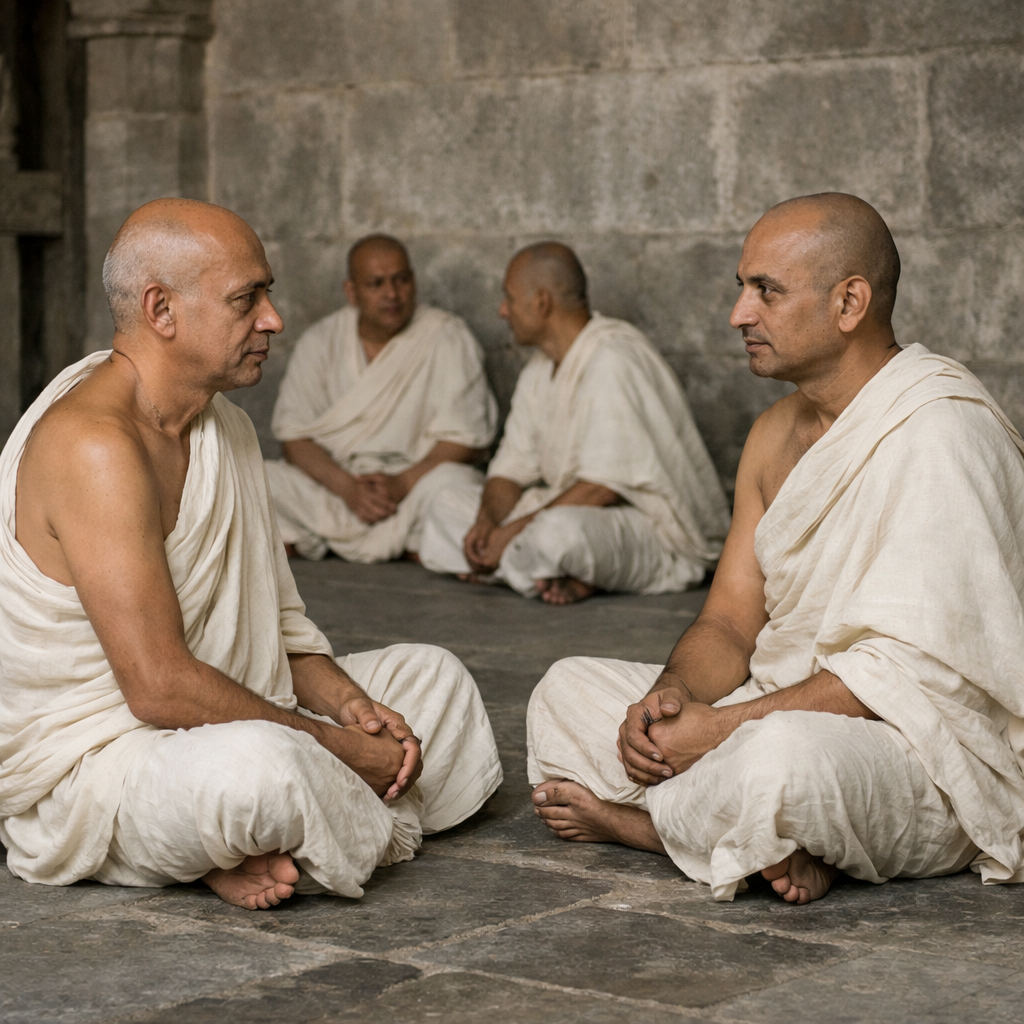
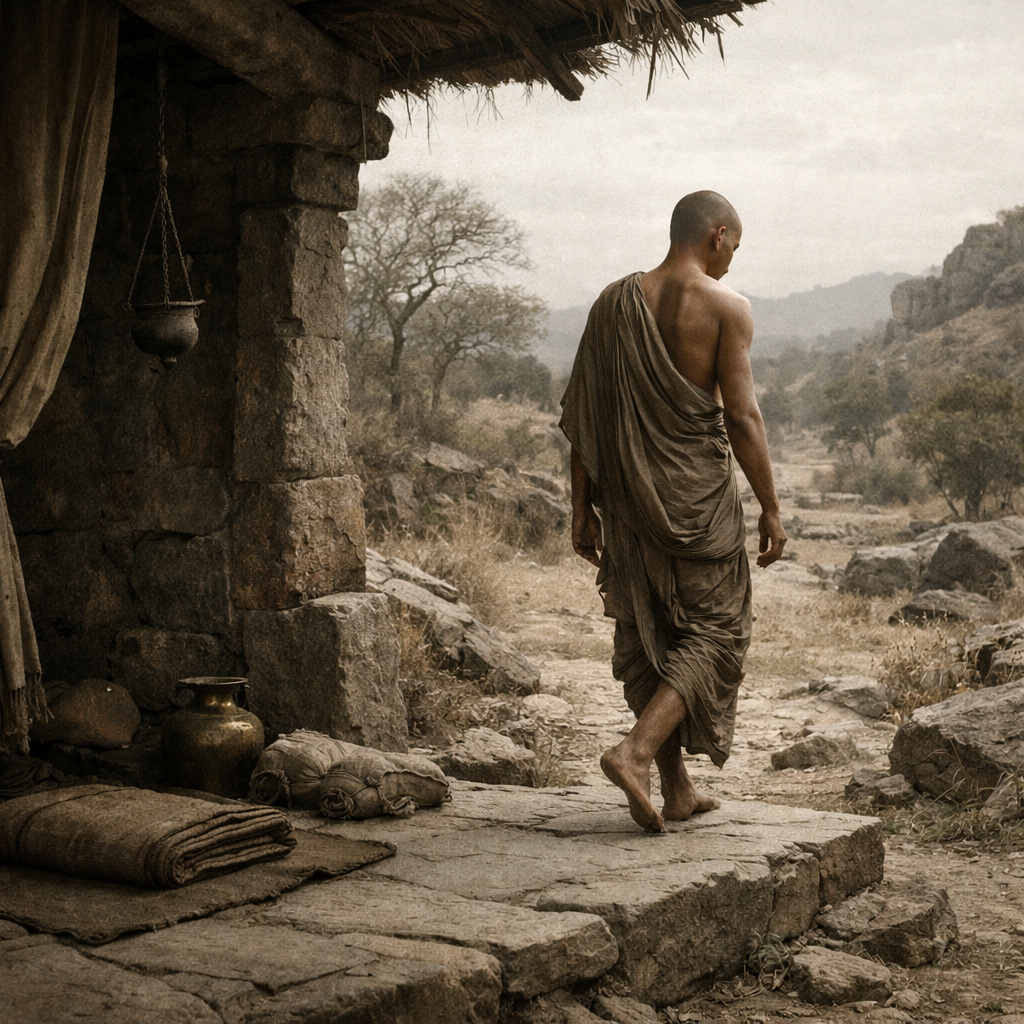
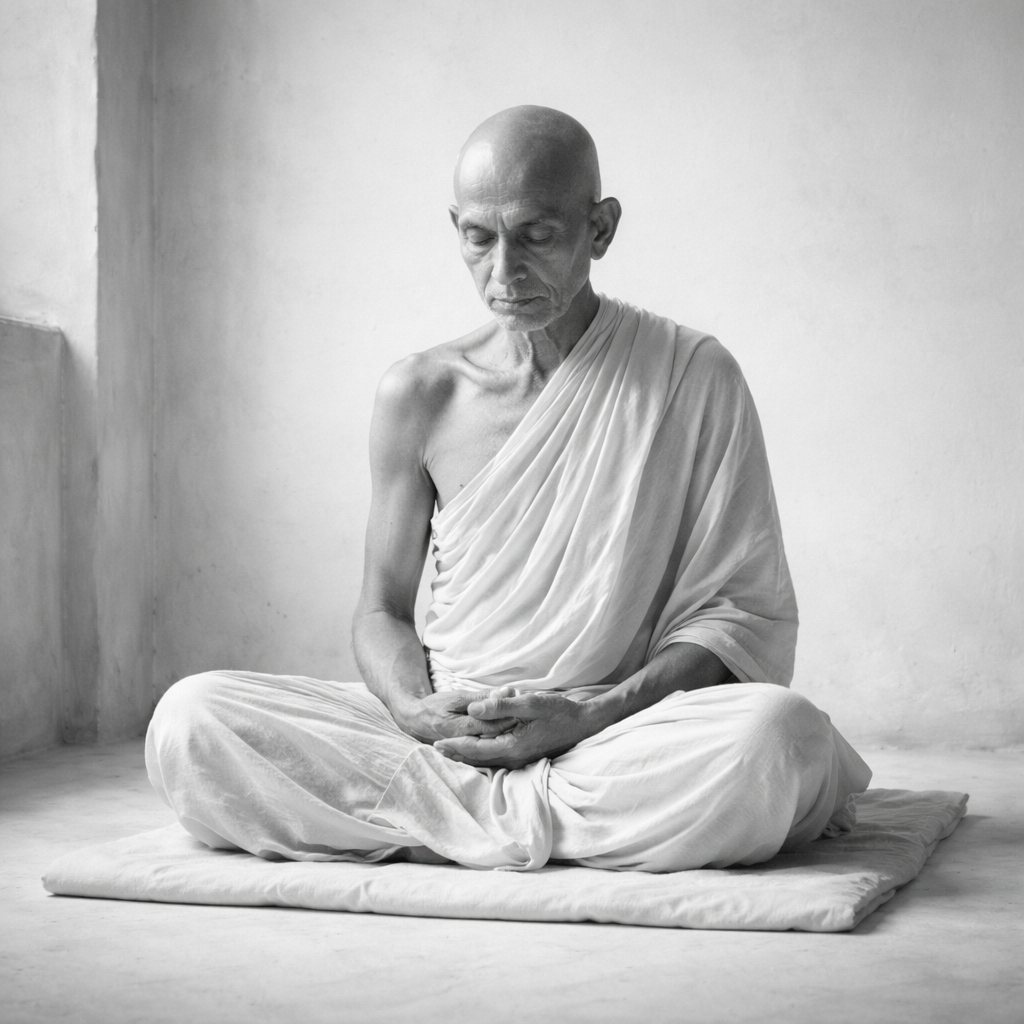
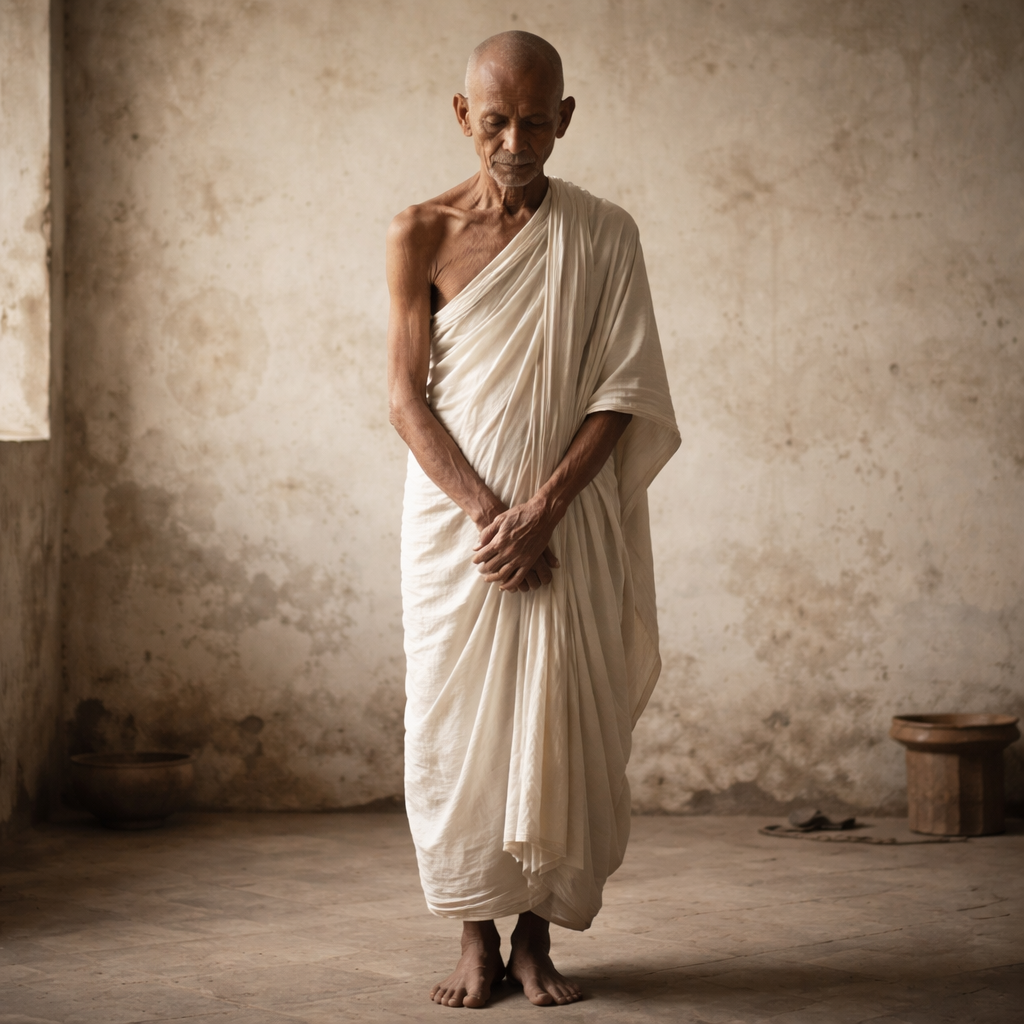
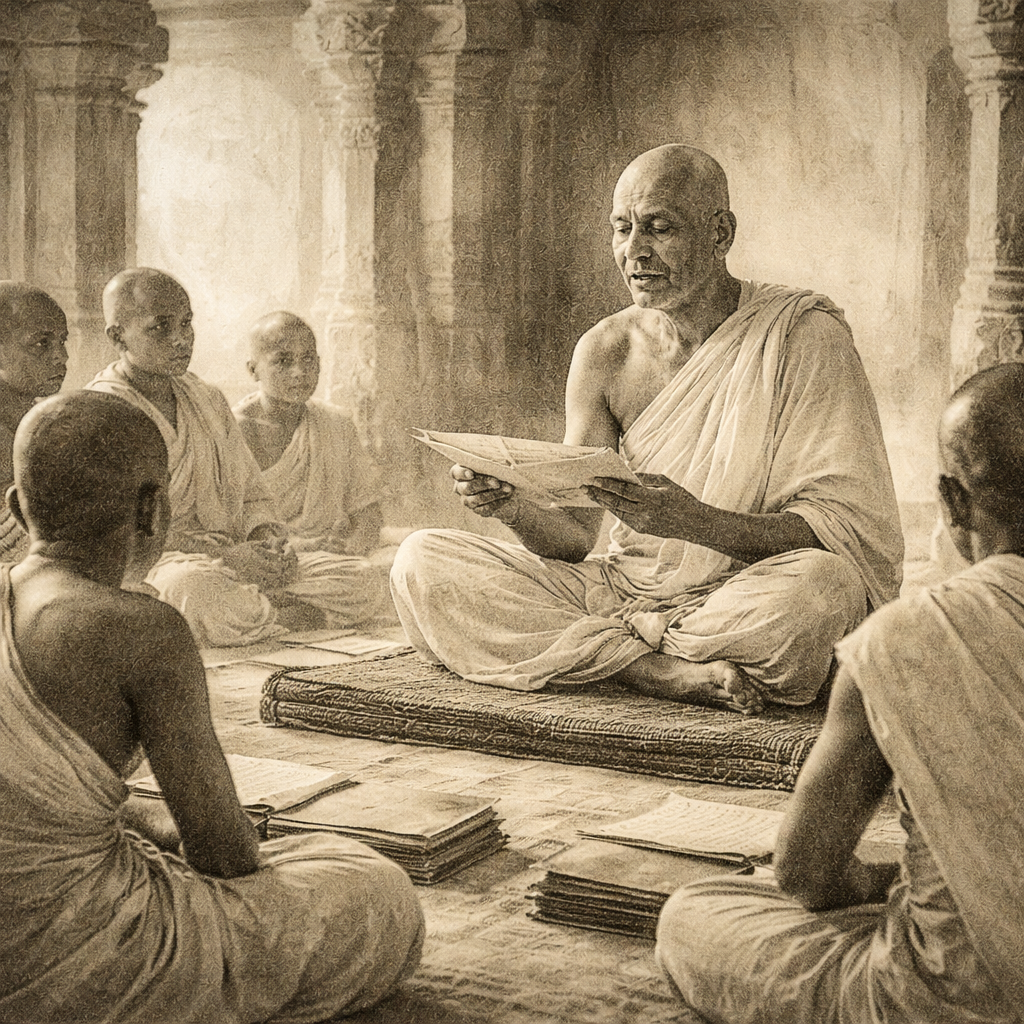
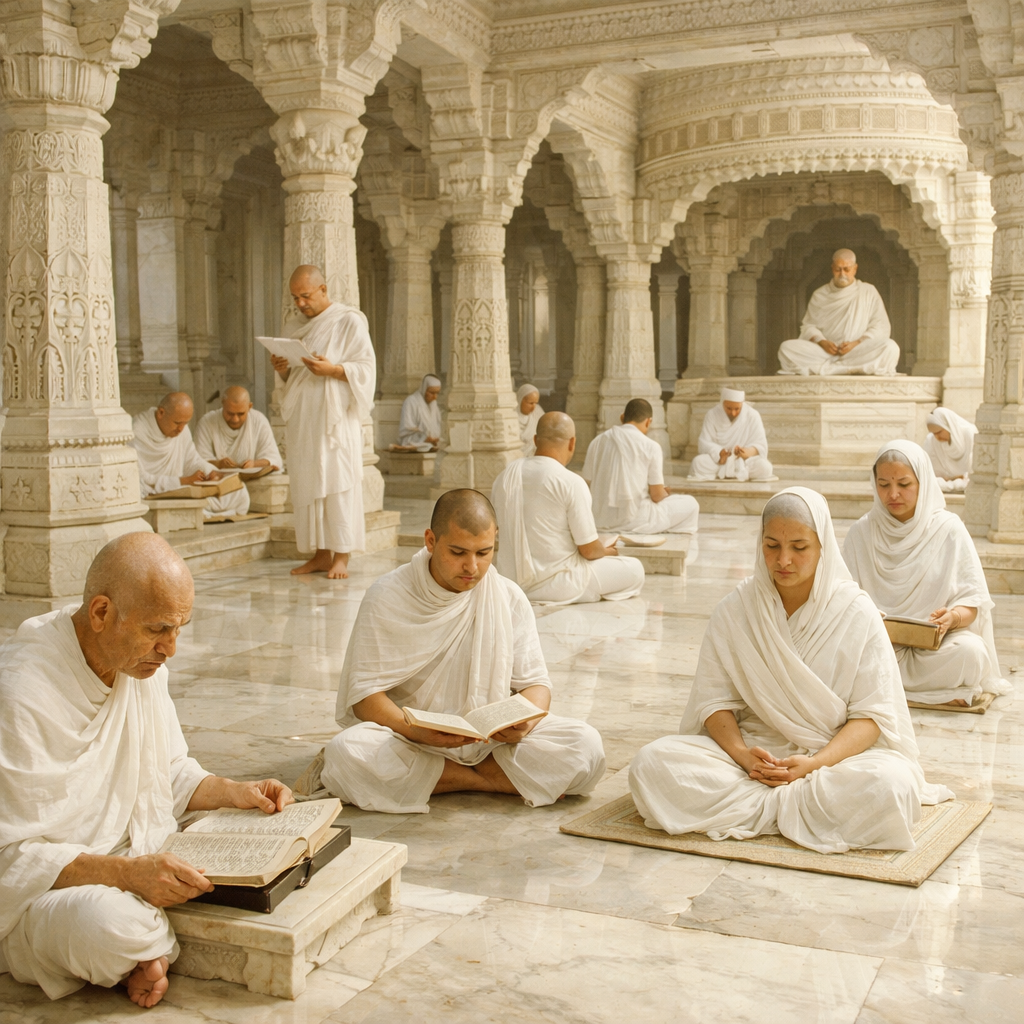
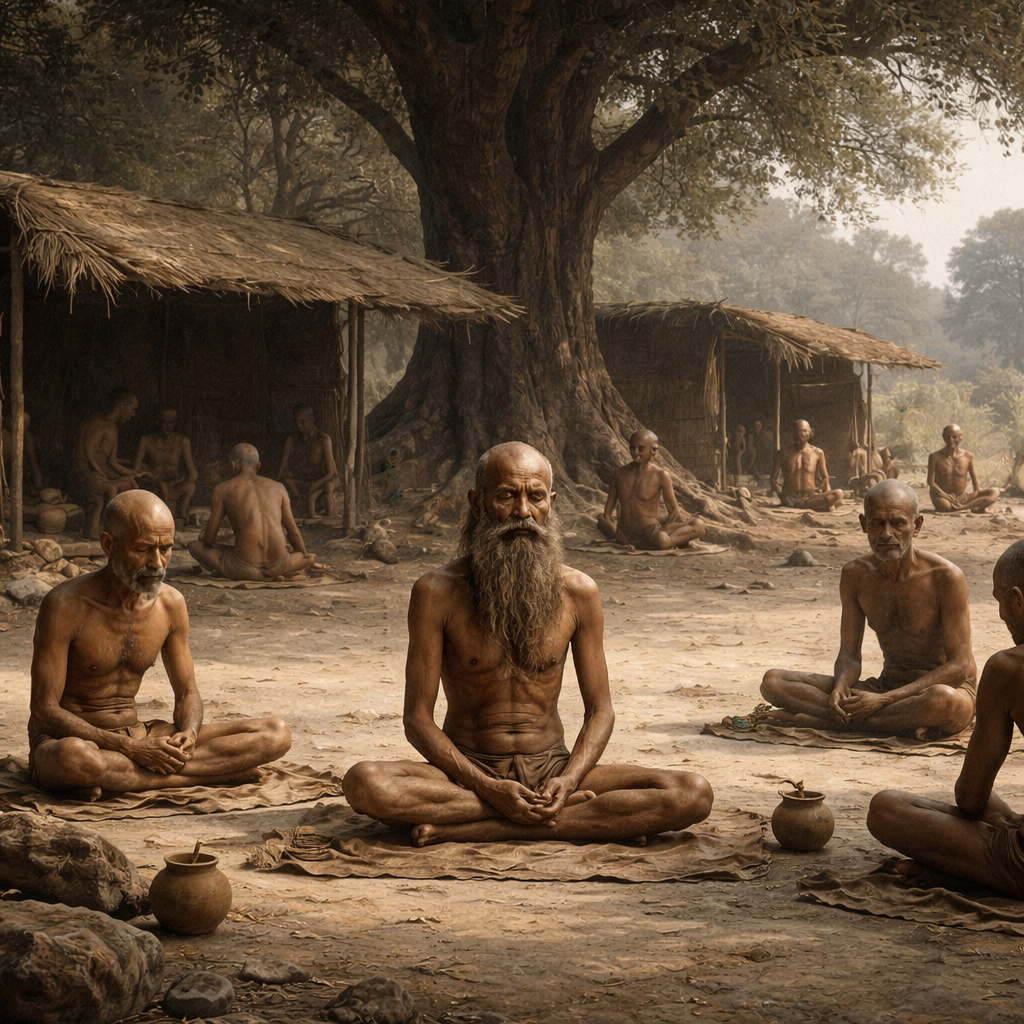
- Monastics: Śvetāmbara white-clad monks/nuns; Digambara sky-clad ascetics.
- Orders: Fourfold community (caturvidha saṅgha): monks, nuns, laymen, laywomen.
- Teachers: Ācāryas (heads of orders), upādhyāyas (scripture teachers).
- Lay councils: Temple committees, community associations.
Jain religious life is sustained through a tightly ordered relationship between renunciant specialists and lay communities, with authority flowing downward from ascetic discipline rather than upward through institutional hierarchy. Monastic lineages define the highest religious standard through visible restraint and ethical exactness, while lay adherents enable this system through material support and partial vows adapted to household life. Education and transmission prioritize preservation, exemplification, and textual fidelity over innovation, reinforcing continuity across generations. Governance remains decentralized, organized around discipline and lineage rather than centralized command. Reform within Jainism functions as a corrective mechanism, restoring strictness and boundary clarity whenever practice drifts toward comfort or institutionalization.
9. Social Function & Law



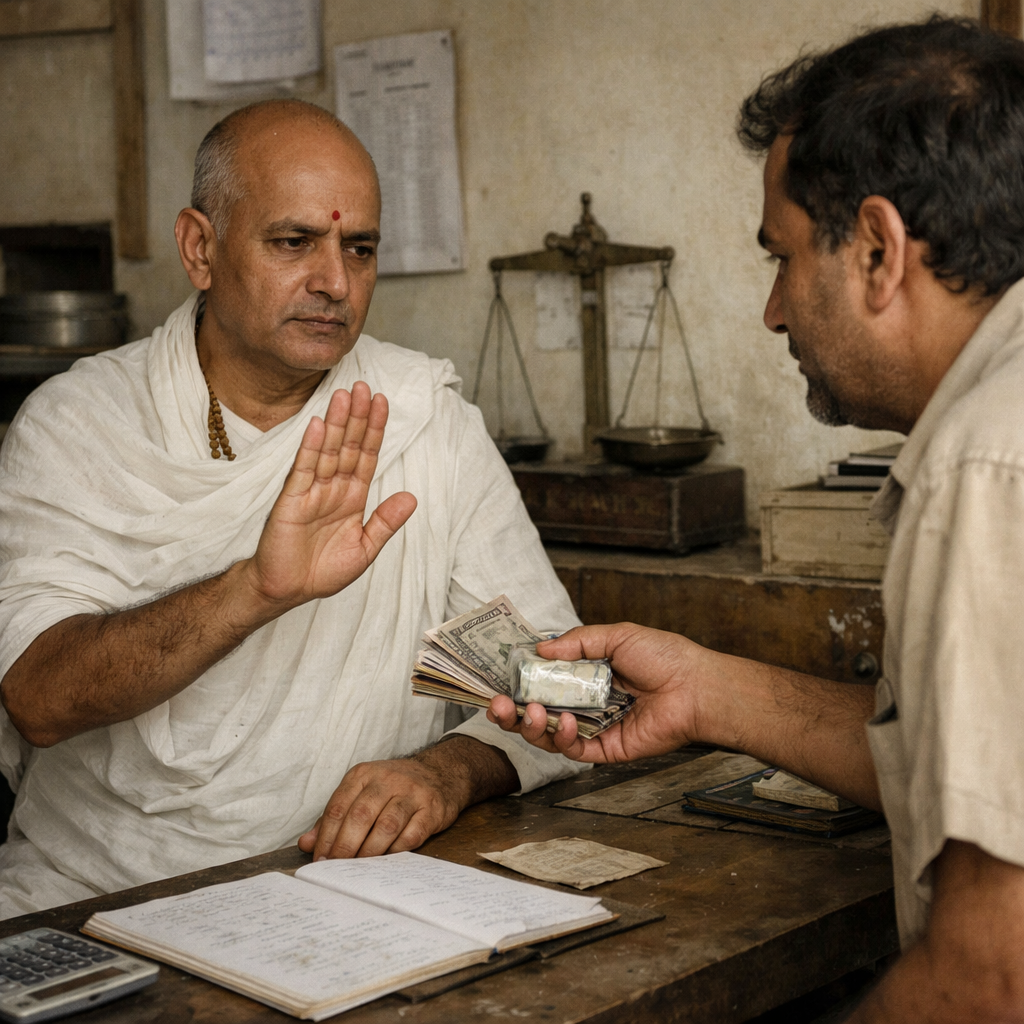
- Ethics: Ahiṃsā (non-violence), satya (truth), asteya (non-stealing), brahmacarya (chastity), aparigraha (non-attachment).
- Law: Monastic rules codified in scriptures; lay morality enforces community cohesion.
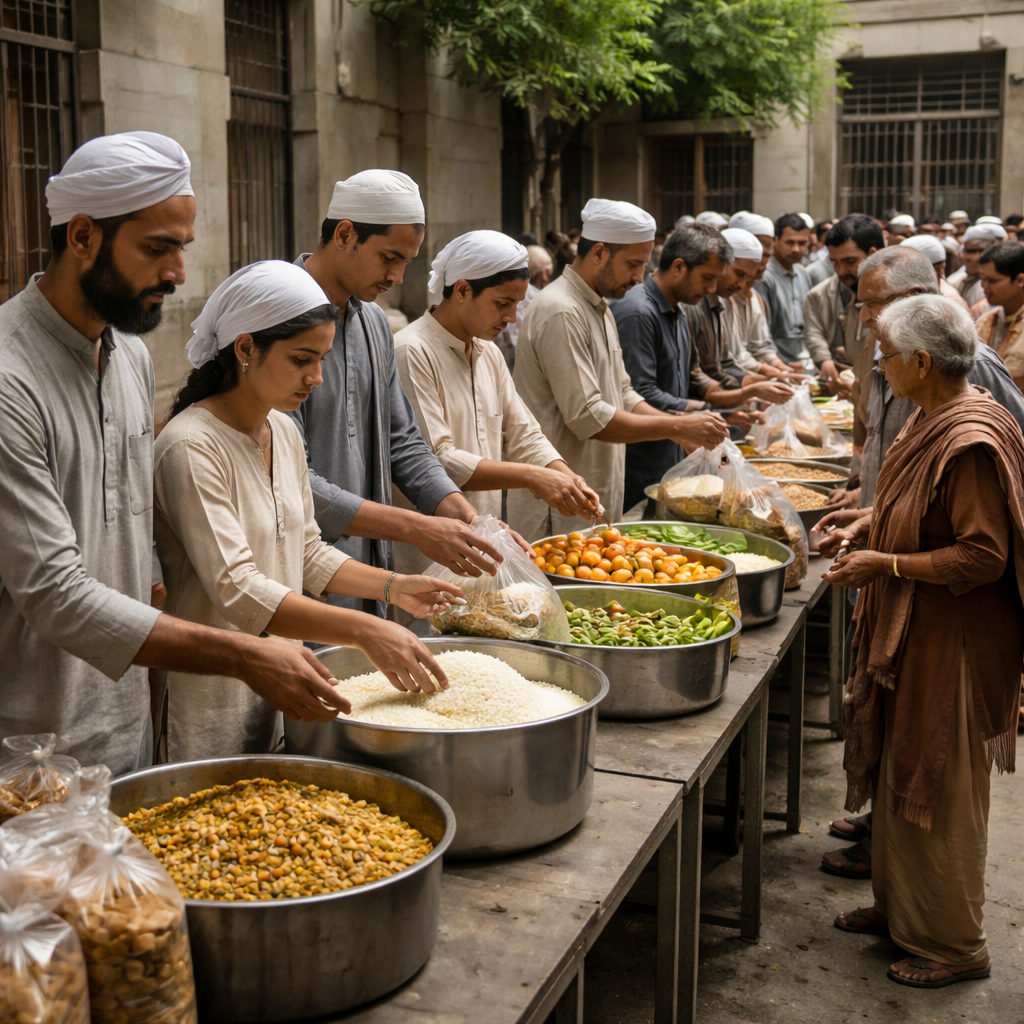
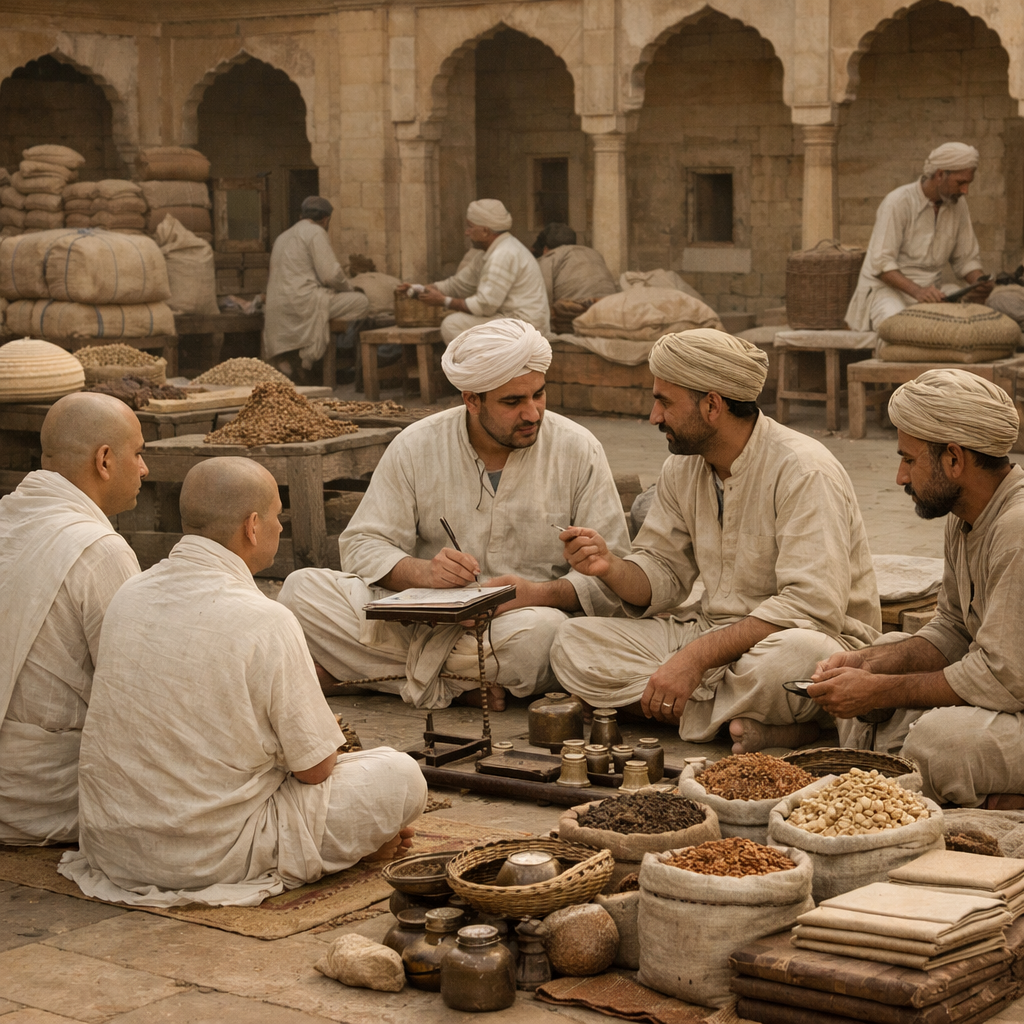
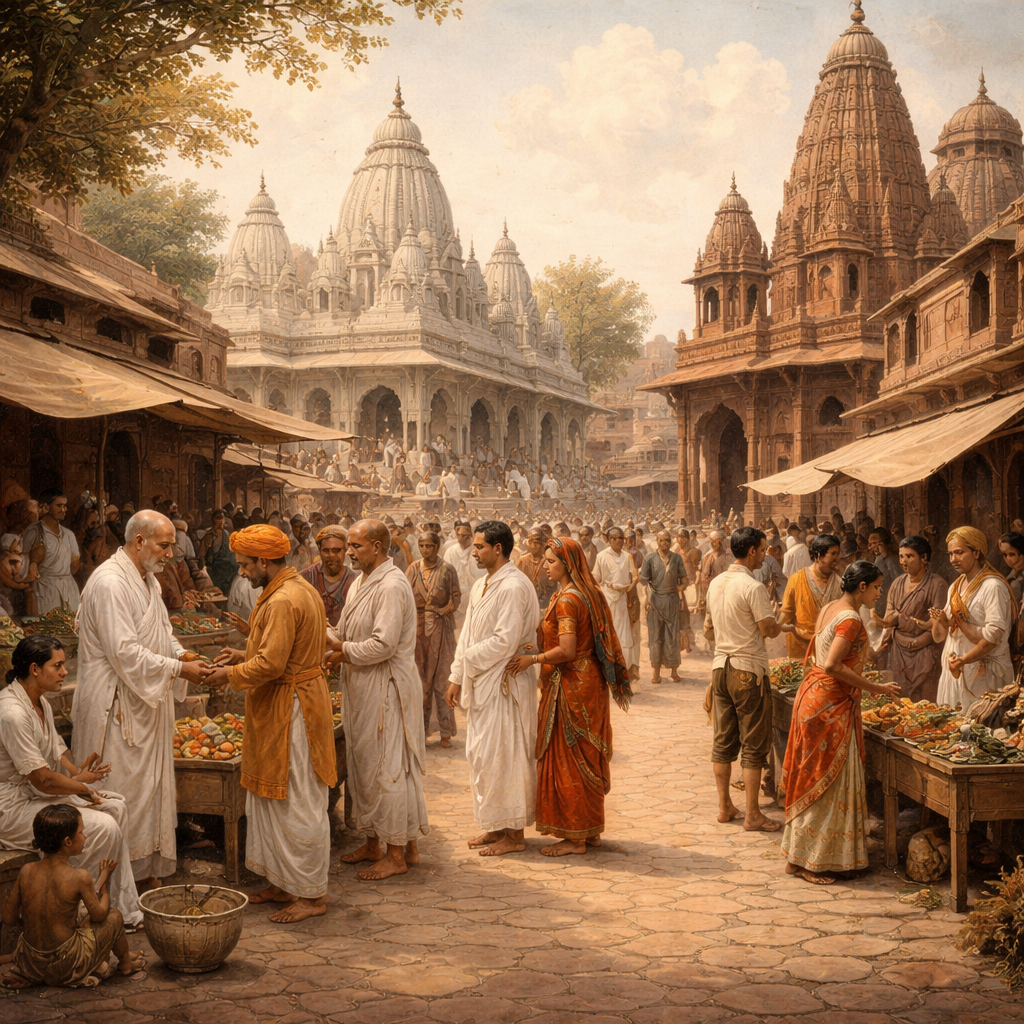
- Society: Merchant communities historically central; Jain philanthropy funds schools, hospitals.
Jainism regulates social life through absolute non-violence and voluntary self-discipline, rejecting political authority, coercive law, and punishment as religious tools. Ethical vows bind through conscience rather than enforcement, with social order centered on ascetic exemplarity, lay adaptation, and inward correction. Cohesion, welfare, and continuity arise from shared restraint and ethical immutability rather than institutional power or legal authority.
10. Death & Afterlife



- Soul (jīva): Eternal, intrinsically pure, bound by karma.
- Rebirth: Endless until liberation.
- Liberation (mokṣa): Attained by complete shedding of karma, soul rises to siddha-śilā (top of universe).
- Funerary practice: Cremation or burial; stress on purity and non-violence; rituals for merit transfer.
Within Jainism, death is fully integrated into an eternal, non-theistic cosmic order governed by precise moral causality. The tradition articulates a sharply defined ontology in which souls are real, indestructible, and individually accountable, while karma operates as a material force that binds and directs rebirth. There is no creator god, no divine judgment, and no collective destiny; liberation is achieved solely through disciplined self-effort and the complete removal of karmic matter. Ancestors play no metaphysical role, merit cannot be transferred, and funerary rites do not alter postmortem fate. Instead, Jain death doctrine underwrites an expansive ethic of nonviolence (ahiṃsā) and restraint, extending moral concern to all forms of life. By locating death within a system of exact moral consequence and permanent liberation without cosmic culmination, Jainism transforms mortality into a framework for total ethical vigilance rather than consolation or fear-based control.
11. Symbolism & Cultural Expression


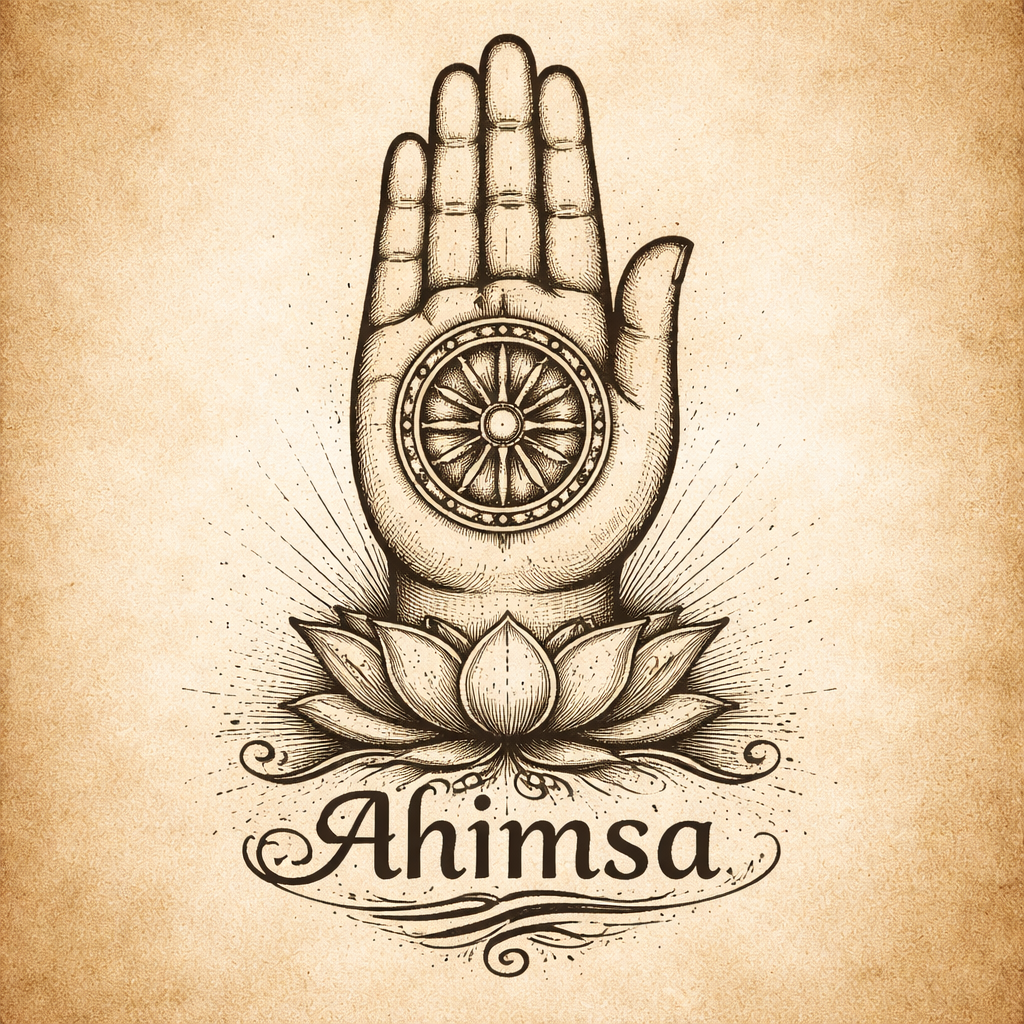
- Symbols: Jain emblem (parasparopagraho jīvānām – “all life is interdependent”), svastika (four realms of rebirth), hand with ahiṃsā symbol, three dots (right faith, knowledge, conduct).
- Colors: White for purity; saffron for renunciation.
- Numbers: 24 tīrthaṅkaras; 5 great vows; 12 lay vows.
- Art: Iconic temple architecture, manuscript illustrations, cosmographs.
Within the symbolic landscape of Eastern religions, Jainism represents an extreme case in which symbolism is stripped of expressiveness and redirected toward total ethical discipline. Unlike traditions that use symbols to orient practitioners toward cosmic process, moral harmony, or relational devotion, Jain symbolism is optimized for precision, minimization, and control of harm. Symbols here are not polyvalent or evocative; they are exacting, schematic, and behavior-governing.
This section shows how Jainism deploys symbolism through restraint rather than elaboration: silence over sound, diagram over image, exemplarity over narrative, and renunciation over authority. Even when visual or ritual forms are present, they function as reminders of metaphysical structure and ethical obligation, not as mediators of presence or meaning. Jainism thus occupies a distinct position among Eastern traditions, demonstrating how symbolism can operate not to enrich experience, but to systematically limit it in service of liberation.
12. Contact & Transformation

- Interactions: With Buddhism and Hinduism in India, shared philosophical milieu.
- Under Hindu & Muslim rule: Retained distinctiveness; some persecution but often coexistence.
- Colonial/modern: Reform movements, emphasis on philosophy and non-violence; influence on global ethics (e.g., Gandhi).
- Diaspora: Active Jain communities in North America, UK, Africa.
- Revival: Renewed temple building, international Jain conferences, academic study.
Jainism’s historical survival is rooted in boundary maintenance rather than expansion. Coexisting for millennia alongside larger religious systems, it preserves identity through rigorous discipline, institutional cohesion, and community self-regulation rather than syncretic incorporation or missionary growth. Contact produces accommodation in language, art, patronage, and public framing, while core ethical and ascetic structures remain tightly guarded.
Periods of reform, suppression, and migration reshape Jainism’s institutional expression without dissolving its internal coherence. Minority status encourages strategic non-confrontation, reliance on patronage networks, and portability of core practices. In diaspora and modern settings, Jainism increasingly presents itself through ethics-centered public representation while sustaining continuity through community institutions and disciplined practice. Across disruption and relocation, Jainism persists through a distinctive pattern of controlled adaptation—absorbing cultural form while keeping its ethical and disciplinary foundations intact.