Human Geography is the study of how human activity is organized across the Earth’s surface and how spatial patterns, movements, environments, and places shape human experience. It examines the arrangements of settlements, networks, and landscapes; the flows of people, goods, and information; the ways humans transform and inhabit the environments they occupy; and the meanings and territorial structures through which places become social and experiential anchors. Unlike the other social sciences, which analyze culture, institutions, economic systems, or behavior, Human Geography focuses on the spatial dimension of human existence—how the distribution, movement, and interpretation of space create the conditions in which societies develop and change.
Human Geography is often presented as a loose collection of themes—urban development, migration flows, cultural landscapes, human–environment relations, regional studies, mobility, GIS, planning, demography, and dozens of others. These concepts originate from many different intellectual traditions, and over time they have been layered on top of one another with little concern for coherence. As a result, the field can appear scattered: spatial processes sit beside cultural theories, environmental questions mix with social ones, and analytic tools are treated as if they were subject areas in themselves. The boundaries blur further because Human Geography sits between multiple disciplines, each of which claims part of its territory. It is no surprise that the field often feels like a swirl of ideas without a clear internal structure. Before offering a unified framework, it’s worth acknowledging the different ways the discipline has been divided, why they persist, and how they contribute to the sense of conceptual sprawl.

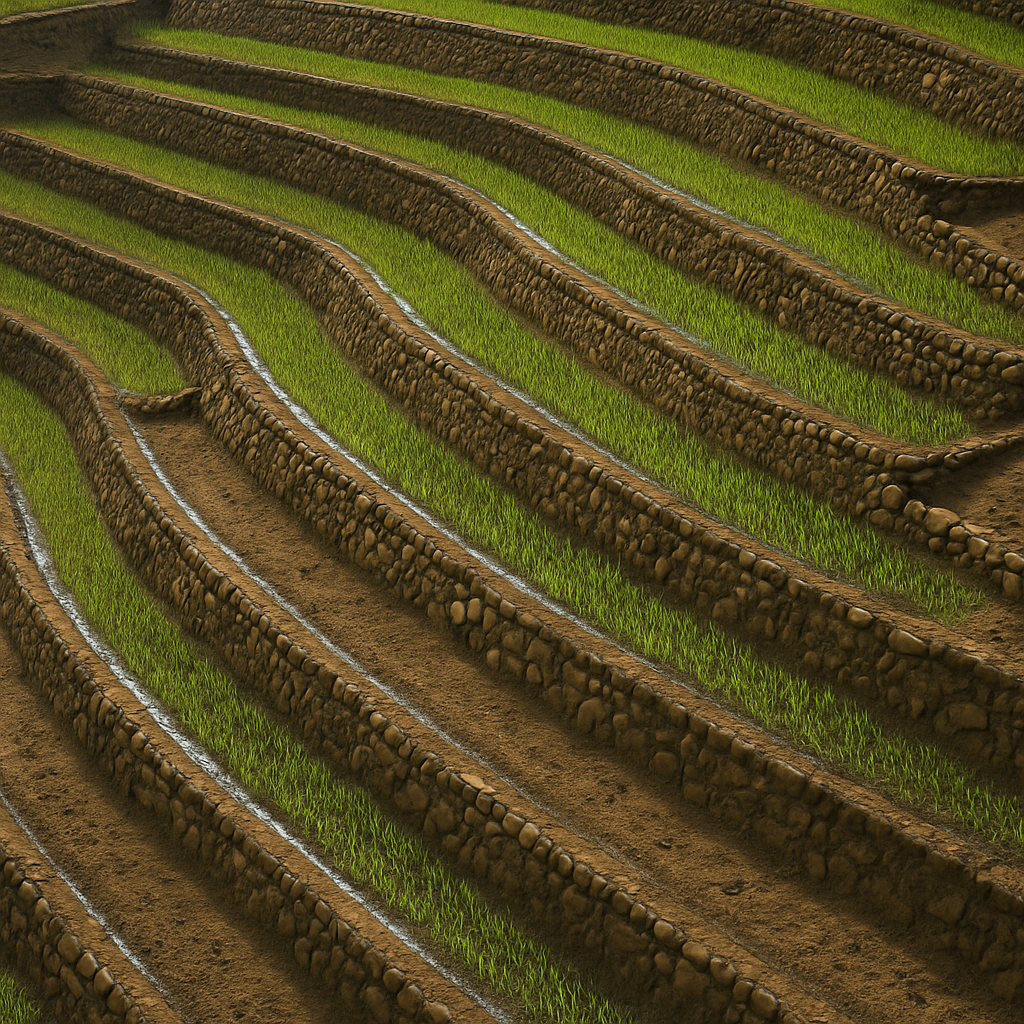


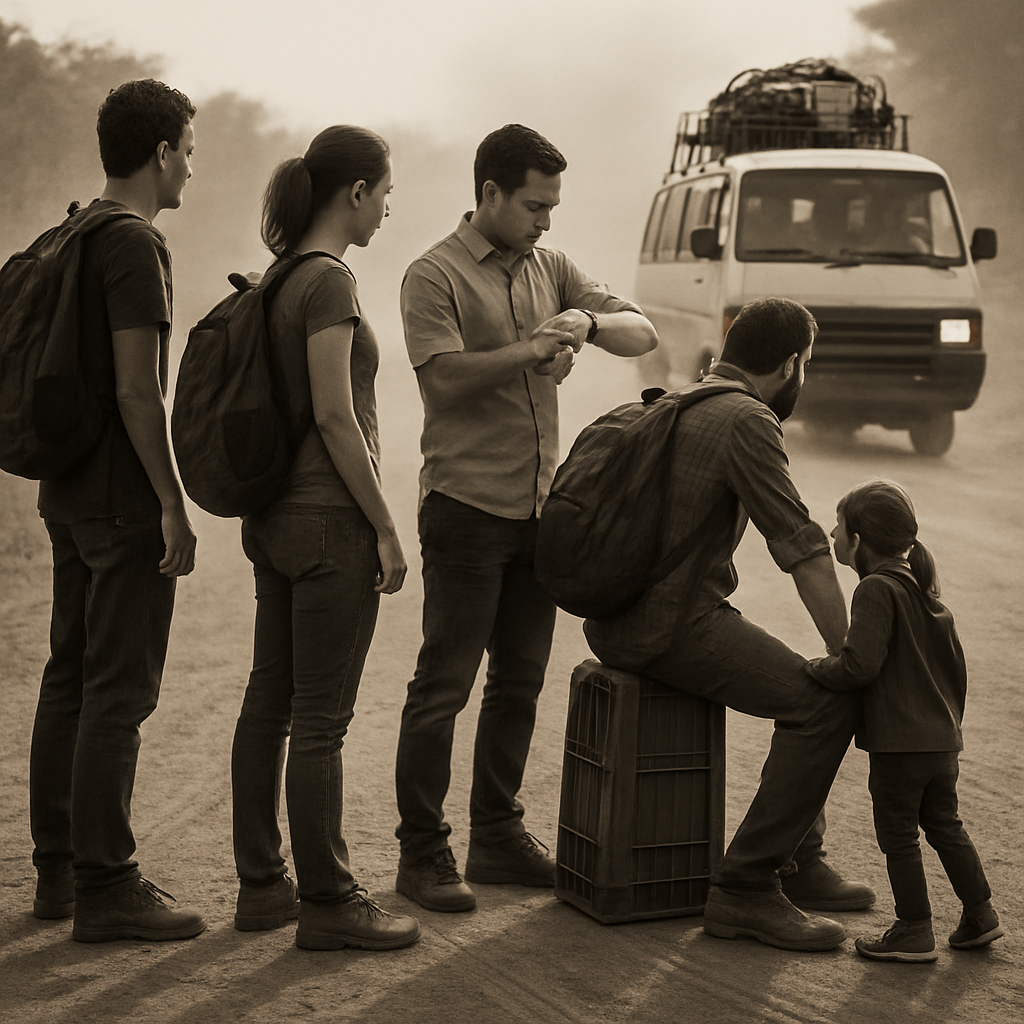
The most common way Human Geography is divided in academic settings is into broad thematic subfields such as urban geography, cultural geography, economic geography, political geography, population geography, development geography, and environmental geography. These categories are familiar because they mirror the major topics scholars often study and the kinds of courses universities offer. They also map loosely onto the concerns of other disciplines: cultural geography draws on anthropology, political geography touches international relations, economic geography overlaps with economics, and environmental geography approaches earth science. This structure is convenient for teaching and administration, and it reflects historical currents in the discipline—but it does not reveal the internal logic of Human Geography itself. The thematic approach collects topics rather than mechanisms, mixes analytical engines with subject matter, and blurs the boundaries that separate the field from its neighbors. As a result, it preserves the sense of conceptual sprawl rather than clarifying how Human Geography actually explains the spatial organization of human life.
A more coherent way to understand Human Geography is to focus on the underlying spatial processes that generate the patterns and experiences we observe on the Earth’s surface. Instead of grouping the field by topics—urban, cultural, political, economic—we can identify the fundamental mechanisms that structure human spatial organization. These mechanisms recur across regions, cultures, and historical periods, and they form the analytical backbone of the discipline. The fields in the table below reflect this deeper structure. Each isolates a distinct spatial logic: how human activity forms patterns, how movement and flows connect places, how environments are transformed and inhabited, and how meaning and identity are attached to space. Together, they provide a framework that captures everything essential to Human Geography while avoiding the conceptual overlap that arises from thematic or discipline-borrowed categorizations.
| Branch Name | Focus | Examples |
|---|---|---|
| Spatial Patterns & Spatial Analysis | The study of how human activities, populations, and built environments are arranged across the Earth’s surface and how spatial structures emerge, persist, or change. | Spatial distribution, clustering and dispersion, density gradients, regional differentiation, spatial autocorrelation, spatial modeling, GIS-based analysis, spatial statistics, location theory, land-use patterns, urban morphology. |
| Mobility, Flows & Connectivity | The movement of people, goods, information, and resources across space, and the networks, pathways, and interactions that structure these flows. | Migration systems, commuting patterns, transportation networks, mobility regimes, spatial diffusion of ideas and diseases, connectivity networks, flow analysis, time–space compression, accessibility modeling, interaction models (gravity, Huff). |
| Human–Environment Interaction & Landscape Modification | How human activity transforms the Earth’s surface through land use, built environments, infrastructure, and spatially uneven exposure to environmental conditions. | Settlement development, land-use change, hazard exposure, environmental justice (spatial distribution), built environment design, spatial patterns of risk, human-altered landscapes, spatial vulnerability, spatial distribution of resources and services. |
| Place, Territory & Spatial Experience | How humans perceive, construct, and act within places, and how territorial boundaries and spatial identities organize life on the Earth’s surface. | Place-making, sense of place, territoriality, boundary systems, borders and frontiers, spatial identity, landscape interpretation, proxemics, personal space, regionalization, symbolic landscapes, spatial imaginaries. |
Together, these fields outline the core analytical structure of Human Geography. Each represents a different way human activity takes shape on the Earth’s surface: through the formation of spatial patterns, the movement of people and resources, the transformation of environments and built landscapes, and the creation of places and territories imbued with meaning. While the thematic subfields of geography remain useful for organizing subject matter, these four spatial engines capture the actual mechanisms that generate geographic phenomena. Nothing essential to Human Geography lies outside this structure, and each field reinforces the others by illuminating a different dimension of how humans inhabit and reshape space. This framework provides a coherent foundation for studying human spatial organization without relying on borrowed concepts from neighboring disciplines.





How the Fields of Human Geography Relate
Human Geography is organized around four spatial engines that together explain how human activity unfolds across the Earth’s surface. Spatial Patterns & Analysis identifies the structures—clusters, networks, gradients, regions—that anchor human presence. Mobility & Flows describes the movements of people, goods, information, and resources that connect or differentiate those structures. Human–Environment Interaction & Landscape Modification shows how human activity reshapes physical and built environments, generating material contexts that enable, constrain, or redirect spatial processes. Place, Territory & Spatial Experience examines how humans interpret, claim, and inhabit these environments, turning physical settings into meaningful and contested spaces. Each field isolates a distinct spatial mechanism, yet none stands alone: patterns shape flows, flows reshape landscapes, landscapes shape place experience, and place attachments feed back into spatial organization. Together, they form a coherent framework for understanding how humans structure and experience space.
1. Spatial Patterns & Analysis → the structural foundation
Spatial Patterns & Analysis reveals the underlying shapes and arrangements of human activity.
It examines:
- where people and activities are distributed,
- how densities, clusters, and regions emerge,
- and what relational patterns appear across scales.
These structures condition all other geographic processes.
Flows originate and terminate in patterned spaces;
environmental transformations follow the logic of existing spatial arrangements;
and place meanings build upon the physical and social organization of landscapes.
Patterns provide the scaffolding on which human spatial systems develop.
2. Mobility, Flows & Connectivity → the dynamic foundation
Mobility & Flows captures the movements that animate geographic space.
It includes:
- migration and circulation,
- commuting and transport networks,
- diffusion of ideas, technologies, or pathogens,
- and global or regional flow systems.
Flows reshape spatial patterns by redistributing populations and activities,
alter environments by changing land use and infrastructure demand,
and transform places by altering access, connectivity, and the lived meaning of distance.
Movement is the engine that reorganizes space.
3. Human–Environment Interaction & Landscape Modification → the material foundation
Human–Environment Interaction explains how human activity alters the Earth’s surface and creates the built environments in which spatial life unfolds.
It encompasses:
- settlement formation and expansion,
- land-use change,
- environmental exposure and spatial vulnerability,
- infrastructure networks and built landscapes.
These material transformations guide flows by enabling or restricting movement,
reconfigure spatial patterns through development or decline,
and frame the experiential qualities of place.
Landscape modification is the physical imprint of human spatial action.
4. Place, Territory & Spatial Experience → the experiential foundation
Place, Territory & Spatial Experience examines how humans interpret, claim, and inhabit geographic space.
It addresses:
- place-making and attachment,
- territorial boundaries and spatial claims,
- symbolic and lived landscapes,
- spatial identity and perception.
Place meanings influence mobility choices,
shape patterns of settlement and land use,
and guide environmental interventions.
They also determine how individuals and communities orient themselves within geographic settings.
Place is where spatial processes acquire human meaning and significance.
The Structure in One Chain
Spatial Patterns establish the structural layout of human presence.
Mobility redistributes that presence by linking or separating places.
Human–Environment Interaction inscribes these processes into the physical landscape.
Place and Territory transform landscapes into meaningful spaces.
Together, these four fields form the full analytic architecture of Human Geography.