Neolithic and Early Bronze Age Tactics: In Longshan times, warfare likely took the form of raids, skirmishes, and sieges of rival villages. Without cavalry or chariots, battles were relatively close-range and personal. Attackers might attempt to breach or burn palisade walls, while defenders rained arrows and threw stones. Surprise attacks at dawn or ambushes in rural terrain were no doubt common tactics among tribal rivals. The existence of fortified towns suggests that protracted siege tactics were known in rudimentary form – an enemy might try to starve out a walled community or infiltrate its gates. However, as one analysis notes, in Yangshao and Longshan times “city assaults were rarely undertaken”; direct attacks on massive earthen walls were daunting without advanced siege engines, so often warfare may have bypassed the strongest forts in favor of attacking fields, herds, or smaller out-settlements. There is also evidence of massacres in some Neolithic contexts (e.g. skeletal trauma at sites in Shandong and the northwest), implying that when a town’s defenses fell, the conflict could end in slaughter or capture of the inhabitants. Ritual likely played a role even at this stage – some scholars propose that organized combat could coincide with ritual feasts or ancestor worship, seeking divine favor for victory.
Shang Warfare Doctrine: The Shang approach to war was strongly influenced by ritual divination and the goal of securing captives for sacrifice. Before any campaign, Shang kings consulted the oracles (inscribed turtle shells or ox bones) to ask the ancestors whether attack would be auspicious. These oracle bone inscriptions reveal a formal decision-making process: which target to attack, whether the ancestors’ blessing was obtained, and even tactical considerations (e.g. “Will a night assault on the Guifang be favorable?” type questions). Once divination approved, the Shang mobilized and struck with force. Their battlefield tactics combined shock and missile elements: lines of spearmen and ge-halberdiers formed the main infantry body, likely arrayed in dense formations to present a wall of bronze blades. Archers would soften the enemy; Shang arrowheads found suggest use of composite bows (capable of powerful penetration). The introduction of chariots added a maneuver element – these could charge enemy flanks or chase down retreating troops. It’s believed Shang chariots also served as elevated firing platforms: a noble archer on a chariot could shoot over the heads of infantry, increasing range and psychological impact. Shang armies probably favored open-field engagements, where chariots and massed infantry could coordinate. Notably, a Shang campaign often aimed to decisively rout the enemy and capture prisoners rather than simply hold territory. Captives (men, women, and children) were brought back to Shang towns as war booty – many were ritually sacrificed to honor Shang gods and ancestors, or forced into servitude. This practice gave Shang warfare a brutal, terroristic character: by “raiding enemy towns and capturing thousands of prisoners for ritual killings”, the Shang instilled fear and also fulfilled religious obligations.
Doctrine-wise, the Shang view of warfare was expansionist and cyclical. They campaigned in all directions around their realm, subduing “fang” states (periphery peoples such as the Tufang, Yifang, Qiang, etc.) in ongoing frontier wars. Many of these campaigns were punitive or preventive – crushing a restive neighbor before it grew threatening. One inscription recounts that the Tufang had fought Shang for generations until Fu Hao defeated them in a single decisive battle. This suggests Shang strategy valued decisive engagement to eliminate a foe’s military capacity in one stroke. In other cases, the Shang practiced ambush tactics: Fu Hao’s victory over the Ba is remembered as the first large-scale ambush recorded in Chinese history – implying she lured the enemy or struck unexpectedly, a tactical feat that became notable enough to preserve in memory. On defense, the Shang could rely on their walled cities. They seemed to avoid rashly assaulting enemy fortresses (in line with Sun-Tzu’s later admonitions); instead, if facing fortified rebels or enemies, the Shang might bypass them or use siege craft only when necessary. There is little evidence of advanced siege engines (no catapults yet), but attackers could pile firewood at gates, dig under walls, or use scaling ladders. The sheer thickness of Shang-era walls, however, often made direct assault impractical. Hence, subterfuge, treachery, or starvation were likely siege methods.
Ritual Combat Practices: Shang warfare was intertwined with ritual. Before battle, divinations and sacrifices (sometimes sacrificing animals or a prisoner to foretell victory) were conducted. After battle, victorious Shang kings offered captured enemies as human sacrifices to ancestors and gods – some oracle bones literally ask if a certain number of prisoners should be sacrificed after a campaign. War itself could be seen as a ritual performance of the king’s mandate: for example, kings personally led troops in ceremonial war chariots, and the presence of inscribed ceremonial axes (yue) in tombs (like Fu Hao’s four great axes) indicates these were symbols of military authority, possibly used in pre-battle rites. It’s possible that in some cases, combat was preceded by ritual single combats or oath-swearing (though direct evidence of Bronze Age “duels” in China is scant). What is clear is the Shang penchant for shock and awe – the very brutality of their warfare (mass killings of captives) was ritualized to reinforce the sacred authority of the king. The Shang believed the spirits granted them victory, and thus, defeated foes were offered back to the spirits in thanks.
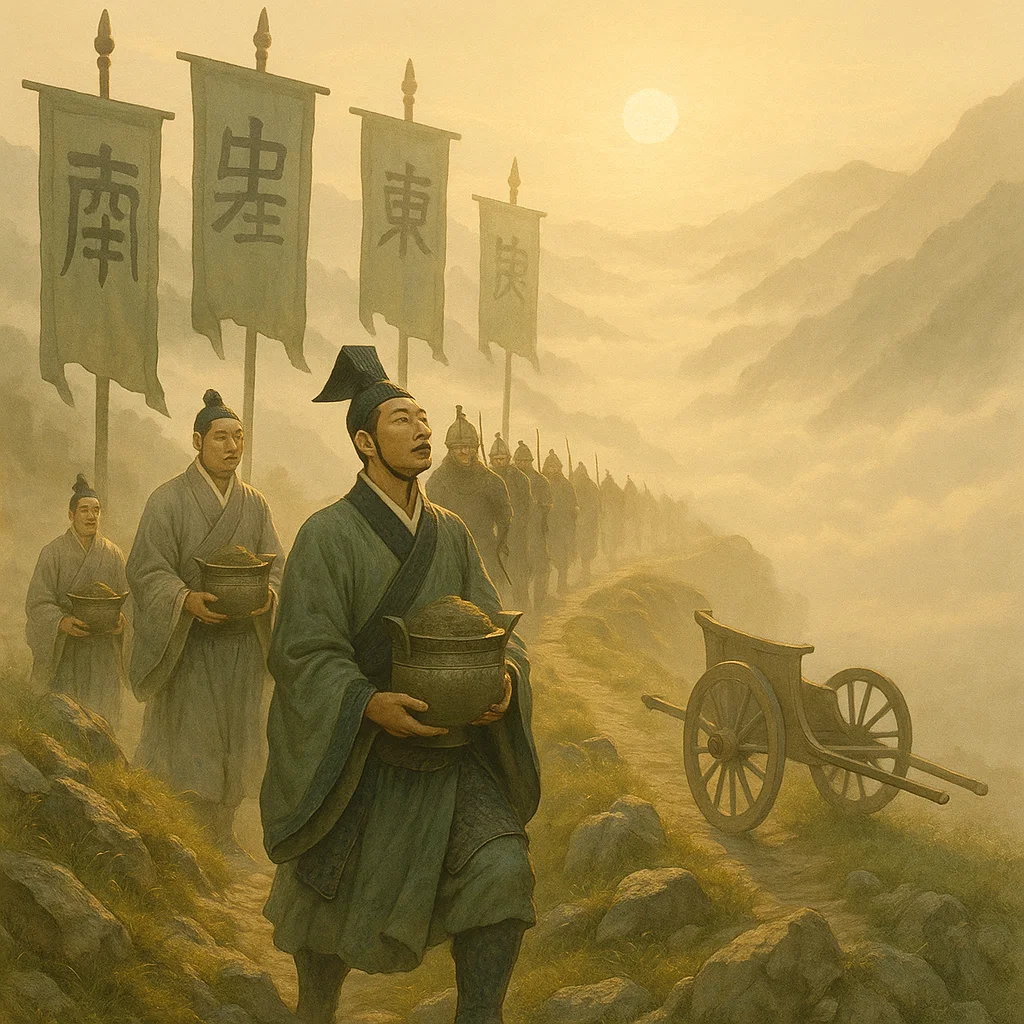
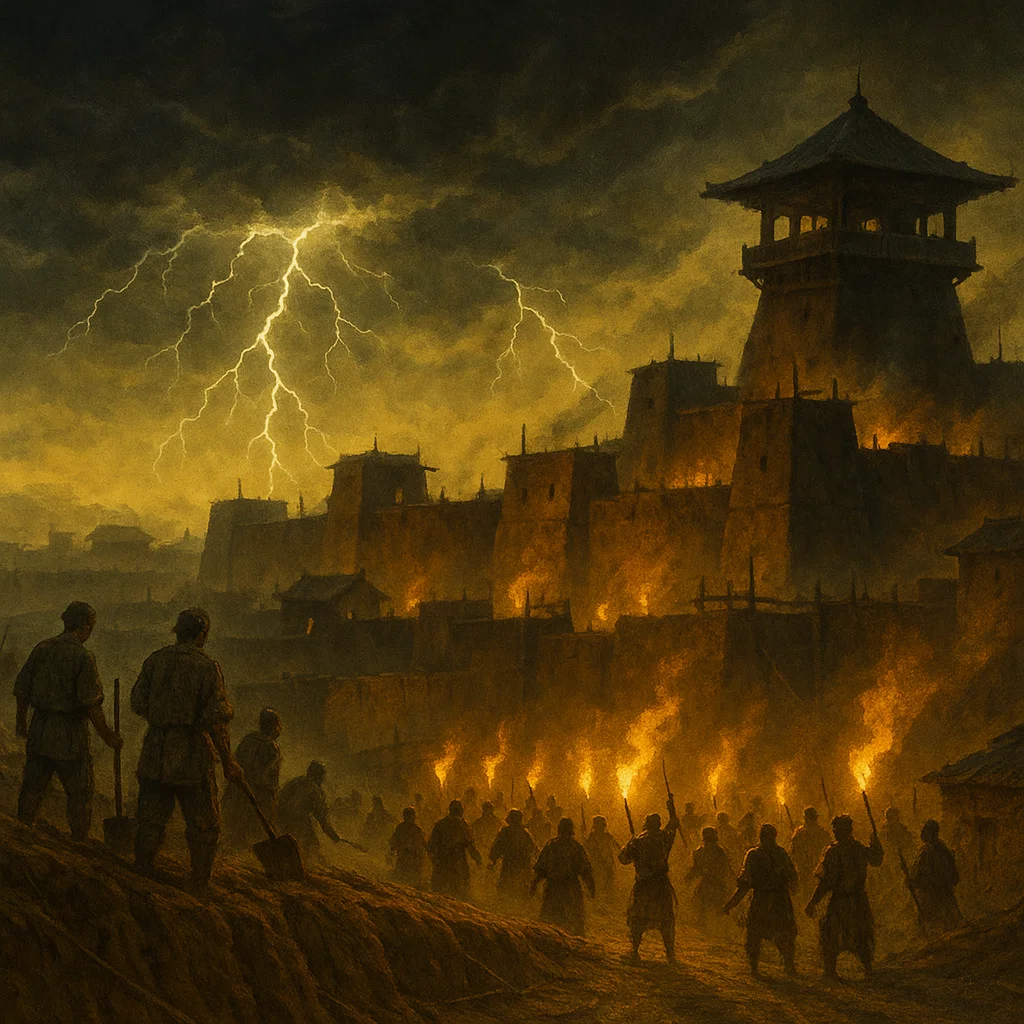
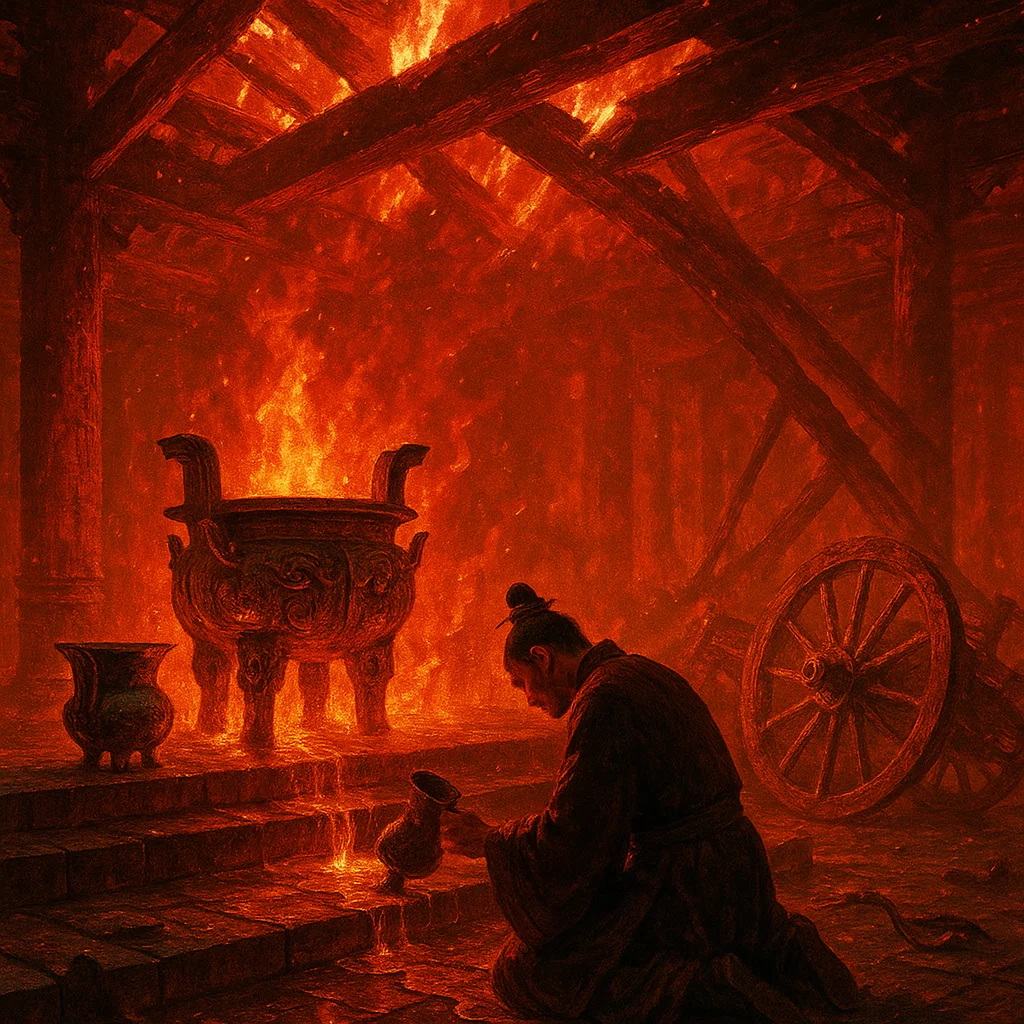
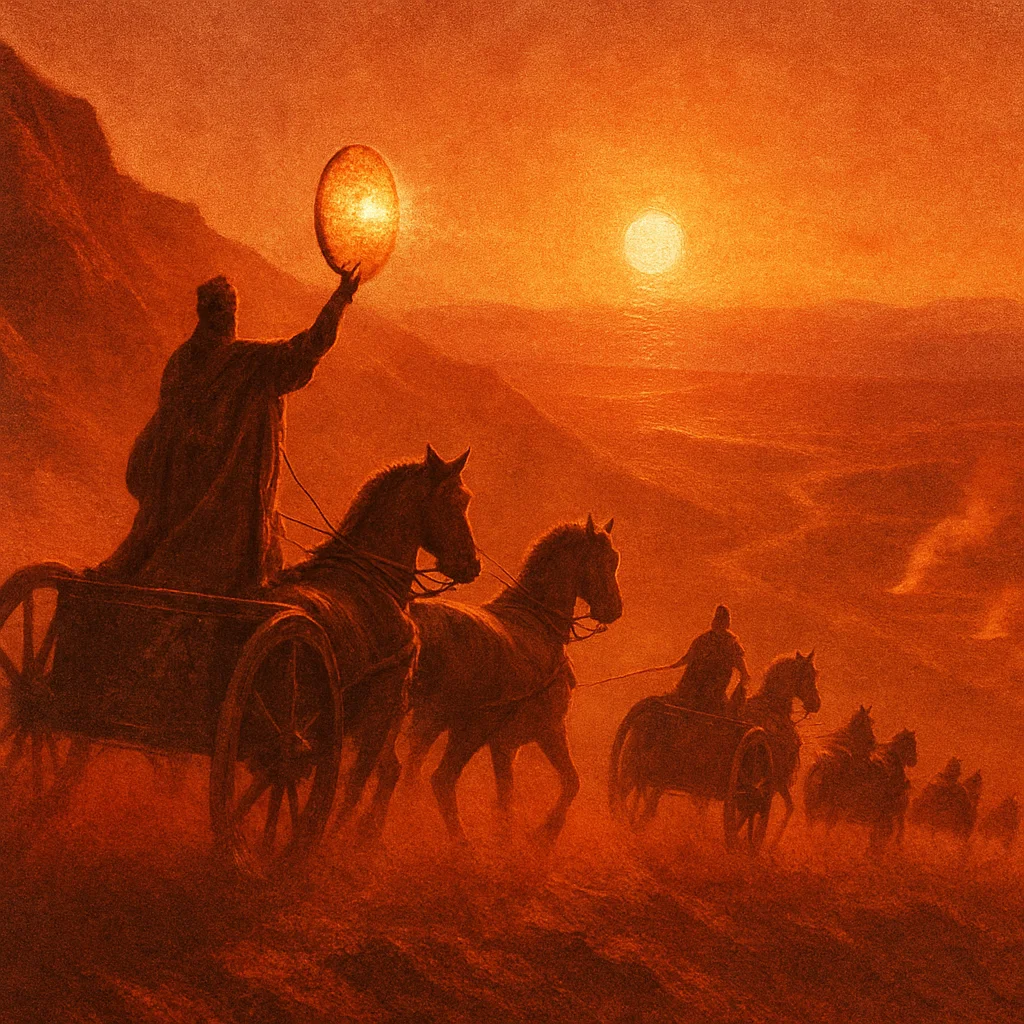
Early Zhou Tactics and Doctrine: The Zhou, while inheriting Shang military technology, introduced a new ethos to warfare. Strategically, they demonstrated patience and timing – as seen when King Wu held off attacking Shang until he judged the morale and omens were right. The Battle of Muye showcases Zhou tactical and psychological savvy: the Zhou army advanced with discipline despite being outnumbered, and crucially, many of Shang’s enslaved soldiers defected or fled rather than fight, having been demoralized by Zhou propaganda about Shang’s misrule. The Zhou likely spread the narrative that Heaven had withdrawn its mandate from the cruel Shang king (who was infamous for tyranny and debauchery), thereby undermining the enemy’s will to fight. When battle was joined at Muye, Zhou troops were fresh and motivated by a moral cause, whereas Shang forces (170,000 strong by some accounts) included coerced slave-soldiers of low morale. Tactically, chariots on both sides clashed – later lore speaks of the Zhou’s well-trained charioteers outmaneuvering the Shang. The Shijing (Classic of Odes) poem “Mian” vividly depicts the Zhou forces at Muye: “Bright shone the chariots… the teams of bays, black-maned and white-bellied, galloped along”. This poetic account highlights the prominent role of chariots and fast horses in the battle’s outcome.
After establishing their dynasty, the Zhou tempered the practice of human sacrifice (at least in rhetoric). War captives under Zhou might be resettled or enslaved rather than routinely sacrificed, aligning with the Zhou’s presentation of themselves as more benevolent rulers than the Shang (whom they castigated for excessive cruelty). The doctrine of the Mandate of Heaven became a guiding principle: Heaven would favor just, moral warfare and punish unjust aggressors. This philosophy influenced Zhou military decision-making – for instance, the Duke of Zhou claimed that Heaven supported him in quelling the Three Guards rebellion, framing it as restoring cosmic order. Nevertheless, early Zhou did engage in heavy-handed campaigns when needed, using the same combined-arms tactics of chariots and infantry. One could say Zhou warfare ideology added a layer of moral justification and ancestral destiny to the practical Shang art of war. Over time, the Zhou feudal lords developed their own armies and often vied for power, but in the initial period (c. 1046–1000 BCE), the Zhou kings maintained a unified doctrine: use swift, decisive strikes to crush opposition and then legitimize the outcome through ritual (such as sacrificing at Mount Tai to thank Heaven, or enfeoffing former enemies as new allies to integrate them).
In summary, the evolution from Longshan to Zhou shows a shift from small-scale, perhaps ritualized skirmishes to large, state-organized campaigns with combined arms. The Shang excelled in military mobilization and terror tactics sanctified by religion, while the Zhou refined warfare with strategic patience and ideological warfare (rallying support by accusing the enemy of losing Heaven’s favor). Both dynasties, however, relied on core tactical principles made possible by Bronze Age technology: the shock power of chariots, the discipline of mass infantry, the force-multiplier of city fortifications, and the dread of ritual violence.