Harappan Warfare Tactics
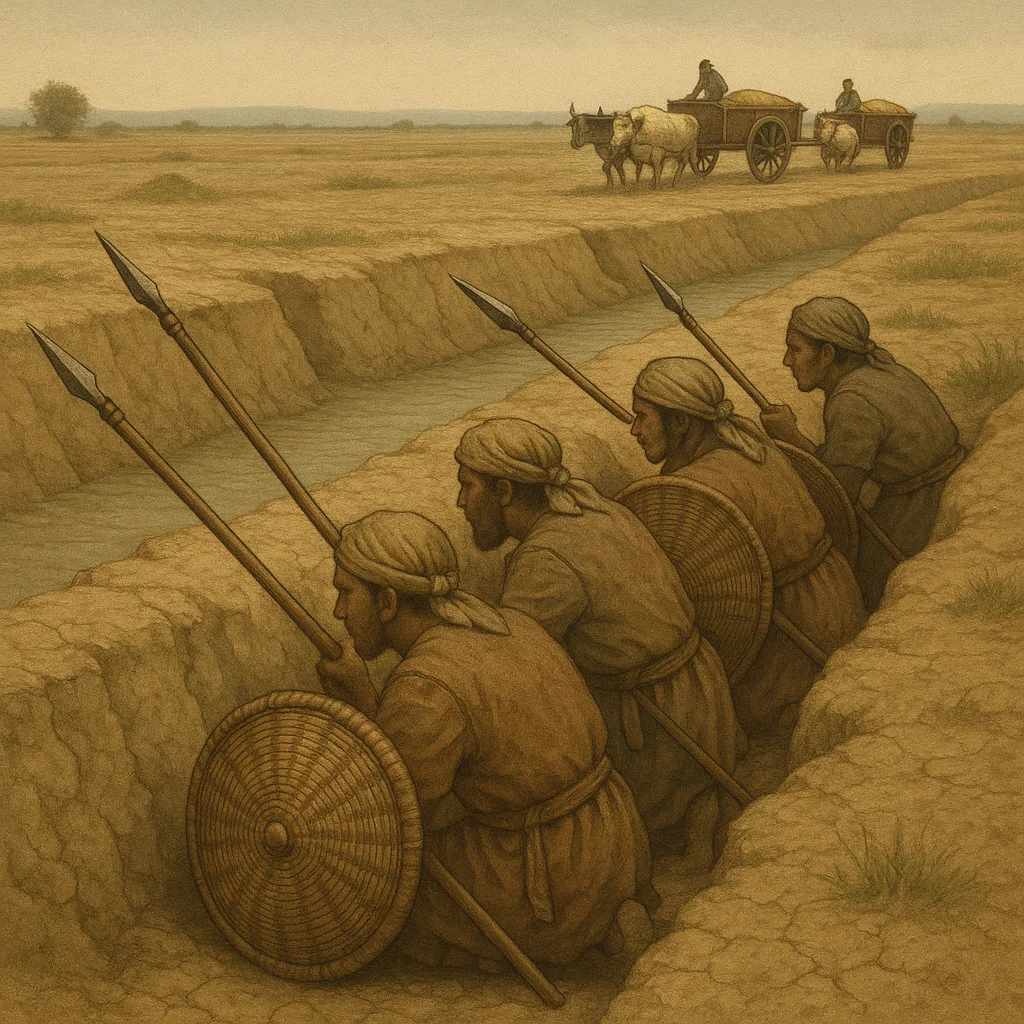
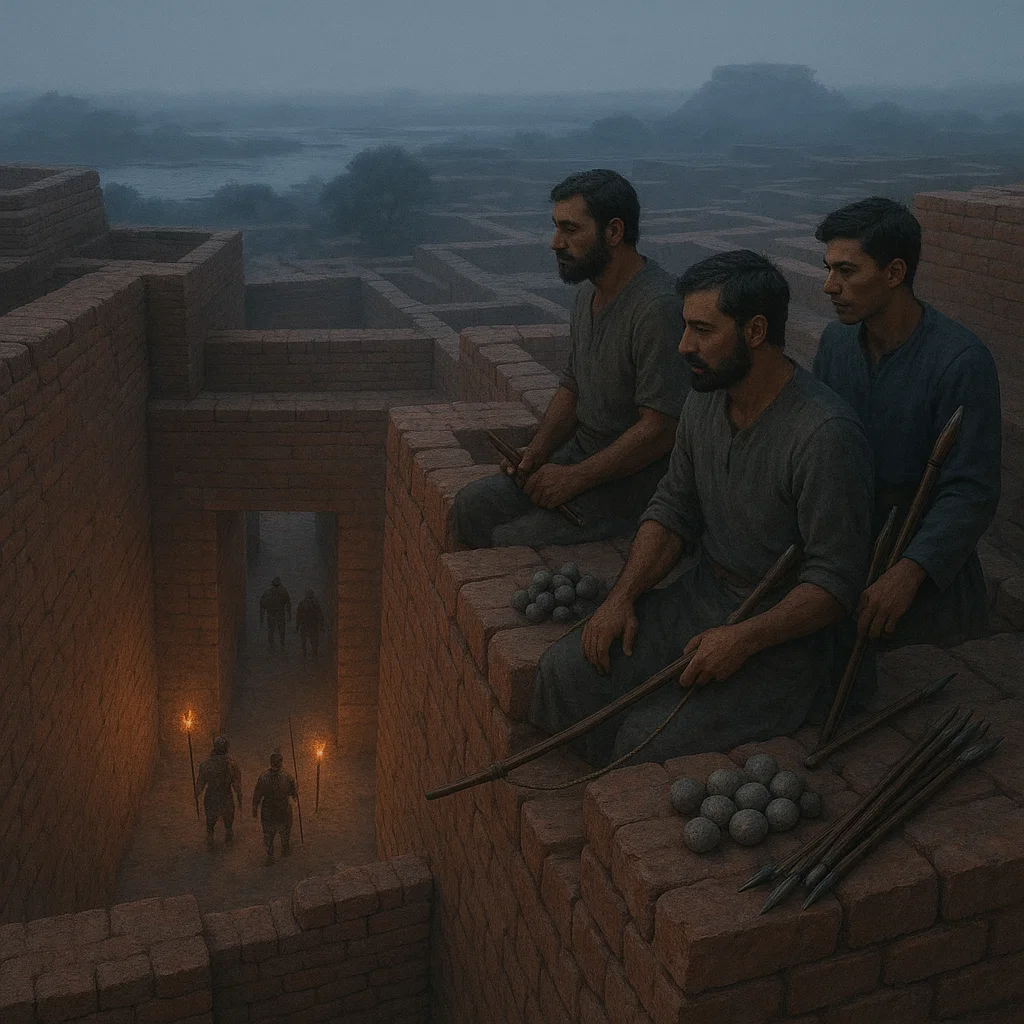
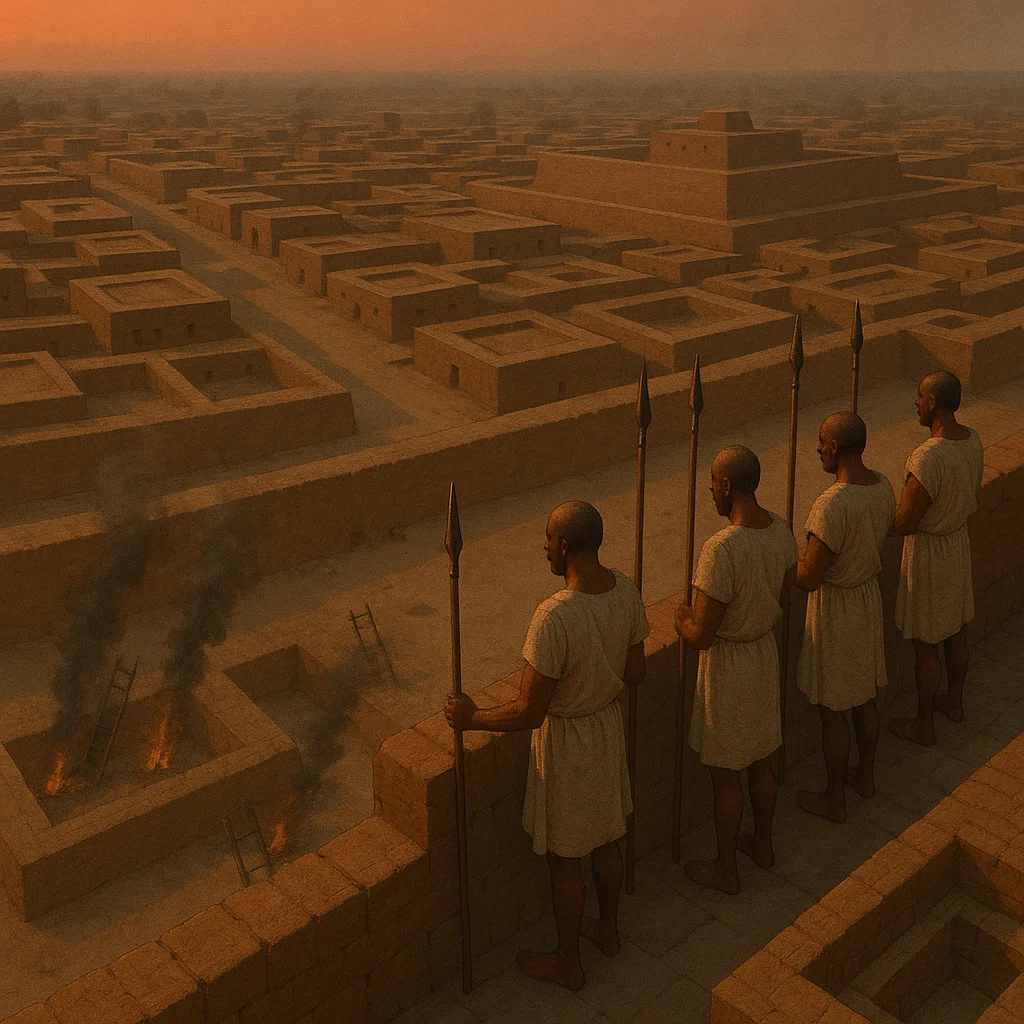
Direct evidence of Harappan battlefield tactics is extremely scarce, so one must infer likely practices from fortification remains and analogies. The Indus cities, being walled, suggest a defensive doctrine focused on fortified strongholds. If threatened by hostile groups, Harappans would retreat behind city walls; thus, siege defense was a critical scenario. The large granaries and water wells inside cities ensured supplies during a siege. Harappan defenders could rain down arrows or sling stones from mud-brick ramparts. Excavations have indeed found sling projectiles on city mounds, consistent with use in repelling attackers. Gateway complexes (often narrow and right-angled) created choke-points to trap and flank enemies who tried to force entry. There is no sign of moats at most sites (aside from Dholavira’s water reservoirs which doubled as barriers), but a deep ditch could have been dug outside walls if needed.
In open combat (outside city walls), Harappan tactics likely revolved around skirmishes and ambushes rather than set-piece battles. The society had many small rural settlements which might have engaged in localized fights – e.g. disputes over water or pasture could escalate to village feuds. In such cases, bands of men armed with spears and bows would confront each other in loose formation. Given the lack of cavalry or chariots, battles would be on foot and relatively slow-moving. A possible tactic was the use of mobile cover: the large rectangular hide shields (if they existed, as suggested by later Indian usage) could form a shield wall to protect advancing spearmen. Archers would soften the enemy from a distance. Once within range, a rush with spears and axes would decide the fight. Since Harappan cities were not heavily burned or destroyed in their heyday, it’s plausible that open warfare was infrequent or inconclusive. More often, raiding may have been the norm – surprise attacks on caravans or outlying villages to steal resources. The need to protect trade goods may explain why even small trade outposts had defensive measures.
Another dimension is naval/riverine tactics. Indus cities like Mohenjo-daro sat on rivers, and Harappans had boats. Conflict could have taken the form of river piracy or blockades. Harappan boats might patrol waterways to secure trade, and if necessary, use grappling and boarding tactics against enemy craft (though again, there’s no record of such an incident). Overall, Harappan “doctrine” emphasized maintaining security and order for commerce rather than expansionist warfare. Their approach to conflict was likely pragmatic: fortify to deter, and if violence breaks out, contain it at the local level. That said, we should not assume they were naïve about warfare. The discovery of burned layers at a few Early Harappan towns and depictions of combat (a seal from Kalibangan shows warriors with spears, possibly with a war deity overseeing) suggest they understood the grim realities of fighting. In summary, Harappan tactics would have been defensive, small-scale, and reliant on fortified positions, with no evidence of formalized battle strategies beyond basic skirmishing and siege survival.
BMAC Tactics & Strategic Patterns
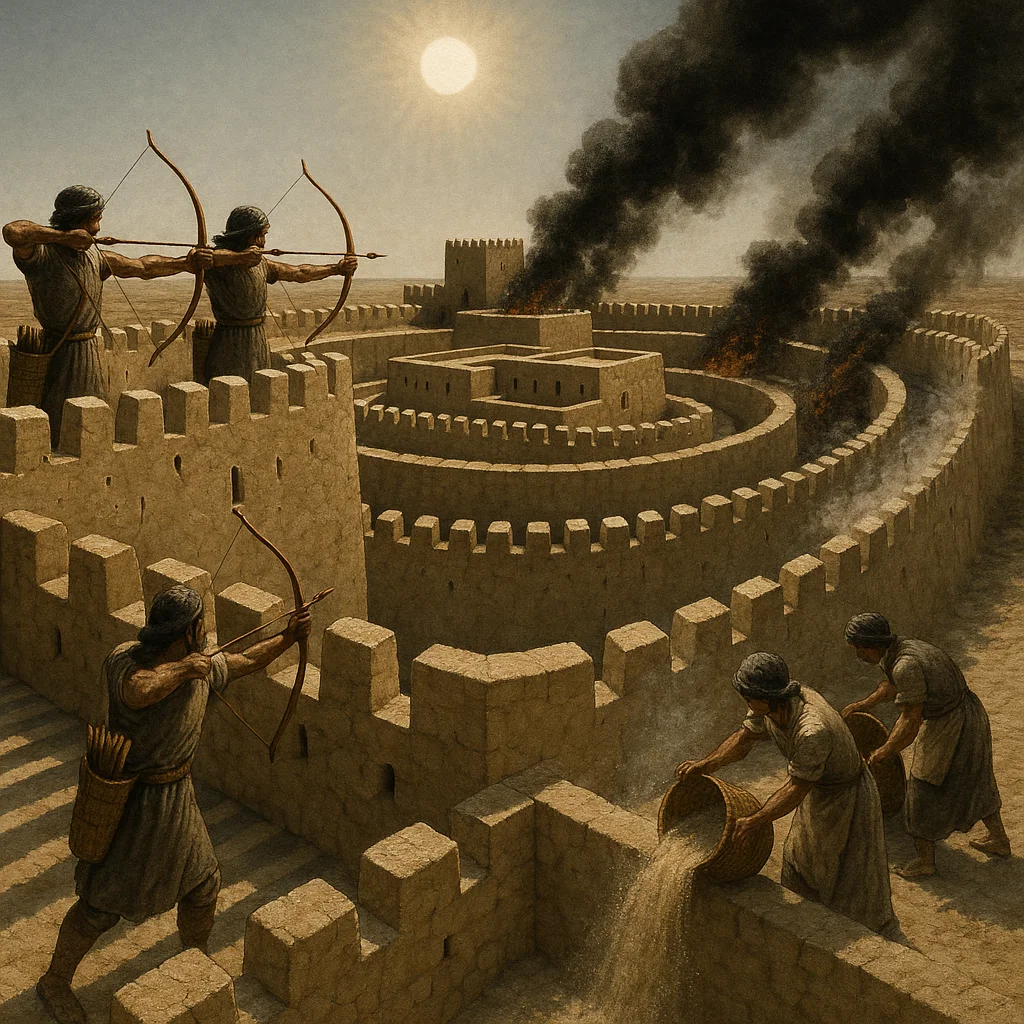
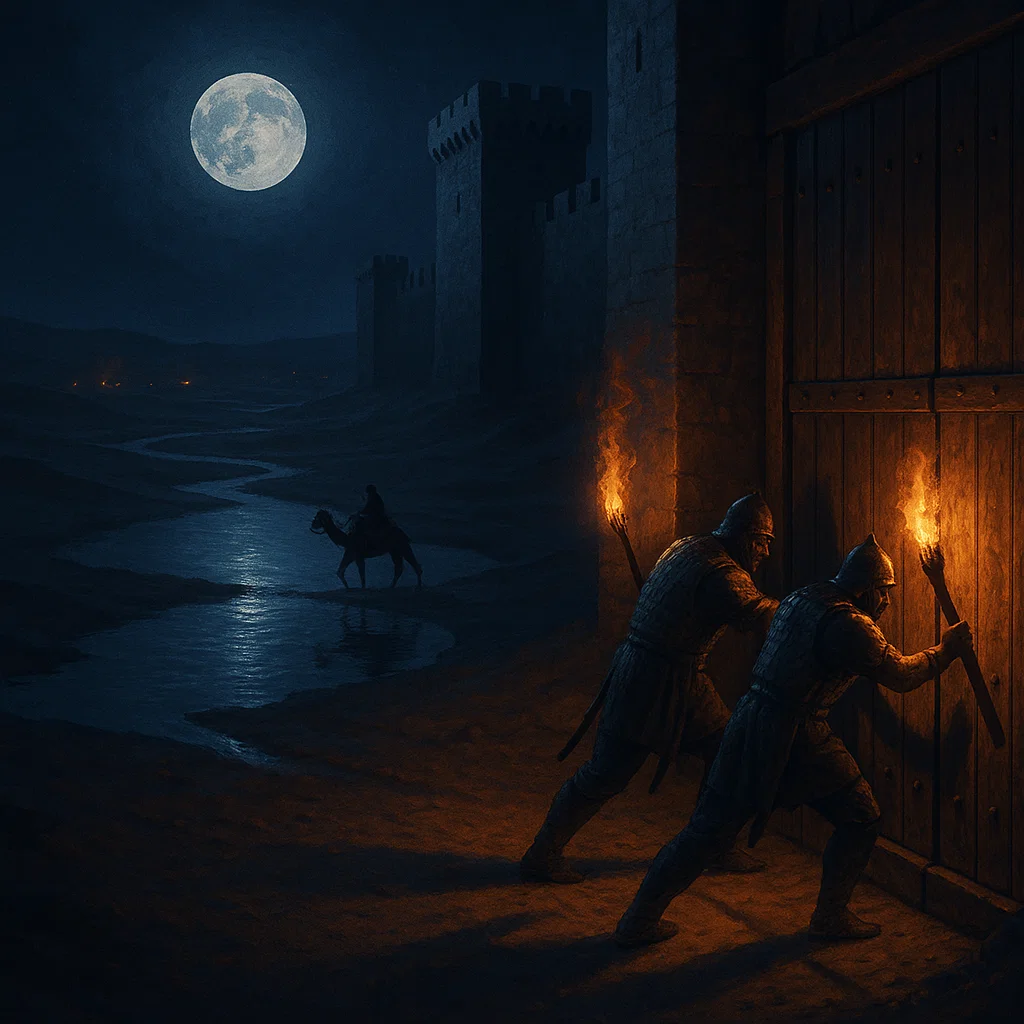
The heavily fortified BMAC settlements point to a tactical mindset oriented around fortress defense and control of territory. A BMAC city under threat would rely on its concentric walls and towers: archers and slingers on the ramparts could shower missiles on approaching enemies, while gatehouses channeled attackers into killing zones. The numerous towers provided flanking fire and likely housed reserves for counterattacks. If steppe nomads or rival oases attempted an assault, the BMAC response would be to withstand the siege until the attackers either broke against the walls or were repelled by a sally. We can imagine tactics such as night sallies through posterns to harass besiegers, use of burning oil or flaming arrows (given access to bitumen or oils, plausible in an oasis context) to disrupt siege works, and rapid repair of wall breaches with timber and earth. The multi-tiered walls allowed a defense-in-depth: even if an outer wall was breached, inner walls provided a fallback line. This layered defense is a hallmark of BMAC military architecture and suggests a doctrine of tenacity – to make any attack so costly that enemies abandon it.
On the field, outside the walls, BMAC forces may have engaged in patrol and ambush tactics in the desert margins. Since they likely lacked large cavalry units initially, they may have confronted nomads by fortifying camps or using terrain (river branches, canals) to limit the nomads’ mobility. However, as horses became known and chariots possibly introduced (via the steppe), tactics could adapt. By the late phase (post-1800 BCE), the mention of “post-BMAC fortifications… of Sintashta type” suggests that Central Asians began to adopt steppe-style military elements. Sintashta warfare involved chariotry and open-field battles on the steppe. If such elements filtered into BMAC, we might see the locals employing chariot units for rapid response between oasis centers or during pursuits of raiders. A fast chariot force could have patrolled the roads and intercepted enemies before they reached the city walls.
Strategically, BMAC sites were located to command vital resources (water in the oases, trade routes like the Tin Road). It is likely that control of oasis-to-oasis routes was a source of conflict. We might deduce that BMAC rulers occasionally campaigned to subdue smaller settlements or defend caravans. For example, the clusters of fortified “mini-forts” (up to 3 encircling walls) in Margiana might represent a network of strongpoints ensuring no enemy could traverse the region unchallenged. If one fort was attacked, neighboring allied forts could send reinforcements – a cooperative defense strategy.
One possible tactical scenario is the defense against steppe cavalry/chariots. Nomadic tactics would involve swift horsemen circling and cutting off supplies. BMAC counters would include closing city gates and using projectile fire to keep riders at bay. If steppe warriors attempted to scale walls or force gates (perhaps not their forte), they would meet concentrated resistance. Conversely, if BMAC forces took the offensive (say, trying to oust steppe camps from their territory), they might march out in infantry columns, protected by a screen of a few chariots or camel riders, and attempt to overwhelm nomads in their camps at dawn (surprise attack). Without clear records, this is conjectural, but it fits known patterns of settled vs nomadic warfare.
In summary, BMAC tactical doctrine centered on static defense bolstered by fortifications, with limited use of mobile units. Strategy was territorial – protect the oasis heartland and critical resources. Their downfall, as evidence suggests, was that eventually the highly mobile Indo-Iranian groups circumvented or slowly infiltrated these defenses. The fortified cities shrank, and the conflict likely shifted to one of attrition and assimilation rather than pitched battles. Tactically, the BMAC way of war represents the last stand of Bronze Age city-fortresses in Central Asia before yielding to the more fluid, mobile warfare of the Iron Age nomads.



Early Aryan (Vedic) Warfare Tactics
The early Indo-Aryans employed tactics characteristic of mobile, high-speed warfare centered on the horse and chariot. Their doctrine valued swift strikes, surprise raids, and heroic individual combat. One hallmark was the raiding (guerilla) tactic of cattle-rustling. The Rigveda often references “cattle raids” and recovery of stolen herds as reasons for conflict. This implies that Vedic clans excelled at lightning raids: a band of warriors would ride out (on chariots or horseback) to seize cattle from an enemy’s pastures and retreat quickly. Defenders in turn would chase and attempt to recover the plunder. Mobility was key—thanks to horses, Aryan fighters could cover long distances rapidly, a stark change from the slower Bronze Age foot armies.
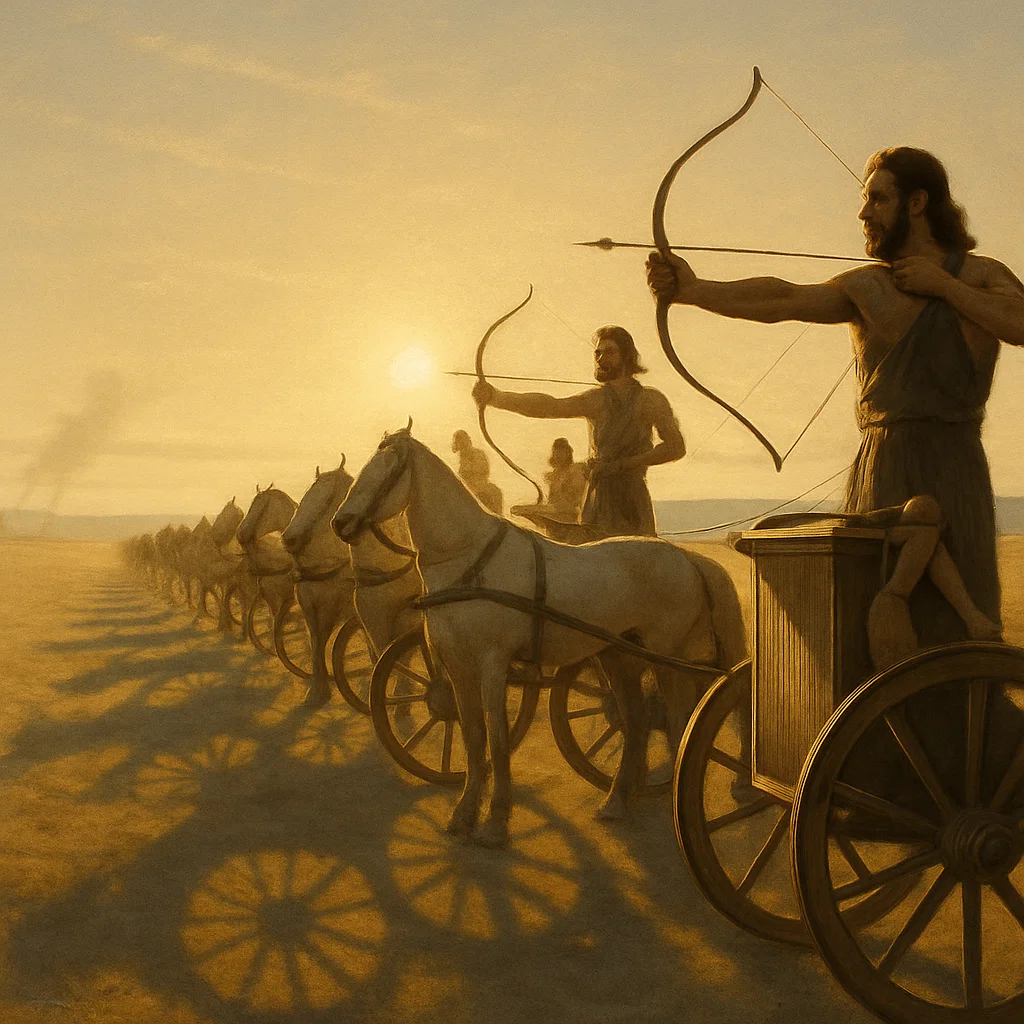
On the battlefield, chariotry was the dominant arm. Chariots functioned as fast platforms from which archers could shoot arrows or throw spears at the enemy line while maneuvering. A likely tactic was the circling charge: charioteers would race across the front of the enemy, discharge arrows in waves (a tactic analogous to later horse archers), then wheel away to avoid counter-attack. Multiple chariots coordinated could harry an opposing force, causing disorder before a decisive charge. The Rigvedic hymns also suggest use of massed chariots in direct combat – e.g. Indra is invoked to lead the Aryans to crush foes who often are described as behind “forts” or defensive positions. This speaks to combined tactics: mobile warfare in open plains, and siege-breaking when encountering fortified settlements.
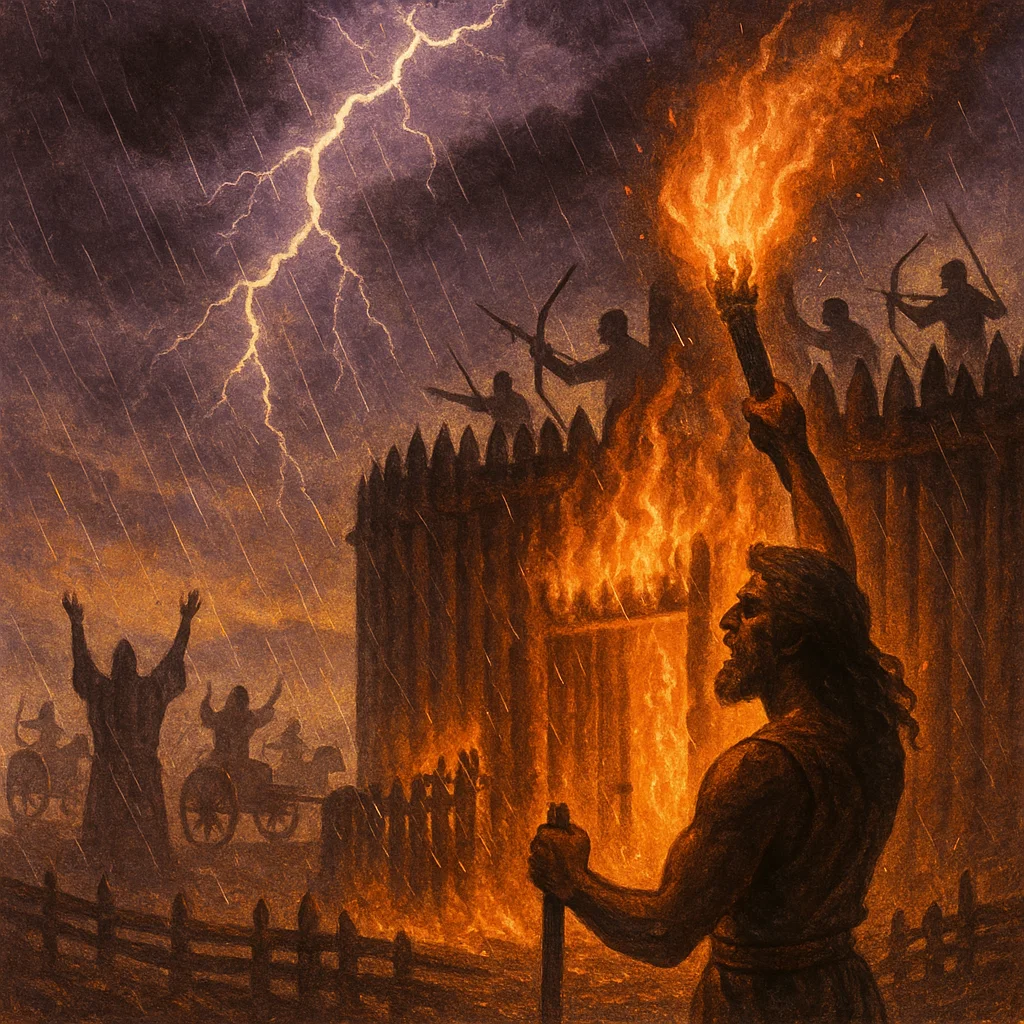
Indeed, a striking aspect of Aryan doctrine is fortress assault. Indra is repeatedly called Purandara, “fort-smasher,” credited with destroying 90 or 100 fortresses of the enemy. These “forts” (pura) may have been walled villages or stockades of the indigenous peoples. Tactically, how did the Aryans overcome fortified places? Likely through a combination of siegecraft and divine morale: they might besiege a fort by surrounding it and cutting off supplies (the nomadic background made them adept at encirclement and attritional war). They could also employ stratagems – setting fires (Indra using lightning is a metaphor for using fire as a weapon), or exploiting treachery inside the fort. When the Rigveda says Indra “shattered” the forts with his bolt, we can imagine the attackers finally breaching the gates or walls, possibly using logs as rams or piling brush to burn gates. Once a breach occurred, the Aryan warriors would rush in with chariots and on foot to engage in close combat, taking the stronghold. The psychological aspect was significant: the Vedic warriors believed they had divine sanction, which would have been a morale advantage in prolonged fights.
In open battle between tribes (such as the Battle of Ten Kings), early Aryans showed some sense of strategy and formation. The battle on the Ravi River (Paruṣṇī) saw King Sudās defeat a coalition by presumably taking up a strong defensive position and then counterattacking at the right moment. The hymns hint that flooding the river (perhaps via a released upstream dam or simply by fighting during the monsoon) played a role in disrupting the enemy, indicating an early use of environmental tactics. We also see tactical unity: the Bharata tribe under one command against a confederation that perhaps lacked coordination, suggesting the value of singular leadership and disciplined force concentration.
As for doctrine, the Aryans had an emergent warrior code centered on valor (śaurya) and divine favor. They sought swift, decisive victories—“let our enemies be scattered” is a common prayer. They were not interested in protracted sieges unless necessary; if an enemy fortified, they preferred to draw them out or find a weakness. Ritual and morale were part of doctrine: sacrifices and Soma libations were done pre-battle to ensure the gods (especially Indra) fought on their side. This imbued a kind of holy war attitude – fighting bravely was a religious duty and cowardice a sin.
In summary, early Aryan tactics were highly mobile and aggressive. They excelled in raid-and-ambush warfare, skilled use of chariot units for both ranged harassment and shock action, and demonstrated effective methods for overcoming fortified foes (through siege or storm). Their doctrine emphasized speed, surprise, and divine-sanctioned boldness, which would come to dominate Iron Age North India as these tactics outmatched the slower, more static strategies of the late Harappans or BMAC remnants.