Solar Time is the chronological framework describing the formation, evolution, and projected fate of the Solar System. It situates humanity’s planetary environment within the lifespan of a single star—the Sun—and its surrounding gravitational domain. Whereas Cosmic Time measures the universe’s expansion as a whole, Solar Time examines processes internal to one stellar system: the condensation of a molecular cloud, the ignition of fusion, the formation and stabilization of planets, and the Sun’s eventual decline.
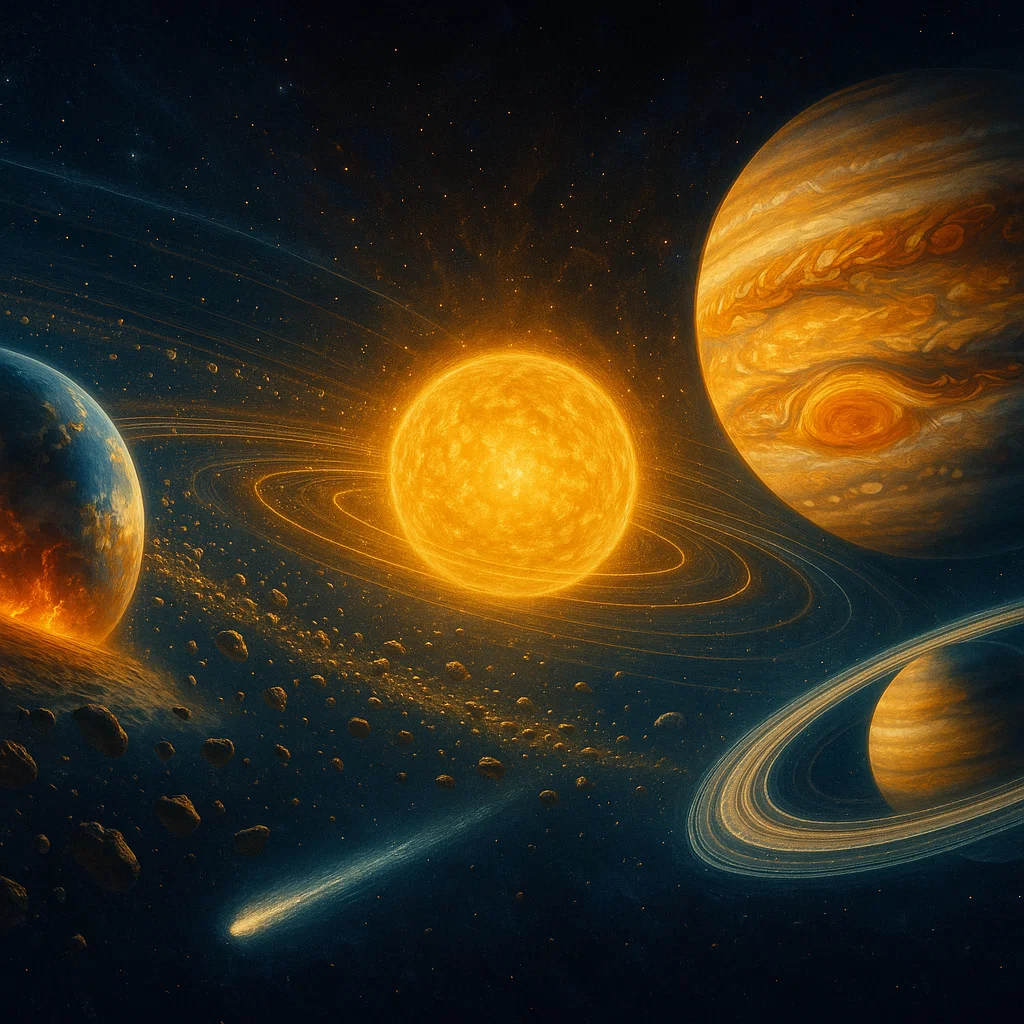
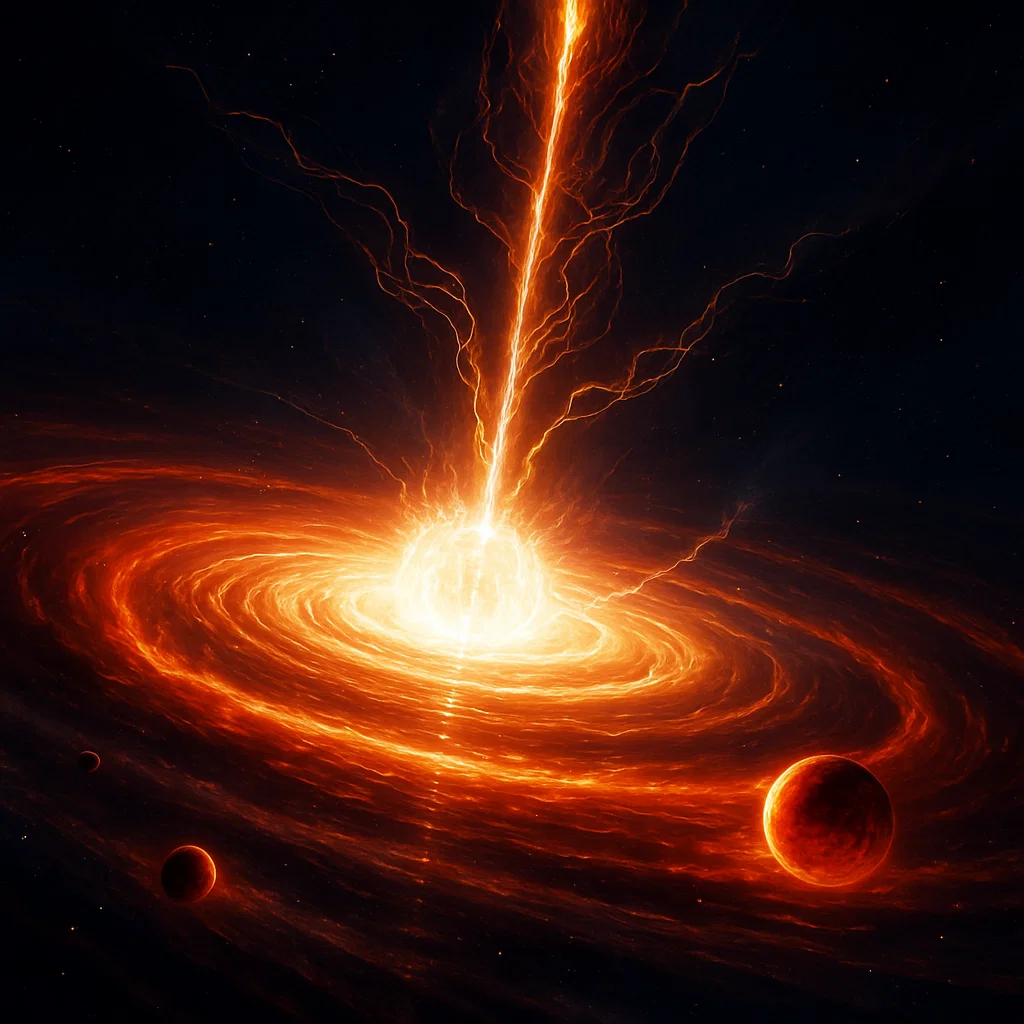
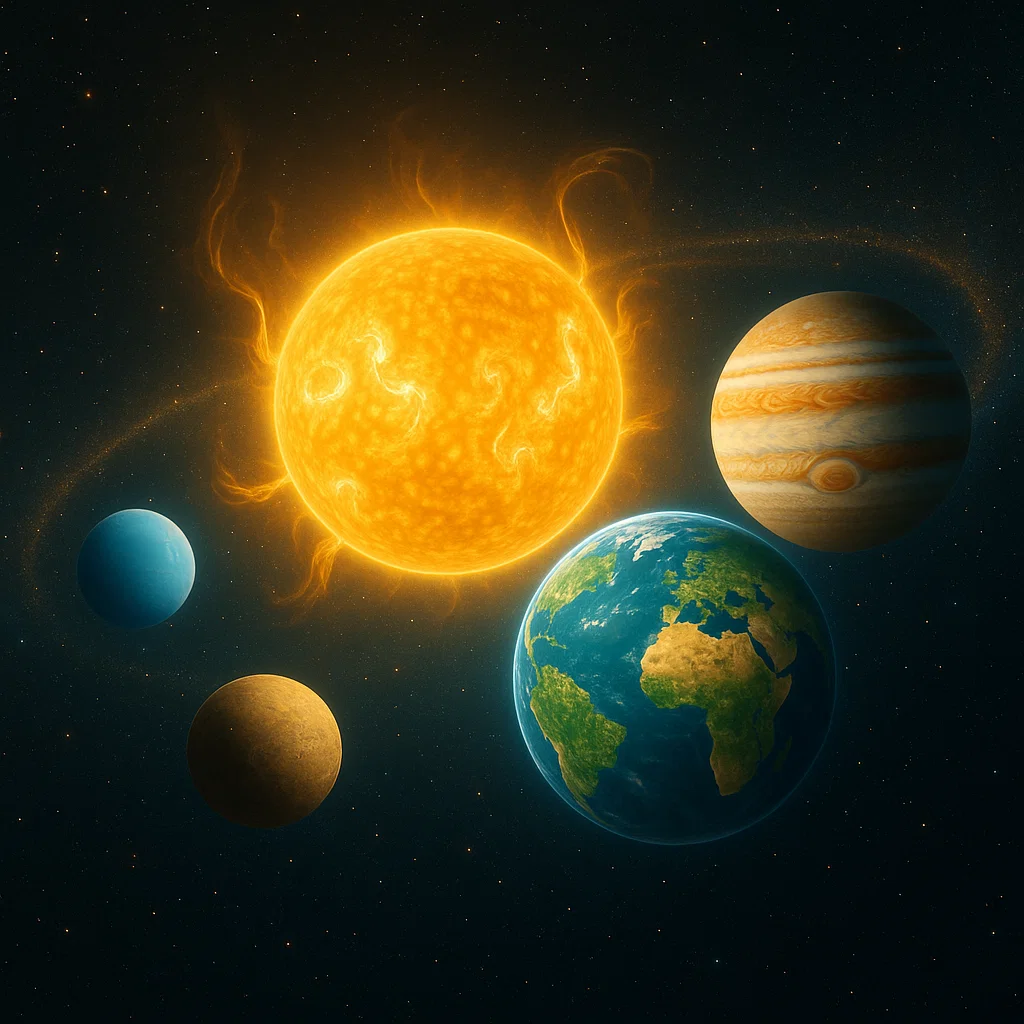
Each era of Solar Time is delineated by a major transition in stellar physics or planetary dynamics—moments when the governing energy regime of the system changes: from accretional heat to nuclear fusion, from orbital chaos to gravitational equilibrium, from stability to stellar decay. These transitions define the physical context in which all subsequent planetary and biological evolution unfolds.
CHRONOS – Solar Time Eras
| Era | Approximate Range | Scale of Time (Duration) | Governing Principle | Example Focus |
|---|---|---|---|---|
| Protostellar Era | 4.6 – 4.55 billion years ago | Tens of millions of years | Gravitational collapse of the solar nebula | Accretion disk formation; ignition of fusion marks birth of Sun |
| Planetary Formation Era | 4.55 – 4.4 billion years ago | ~100 million years | Coalescence of planetesimals and heavy bombardment | Formation of terrestrial planets and gas giants; late accretion impacts |
| Stabilization Era | 4.4 – 3.8 billion years ago | ~600 million years | Thermal and orbital equilibration of early Solar System | Crust formation on Earth, emergence of oceans, Moon’s stabilizing influence |
| Main Sequence Era (Current) | 3.8 billion years ago – present | ~3.8 billion years so far | Steady hydrogen fusion in the Sun’s core | Long-term luminosity stability, climate equilibrium, emergence of life |
| Post-Main Sequence Era (Future) | ~5 – 7 billion years from now | Several billion years | Core hydrogen exhaustion, transition to red-giant phase | Solar expansion, engulfment of inner planets, outer-planet migration |
| White Dwarf Era (Future) | ~7 – 100 billion years from now | Tens of billions of years | Remnant stellar cooling and system dispersal | White dwarf cooling, planetary ejection, decay of orbits and radiation fields |
Summary:
Solar Time expresses the temporal architecture of one star’s life cycle, from gravitational collapse to thermonuclear equilibrium and eventual entropy. Its eras correspond to distinct energy regimes and dynamical reorganizations that together define the lifespan and habitability of the Solar System—a localized reflection of the universal processes traced in Cosmic Time.