Philosophy School
Cyrenaicism
Socratic hedonist school associated with Aristippus of Cyrene and later Cyrenaics, centered on present bodily pleasure, pain avoidance, practical self-command, skeptical and empiricist epistemology, and the art of managing circumstances for pleasurable living.
Period
Ancient History3000 BCE – 499 CE
Era
Classical Antiquity500 BCE – 499 CE
Begin
435 BCE
End
356 BCE


Structural Factors
- Shared Core Claims
- Pleasure is the immediate good, pain is to be avoided, present experience is the clearest guide, practical wisdom manages circumstances without servitude to them, and external things are known less securely than one's own affections.
- Shared Methods
- Socratic practical instruction, hedonist valuation, attention to immediate experience, control of pleasures rather than enslavement to them, skeptical caution about external things, and adaptive conduct in changing circumstances.
- Shared Lineage
- Cyrenaicism descends from Socrates through Aristippus of Cyrene, Arete of Cyrene, Aristippus the Younger, Hegesias, Anniceris, Theodorus, and later doxographic and Epicurean comparison traditions.
- Shared Problems
- Present pleasure, bodily and mental enjoyment, pain, self-command, external-object knowledge, affections, prudence, friendship, death, pessimism, impiety, the relation to Epicureanism, and the status of Cyrenaicism as a Socratic school.
- Shared Vocabulary
- pleasure, pain, affection, motion, present enjoyment, self-command, prudence, hedonism, Cyrene, Socratic school, bodily pleasure, Hegesiac pessimism, Annicerean friendship, Theodorean impiety, and Epicurean comparison.
- Shared Historical Context
- Cyrenaicism arose from the Socratic circles of the fourth century BCE and was associated with Cyrene and later Hellenistic debate, surviving through doxography, Diogenes Laertius, Cicero, Sextus Empiricus, Athenaeus, and later reconstruction.
Defining Axes
- Doctrine
- Its doctrine treats present pleasure as the immediate good while emphasizing self-control, practical adaptability, and caution about claims to know external objects beyond experienced affections.
- Method
- Its method applies Socratic training to pleasure: learn how to enjoy without dependence, distinguish present affective experience from uncertain external claims, and adapt conduct to circumstance.
- Lineage
- The lineage runs from Socrates and Aristippus to Arete, Aristippus the Younger, Hegesias, Anniceris, Theodorus, Cyrenaic subgroups, Epicurean comparison, and modern scholarship on ancient hedonism.
- Subject Focus
- Cyrenaicism focuses on ethics, epistemology, pleasure, pain, self-command, practical action, skepticism, bodily experience, friendship, death, impiety, and the philosophy of happiness.
- Geography / Culture
- Its named center is Cyrene in North Africa, with intellectual roots in Athens and Socratic circles and later reception across Hellenistic and Roman philosophical literature.
- Historical Reaction
- It reacts against ascetic denial of pleasure, abstract metaphysical certainty, conventional moralism, and philosophical systems that subordinate present experience to remote goods or speculative knowledge.
Internal Structure
- Foundational Texts
- No intact Cyrenaic canon survives. Evidence comes from Aristippus testimonia, Diogenes Laertius, Xenophon, Cicero, Sextus Empiricus, Athenaeus, Plutarch, doxography, Aristippus the Younger, Arete of Cyrene, Hegesias, Anniceris, Theodorus, and modern reconstruction.
- Core Vocabulary
- Core vocabulary includes pleasure, pain, pathos, affection, motion, present, bodily pleasure, self-command, prudence, hedone, Cyrene, Hegesias, Anniceris, Theodorus, Aristippus, Socratic school, and hedonism.
- Metaphysics
- Cyrenaicism has little systematic metaphysics; it is more concerned with immediate experience and practical living than with claims about hidden essences, external substances, or cosmic order.
- Epistemology
- Its epistemology is cautious and experience-centered: one can know one's own affections or experiences more securely than the external objects that may cause them.
- Ethics
- Its ethics identifies pleasure as the immediate good, but not crude enslavement to appetite; the wise person controls pleasures, circumstances, and social appearances to live freely and enjoyably.
- Method
- Cyrenaic method combines Socratic conversation, practical training, hedonist choice, attention to present affection, and skeptical restraint about speculative claims.
- Internal Debates
- Internal debates concern Aristippus versus Aristippus the Younger as founder, present pleasure versus prudence, bodily versus mental pleasure, Hegesiac pessimism, Annicerean friendship, Theodorean impiety, and Epicurean criticism.
- Successors
- Successors and receptions include Epicurean hedonism by contrast, ancient debates about pleasure, skeptical empiricism about affections, Hellenistic ethics, modern hedonism scholarship, and histories of Socratic minor schools.
External Classification Context
- History of Philosophy
- Cyrenaicism is a major Socratic minor school and an early systematic hedonism, important for understanding Hellenistic ethics, ancient epistemology, and Epicurean contrasts.
- Philosophy of Philosophy
- It treats philosophy as an art of living pleasantly and intelligently under conditions of uncertainty, rather than as a speculative system detached from experience.
- Intellectual History
- Its history depends on fragmentary testimonia, lost writings, doxography, ancient school polemic, Hellenistic ethical debate, Roman reports, and modern reconstruction of Socratic hedonism.
- University Classification
- Usually classified under ancient Greek philosophy, Socratic schools, ethics, hedonism, Hellenistic philosophy, epistemology, skepticism, and classical reception.
- Classical Sources
- Classical evidence comes from Diogenes Laertius, Xenophon, Cicero, Sextus Empiricus, Athenaeus, Plutarch, Stobaeus, Aristippus testimonia, and later Greek and Roman reports about Cyrenaic subgroups.
- Sociology of Knowledge
- The school spread through Socratic teacher lineages, Cyrene traditions, oral teaching, doxographic collection, Hellenistic ethical rivalry, Roman philosophical reporting, and later scholarly reconstruction.
Linked Philosophers
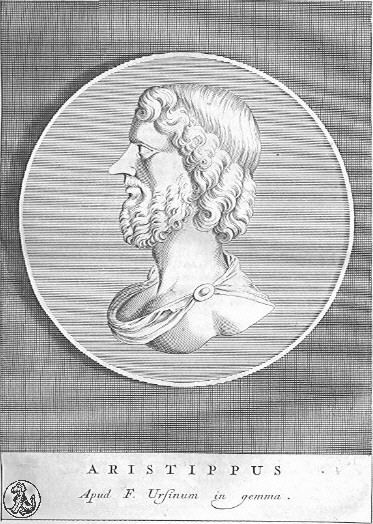
Aristippus of Cyrene
435 BCE – 356 BCE
Cyrene
Greek Socratic philosopher from Cyrene who founded the Cyrenaic school, made present pleasure central to ethics, emphasized immediate experience, and shaped ancient debates over hedonism and practical freedom.