Philosophy School
Hegelianism
Philosophical tradition rooted in Hegel's absolute idealism, dialectical method, logic, spirit, recognition, history, freedom, ethical life, state, religion, art, and systematic reconciliation of thought and reality.
Period
Modern History1800 CE – 1944 CE
Era
Long 19th Century1870 CE – 1913 CE
Begin
1770 CE
End
1831 CE
Structural Factors
- Shared Core Claims
- Hegelianism holds that thought and reality are internally related through reason, that concepts develop dialectically, and that freedom becomes actual through historical, social, ethical, religious, artistic, and institutional forms of spirit.
- Shared Methods
- Dialectical development, immanent critique, determinate negation, speculative logic, historical reconstruction, phenomenological progression, conceptual mediation, and systematic integration of logic, nature, spirit, institutions, and history.
- Shared Lineage
- The lineage runs from Kant, Fichte, Schelling, and German Idealism through Hegel, Right and Left Hegelians, Young Hegelians, British and Italian idealists, Marxist Hegelians, critical theory, and contemporary recognition and social philosophy.
- Shared Problems
- Absolute idealism, dialectic, recognition, freedom, state, civil society, ethical life, alienation, labor, religion and philosophy, history and teleology, logic and metaphysics, art, right, and the relation between system and critique.
- Shared Vocabulary
- Dialectic, Geist, Spirit, Begriff, concept, Aufhebung, determinate negation, recognition, Sittlichkeit, civil society, alienation, lordship and bondage, absolute, negativity, mediation, actuality, reason, and freedom.
- Shared Historical Context
- Hegelianism formed in post-Kantian Germany and spread through nineteenth-century universities, theological and political controversies, revolutionary and reform movements, Marxist receptions, British and Italian idealism, and twentieth-century continental and analytic reassessments.
Defining Axes
- Doctrine
- Its doctrine interprets reality as rationally intelligible through historical and conceptual development, with freedom and spirit becoming actual through institutions, self-consciousness, culture, and philosophy.
- Method
- Its method is immanent and dialectical: concepts are followed through their tensions, negations, mediations, and higher determinations rather than treated as isolated definitions.
- Lineage
- The lineage axis includes Hegel, his immediate school, Right and Left Hegelians, Feuerbach, Marx, British idealists, Croce, Gentile, Kojève, Frankfurt School figures, and contemporary Hegelian social theorists.
- Subject Focus
- Hegelianism focuses on logic, metaphysics, epistemology, social and political philosophy, history, aesthetics, religion, law, recognition, labor, institutions, alienation, and freedom.
- Geography / Culture
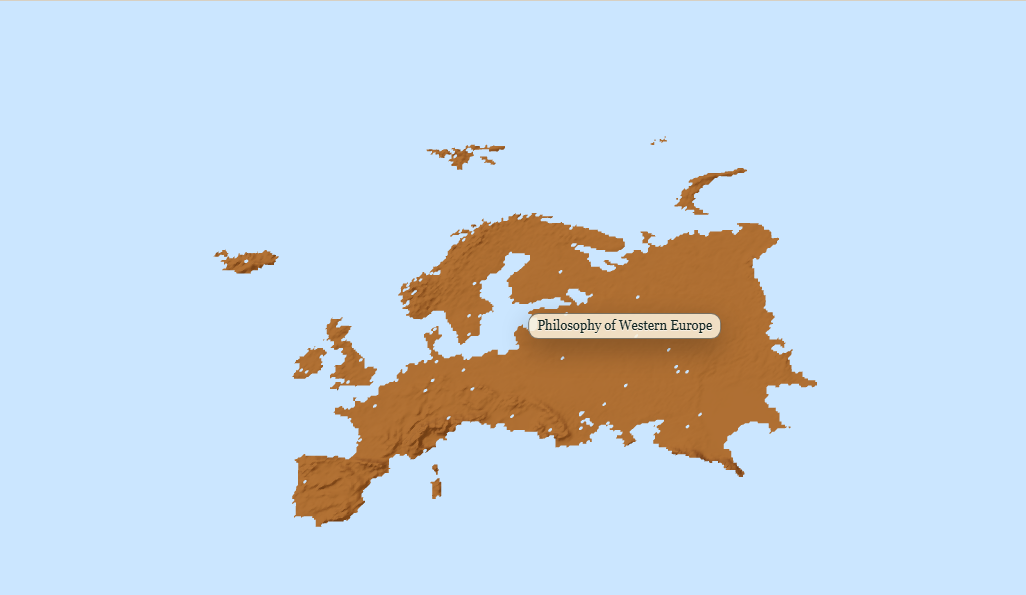
- Its centers include Jena, Heidelberg, Berlin, nineteenth-century German universities, British and Italian idealist circles, Marxist traditions, French Hegelian reception, and contemporary global Hegel scholarship.
- Historical Reaction
- It reacts to Kantian dualisms, Fichtean subjectivism, Schellingian identity philosophy, Enlightenment abstraction, Romantic immediacy, post-revolutionary politics, theology, civil society, and anti-systematic critiques.
Internal Structure
- Foundational Texts
- Foundational texts include Hegel's Phenomenology of Spirit, Science of Logic, Encyclopaedia of the Philosophical Sciences, Elements of the Philosophy of Right, lectures on history, religion, art, and history of philosophy, plus Right, Left, Young Hegelian, British Idealist, Italian, Marxist, and contemporary receptions.
- Core Vocabulary
- Core vocabulary includes dialectic, Aufhebung, Geist, Spirit, Begriff, concept, negativity, mediation, actuality, rationality, recognition, lordship and bondage, alienation, ethical life, civil society, state, absolute, and freedom.
- Metaphysics
- Hegelian metaphysics treats being, essence, concept, nature, and spirit as internally articulated moments of rational development rather than as fixed substances or external oppositions.
- Epistemology
- Its epistemology studies how consciousness moves through shapes of experience toward self-conscious reason, and how knowing must grasp objects through historically mediated concepts.
- Ethics
- Its ethics centers freedom, recognition, ethical life, family, civil society, state, responsibility, labor, institutions, and the social conditions under which persons become self-conscious agents.
- Method
- The school works through speculative logic, phenomenological narration, immanent critique, historical interpretation, political analysis, lectures, commentary, and reinterpretation of inherited religious, artistic, legal, and philosophical forms.
- Internal Debates
- Internal debates concern the dialectic, absolute idealism, religion, the state, civil society, master/slave recognition, Marxist appropriation, Right versus Left Hegelianism, British and Italian idealism, anti-Hegelian critiques, and analytic Hegelian readings.
- Successors
- Successors and related formations include Young Hegelianism, Marxism, British Idealism, Italian Idealism, neo-Hegelianism, existential and phenomenological receptions, critical theory, recognition theory, and contemporary analytic Hegel studies.
External Classification Context
- History of Philosophy
- Hegelianism is one of the central post-Kantian traditions, linking German Idealism to Marxism, continental philosophy, political theory, philosophy of history, social theory, and modern debates over recognition and freedom.
- Philosophy of Philosophy
- It treats philosophy as the self-comprehension of its age in thought, requiring systematic grasp of the historical forms through which reason, freedom, and spirit become intelligible.
- Intellectual History
- Its intellectual history includes German universities, post-revolutionary Europe, theological controversies, political reform, student movements, Marxist theory, British and Italian academic idealism, translations, commentaries, and modern Hegel societies.
- University Classification
- Usually classified under modern philosophy, German Idealism, continental philosophy, metaphysics, epistemology, logic, political philosophy, social philosophy, aesthetics, philosophy of religion, and history of philosophy.
- Classical Sources
- Classical evidence comes from Hegel's published works, lectures, manuscripts, correspondence, student notes, editions, translations, early Hegelian school writings, polemics, and later critical scholarship.
- Sociology of Knowledge
- Hegelianism persisted through university lectures, philosophical societies, political movements, theological schools, Marxist parties, translations, journals, seminars, editions, and recurring reinterpretation in social theory and philosophy.
Linked Philosophers
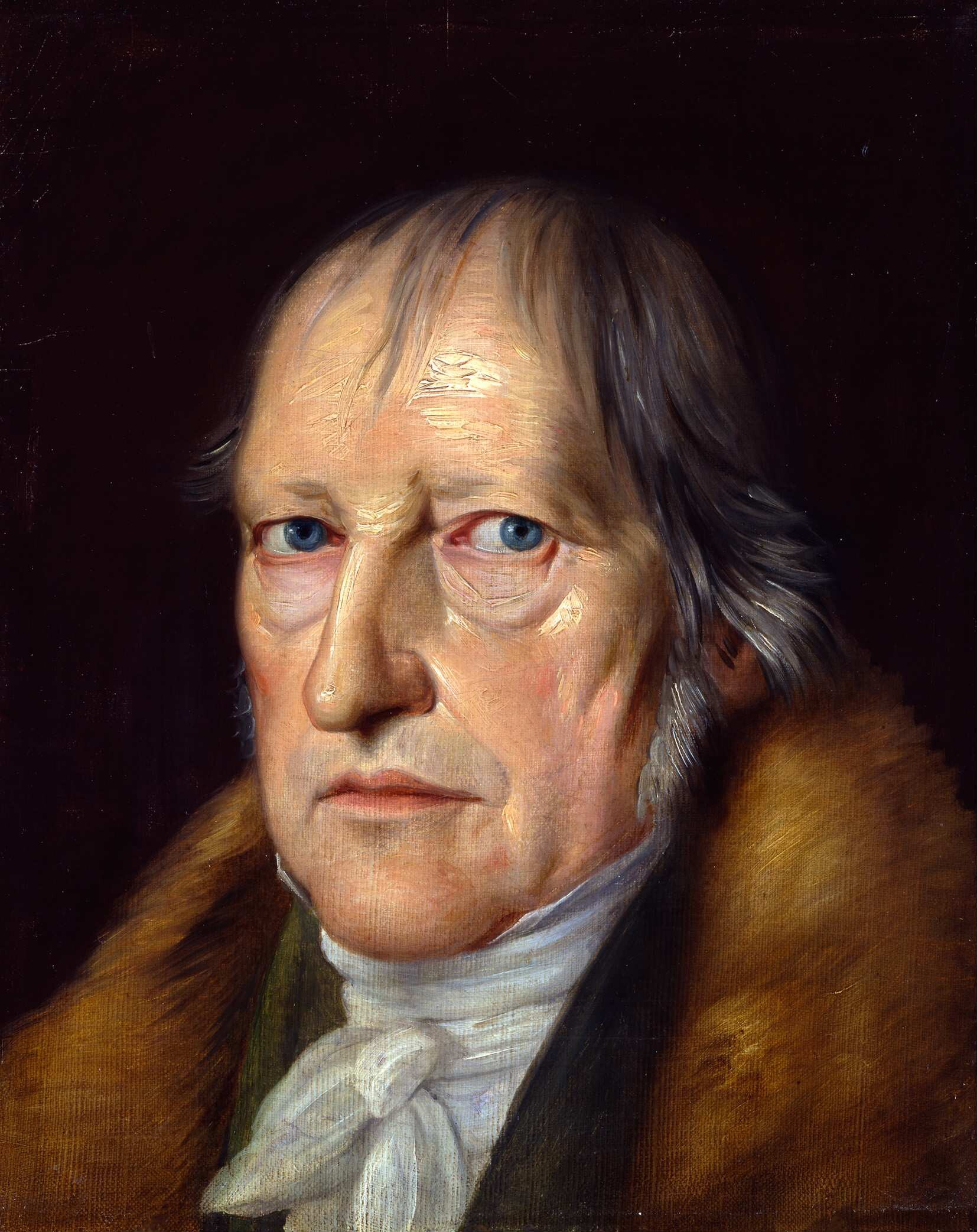
Georg Wilhelm Friedrich Hegel
1770 CE – 1831 CE
Stuttgart, Duchy of Württemberg
German Idealist philosopher of dialectic, absolute idealism, recognition, freedom, ethical life, history, art, nature, religion, and systematic philosophy.